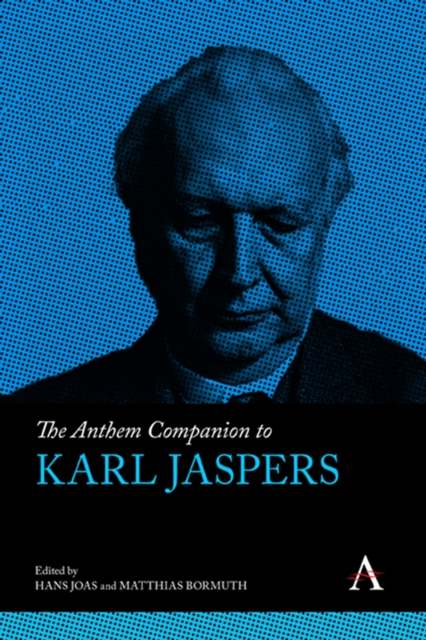
This collection of articles by an international group of leading experts has its special focus on the relevance of Karl Jaspers's philosophy for the social sciences.
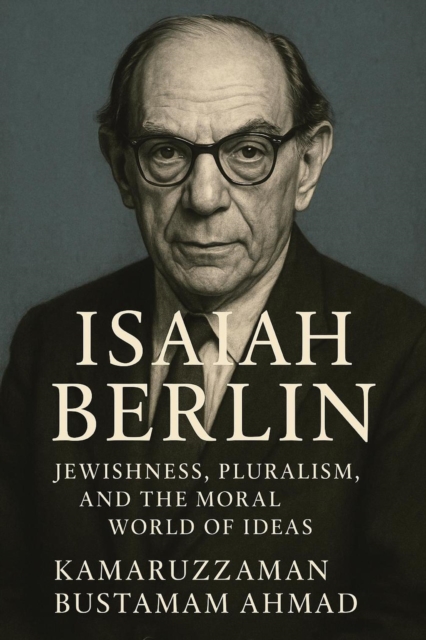
This book is the culmination of a sustained intellectual engagement with the thought of Isaiah Berlin, developed over nearly a decade of research, writing, and critical reflection.
This book offers a timely intervention in the discourses around transhumanism, posthumanism, and phenomenology, aspiring to inaugurate a turning in Western thought in the direction of a more phenomenologically oriented consideration of what it means to be human and of what it might mean to be “posthuman.
World-renowned analytic philosophers John McDowell and Robert Brandom, dubbed "e;Pittsburgh Neo-Hegelians,"e; recently engaged in an intriguing debate about perception.
In The Tenets of Cognitive Existentialism, Dimitri Ginev draws on developments in hermeneutic phenomenology and other programs in hermeneutic philosophy to inform an interpretative approach to scientific practices.
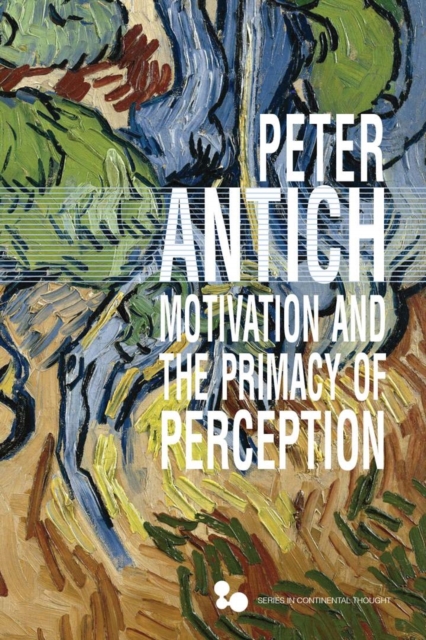
Merleau-Ponty's phenomenological notion of motivation advances a compelling alternative to the empiricist and rationalist assumptions that underpin modern epistemology.
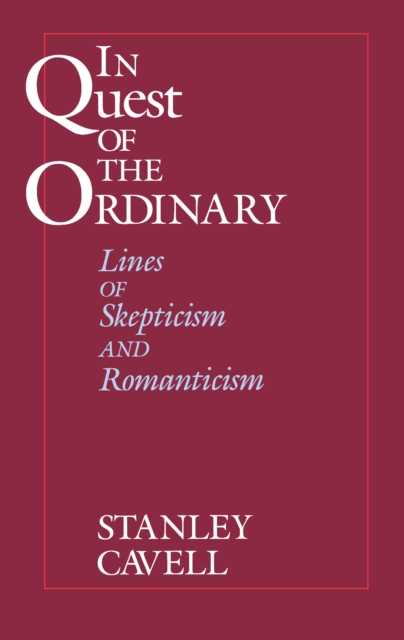
These lectures by one of the most influential and original philosophers of the twentieth century constitute a sustained argument for the philosophical basis of romanticism, particularly in its American rendering.
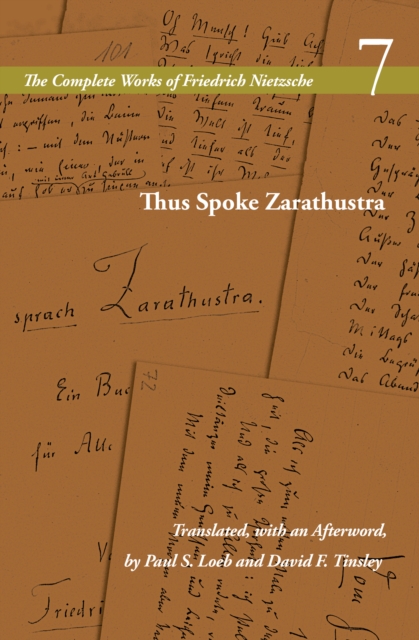
Thus Spoke Zarathustra stands alone among Nietzsche's published works as a poetic and narrative rendering of his most sophisticated ideas through the medium of Zarathustra's uniquely prophetic voice.
Thus Spoke Zarathustra stands alone among Nietzsche's published works as a poetic and narrative rendering of his most sophisticated ideas through the medium of Zarathustra's uniquely prophetic voice.
This volume brings together leading scholars from the phenomenological tradition to address questions regarding the relation of social ontology and phenomenology.
This volume brings together leading scholars from the phenomenological tradition to address questions regarding the relation of social ontology and phenomenology.
Identifying the theological background for the later classical exposition of pragmatism by William James illuminates a method that can shift the parameters of contemporary philosophy of religion discourse and contribute to the development of novel solutions to perennial problems.
This book brings together an interdisciplinary range of scholars from across the spectrum of disciplines, generations, and geopolitical divides to revisit Jacques Derrida's account of law, violence, and justice.
Merleau-Ponty's phenomenological notion of motivation advances a compelling alternative to the empiricist and rationalist assumptions that underpin modern epistemology.
The key to mitigating the environmental crisis isn't just based on science; it depends upon a profound philosophical revision of how we think about and behave in relation to the world.
World-renowned analytic philosophers John McDowell and Robert Brandom, dubbed "e;Pittsburgh Neo-Hegelians,"e; recently engaged in an intriguing debate about perception.
In The Tenets of Cognitive Existentialism, Dimitri Ginev draws on developments in hermeneutic phenomenology and other programs in hermeneutic philosophy to inform an interpretative approach to scientific practices.
These lectures by one of the most influential and original philosophers of the twentieth century constitute a sustained argument for the philosophical basis of romanticism, particularly in its American rendering.
The key to mitigating the environmental crisis isn't just based on science; it depends upon a profound philosophical revision of how we think about and behave in relation to the world.
This book offers a timely intervention in the discourses around transhumanism, posthumanism, and phenomenology, aspiring to inaugurate a turning in Western thought in the direction of a more phenomenologically oriented consideration of what it means to be human and of what it might mean to be “posthuman.
This book brings together an interdisciplinary range of scholars from across the spectrum of disciplines, generations, and geopolitical divides to revisit Jacques Derrida's account of law, violence, and justice.
Stephen Dunning examines Kierkegaard's theory of stages in terms of his dialectic of inwardness, shown here to be the Ariadne's thread"e; uniting all the major pseudonymous works.
In this comprehensive study of Voltaire's intellectual development, he provides the first full treatment of the effect of the English experience on Voltaire, the diversity of activity at Cirey, and the relation of Voltaire's thought to 17th- and 18th-century philosophy.
The author describes the influence on the Enlightenment of the intellectual currents that had been active in France, particularly the historical and humanistic esprit critique and the scientific esprit moderne.
Albert approaches critical rationalism as an alternative to other philosophical standpoints dominant in Germany: the conceptions of the Frankfurt School, hermeneutical thinking as represented by Gadamer, analytic philosophy, and logical empiricism.
Students of the Enlightenment have long assumed that the major movement towards atheism in the Ancien Regime was centered in the circle of intellectuals who met at the home of Baron d'Holbach during the last half of the eighteenth century.
By the mid-1600s, the commonsense, manifest picture of the world associated with Aristotle had been undermined by skeptical arguments on the one hand and by the rise of the New Science on the other.
"e;The focus of any genuinely new piece of criticism or interpretation must be on the creative act of finding the new, but deconstruction puts the matter the other way around: its emphasis is on debunking the old.
Armstrong suggests that Jamess perspective is essentially phenomenological that his understanding of the process of knowing, the art of fiction, and experience as a whole coincides in important ways with the ideas of the leading phenomenologists.