This edited collection covers Friedrich Waismann's most influential contributions to twentieth-century philosophy of language: his concepts of open texture and language strata, his early criticism of verificationism and the analytic-synthetic distinction, as well as their significance for experimental and legal philosophy.
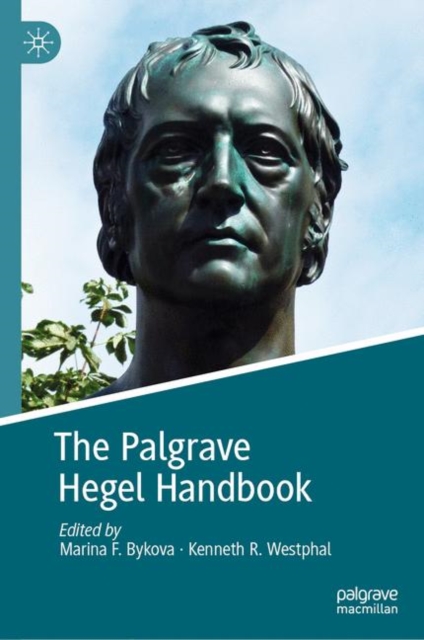
This volume articulates and develops new research questions and original insights regarding the philosophical dialogue between Hegel's philosophy, his heritage, and contemporary phenomenology, including, among others, Husserl, Heidegger, Merleau-Ponty, and Ricoeur.
Over the last four decades, John Dewey's pragmatist philosophy has formed an intellectual core in design research, underpinning Donald Schon's theory of reflective practice, the experiential perspective in HCI and the democratic commitments of participatory design.
Engaging with several emerging and interconnected approaches in the social sciences, including pragmatism, system theory, processual thinking and relational thinking, this book leverages John Dewey and Arthur Bentley's often misunderstood concept of trans-action to revisit and redefine our perceptions of social relations and social life.
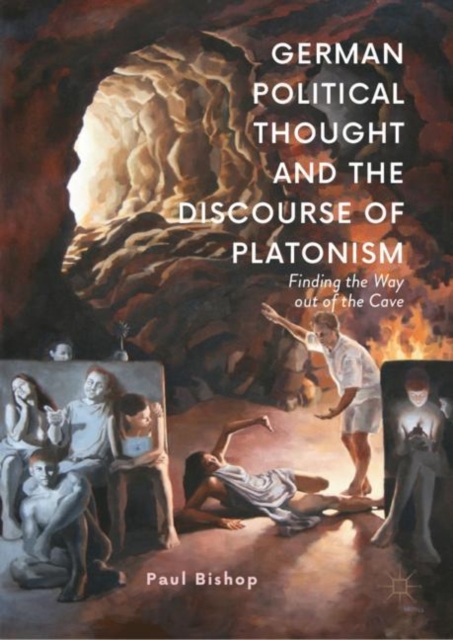
Taking Plato's allegory of the cave as its starting-point, this book demonstrates how later European thinkers can be read as a reaction and a response to key aspects of this allegory and its discourse of enchainment and liberation.
This book expands on the thought of Walter Benjamin by exploring the notion of modern mind, pointing to the mutual and ongoing feedback between mind and city-form.
This is the first English-language guidebook geared at an interdisciplinary audience that reflects relevant scholarly developments related to the legacy and legitimacy of Ferdinand de Saussure's Course in General Linguistics (1916) today.
»Menschliches, noch Menschlicheres« ist ein authentisch-philosophischer Essay, in einer Sprache geschrieben, die so verständlich und präzise wie inspirierend ist.
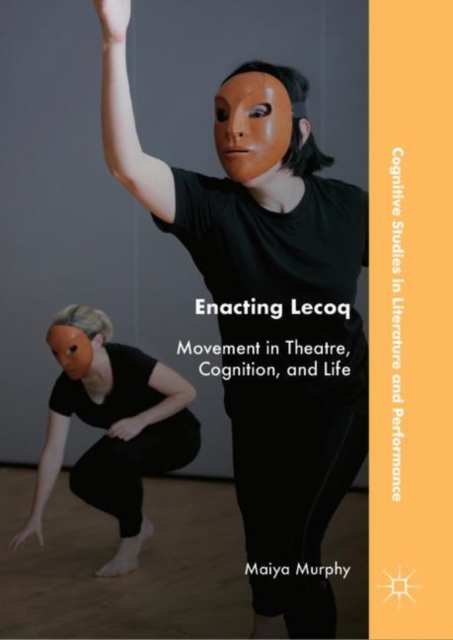
This book examines the theatrical movement-based pedagogy of Jacques Lecoq (1921-1999) through the lens of the cognitive scientific paradigm of enaction.
This book investigates the phenomenological ways that dance choreographing and dance performance exemplify both Truth and meaning-making within Native American epistemology, from an analytic philosophical perspective.
The book addresses two main areas of Kant's theoretical philosophy: the doctrine of transcendental idealism and various central aspects of the arguments from the Metaphysical and Transcendental Deductions, as well as the relation between the deduction argument and idealism.
This book develops a philosophy of aesthetic experience through two socially significant philosophical movements: early German Romanticism and early critical theory.
During the Progressive Era in the United States, as teaching became professionalized and compulsory attendance laws were passed, the public school emerged as a cultural authority.
This book intertwines phenomenological fieldwork with a wide range of Heidegger's writings to explore how our everyday uses of mobile media technologies permit a unique avenue to rediscover poiesis, our creative cultivation that is simultaneously a bringing forth, a revealing.
This is the first monograph to deal with medicine as a form of hermeneutics, now in a thoroughly revised and updated edition, including a whole new chapter on medical ethics.
This book examines postmodern theology and how it relates to the cinematic style of Robert Bresson, Carl Theodor Dreyer, Ingmar Bergman, and Luis Bunuel.
This book is based on the understanding that the diversity and heterogeneity of science and society are not only issue of critique, but engender experimental forms of collaboration.
This book argues that global crises such as the present Covid-19 pandemic are correlates of the contemporary thought regime that it calls technohumanism.
In this small book, Ulrich Steinvorth describes the reasons why analytic philosophy, which started as an anti-metaphysical project, has become a strong advocate of metaphysics, and why it must become synthetic, normative, and naturalistic.
This book offers a phenomenological conception of experiential justification that seeks to clarify why certain experiences are a source of immediate justification and what role experiences play in gaining (scientific) knowledge.