This book explores the origins of the academic culture wars of the late 20th century and examines their lasting influence on the humanities and progressive politics.
The main themes and aims of this book are understanding aesthetics, contemporary art and the end of the avant-garde not from the traditional viewpoint of the metaphysics of the beautiful and the sublime but rather thru close connection to the techno-genesis of virtual worlds.
Every attempt to examine our consciousness's passive life and its dynamic in its various forms inevitably intersects with our primal awareness of the future.
This book addresses an epidemic that has developed on a global scale, and, which under the heading of "e;addiction,"e; presents a new narrative about the travails of the human predicament.
Drawing on the culture's history before and after the birth of rap music, this book argues that the values attributed to Hip Hop by 'postmodern' scholars stand in stark contrast with those that not only implicitly guided its aesthetic elements, but are explicitly voiced by Hip Hop's pioneers and rap music's most consequential artists.
This book explores how phenomenological ideas about embodiment, perception, and lived experience are discussed within disability studies, critical race theory, and queer studies.
Hegel's philosophy has been of fundamental importance for the development of contemporary thought and for the very representation of Western modernity.
This volume explores recent developments in the practice of hospitality, as well as the curious, precarious relationship between guests and their hosts.
Building on the thriving discussion on the role of attention within the phenomenological tradition, from Aron Gurwitsch and Merleau-Ponty to Bernhard Waldenfels, this book investigates the enigmatic role of attention as a faculty that enables change within subjective and intersubjective experience.
In thinking about ontology as the study of being or what fundamentally exists, we can adopt an ontology that either takes substances or processes as primary.
This volume presents discussions on a wide range of topics focused on eco-phenomenology and the interdisciplinary investigation of contemporary environmental thought.
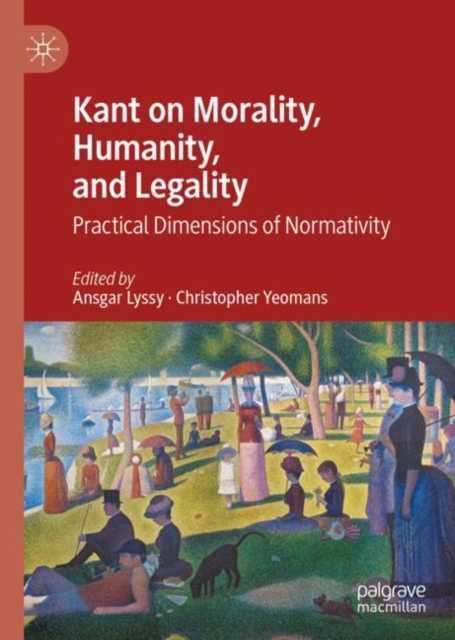
It was not so long ago that the dominant picture of Kant's practical philosophy was forma-listic, focusing almost exclusively on his Groundwork of the Metaphysics of Morals and Critique of Practical Reason.
This volume expands the concept and role of the schema, with three goals in mind: 1) to outline the continuing issues in the schema concept as the legacy of Kant's concept and analysis, 2) to show that Kant's challenges resulted in successful but truncated views of the schema and its functions, 3) to reconstruct Otto Selz's schema concept by proposing an alternative.
Using both Father Kevin Wall's eidetic matrix of "e;the relational unity of being"e; and Edith Stein's remarkable synoptic view of intentionality in both Aquinas and Husserl, this book uncovers purely logical ground for a subalternate eidetic science called "e;convergent phenomenology,"e; itself located at the inmost depths of Husserlian phenomenology.
This book draws on existential theory and original research to present the conceptual framework for an understanding of existential authenticity and demonstrates how this approach might be adopted in practice.
This edited collection marks a new wave of international and philosophical scholarship on "e;the heart"e;- that rich dimension of our emotional being in the world.
This book seeks to provide new perspectives, to broaden the field of philosophy of science, or to renew themes that have had a great impact on the profession.
This book joins the contemporary recovery of Kant's empirical works to highlight the relevance of his concept of culture for understanding the sources of various characteristic modern dilemmas, such as the tension between culture and happiness, the morally ambivalent nature of cultural progress, or the existing conflicts between a factual plurality of cultures and the historical forces pressing toward a universal civilization.
In each connection with new cultural contexts a new hybrid state of cultural adaptation is constructed enabling people to adjust to new conditions by creating innovative solutions for the self.
This volume explains how Star Trek allows viewers to comprehend significant aspects of Georg Hegel's concept the absolute, the driving force behind history.