This book shows that screens don't just distribute the visible and the invisible, but have always mediated our body's relationships with the physical and anthropological-cultural environment.
In this book, Richard Dien Winfield builds upon Hegel's Aesthetics to provide a comprehensive and systematic analysis of the individual fine arts, which remedies Hegel's inconsistencies and major omissions.
Winner of the Edward Goodwin Ballard Prize as announced at the Society for Phenomenology and Existential Philosophy Meeting on September 27, 2024 The book offers a systematic reconstruction of the disagreement between Husserl and Heidegger from the former's perspective, but without falling into any form of Husserlian apologetics.
Winner of the Edward Goodwin Ballard Prize as announced at the Society for Phenomenology and Existential Philosophy Meeting on September 27, 2024 The book offers a systematic reconstruction of the disagreement between Husserl and Heidegger from the former's point of view, but without falling into any form of Husserlian apologetics.
This book excavates the rhetorical devices that Nietzsche habitually uses and demonstrates how they circumscribe rather than expand the reader's interpretive horizon.
This book excavates the rhetorical devices that Nietzsche habitually uses and demonstrates how they circumscribe rather than expand the reader's interpretive horizon.
This book explores dialogue as a transformative form of philosophical practice by unveiling the method behind the unique dialogue developed by mystic and thinker Jiddu Krishnamurti (1895-1986).
This book explores dialogue as a transformative form of philosophical practice by unveiling the method behind the unique dialogue developed by mystic and thinker Jiddu Krishnamurti (1895-1986).
This book presents twelve of the author's selected essays on subjects related to contemporary Chinese thought and examines other significant works on the history of Chinese philosophy.
This book presents twelve of the author's selected essays on subjects related to contemporary Chinese thought and examines other significant works on the history of Chinese philosophy.
This book covers Husserl's stance on the philosopher and the history of philosophy, whether or not such a history is part of the philosophical attitude itself, and if so, how Husserl's phenomenology might weigh in on such matters.
This book explores the religious experiences of two notable figures who endured severe trials under authoritarian regimes: Bediuzzaman Said Nursi (1877-1960) within the Islamic tradition, and Aleksander Solzhenitsyn (1918-2008) within the Russian Orthodox Christian tradition.
This book shows that screens don't just distribute the visible and the invisible, but have always mediated our body's relationships with the physical and anthropological-cultural environment.
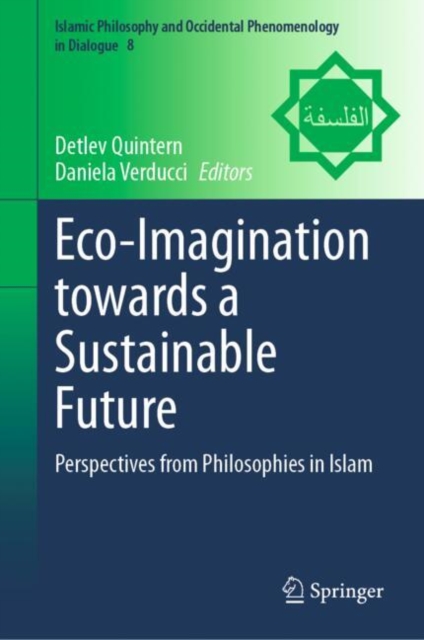
The Volume brings together scholars from Azerbaijan, Egypt, Germany, India, Iran, Iraq, Italy, the Netherlands, and Turkey to approach the new field of Eco-Imagination from various philosophical and disciplinary backgrounds.
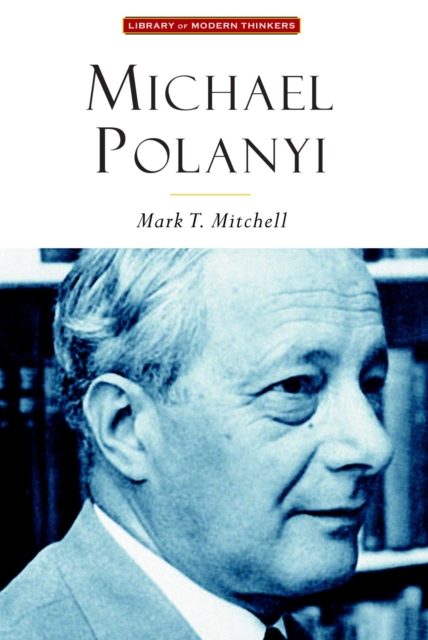
The polymath Michael Polanyi first made his mark as a physical chemist, but his interests gradually shifted to economics, politics, and philosophy, in which field he would ultimately propose a revolutionary theory of knowledge that grew out of his firsthand experience with both the scientific method and political totalitarianism.
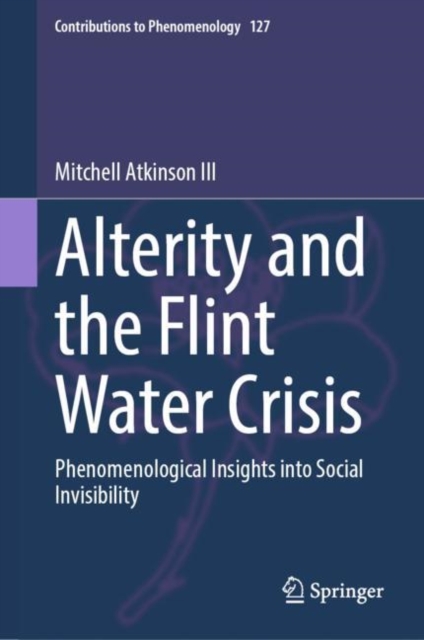
This text develops a novel methodology for social investigation into the Flint (Michigan, USA) water crisis by using classical Husserlian phenomenology as its point of departure.
Anselm's ontological argument is one of the most fascinating, most controversial, and most misunderstood arguments in the entire history of Western thought.
This text develops a novel methodology for social investigation into the Flint (Michigan, USA) water crisis by using classical Husserlian phenomenology as its point of departure.
Anselm's ontological argument is one of the most fascinating, most controversial, and most misunderstood arguments in the entire history of Western thought.
The book examines the life and the writings of Gabriele Biondo, a secular priest who lived in the little town of Modigliana between the second half of the fifteenth century and the first decades of the sixteenth century.
This book analyses the role of diagrammatic reasoning in Plato's philosophy: the readers will realize that Plato, describing the stages of human cognitive development using a diagram, poses a logic problem to stimulate the general reasoning abilities of his readers.
This book presents a series of coordinated studies that explain and illustrate how philosophy must be developed systematically with its problems and topics bound together by links of reciprocal interconnection.
This book analyses the role of diagrammatic reasoning in Plato's philosophy: the readers will realize that Plato, describing the stages of human cognitive development using a diagram, poses a logic problem to stimulate the general reasoning abilities of his readers.
This book presents a series of coordinated studies that explain and illustrate how philosophy must be developed systematically with its problems and topics bound together by links of reciprocal interconnection.
This book provides an original and challenging perspective of religions as abstract complex adaptive systems, using an interdisciplinary approach to try to understand what religions are and how they function, two fundamental issues which, despite an intense struggle from several fields, have not yet been resolved.
The book examines the life and the writings of Gabriele Biondo, a secular priest who lived in the little town of Modigliana between the second half of the fifteenth century and the first decades of the sixteenth century.
Der vorliegende Band enthält Forschungsmanuskripte Husserls zur Konstitution von Raumdingen aus den Jahren 1909-1934, die aus der Manuskriptgruppe D unter thematischen und qualitativen Gesichtspunkten ausgewählt wurden.
This book presents the idea of the gift of bonds as the core intuition of phenomenology, constituting it into that method of philosophical research that Husserl had in mind when he characterized phenomenology as the culmination and fulfillment of Western philosophy.
This book's overarching premise is that discussion and critique in the discourses of architecture and urbanism have their primary focus on engagements with form, particularly in the sense of the question as to what planning and architecture signify with respect to the forms they take, and how their meanings or content (what is "e;contained"e;) is considered in relation to form-as-container.
This book focuses on Edmund Husserl's philosophical collaboration with Eugen Fink which took place in the early 1930s, and shows how their disagreement over the nature, origin, and aim of phenomenology led to a crucial divergence on the issue of who was engaging in phenomenology, and with what motivation.
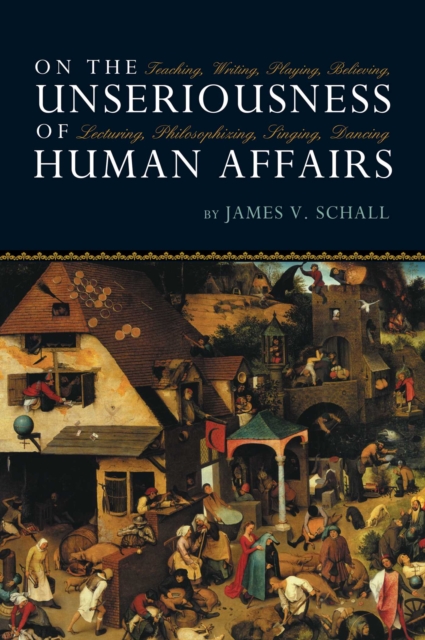
In this wise and witty book, acclaimed author James Schall illuminates a fundamental truth that will shock ceaselessly busy and ambitious Americans: human affairs are unserious.