This book, the second of two volumes, focuses on the conceptualization of Indigenous Knowledge and Curriculum, Ethiopian/African Philosophy and the possibilities of Indigenization/Africanization of African Education.
Critical theory emerged in the 1920s from the work of the Frankfurt School, the circle of German-Jewish academics who sought to diagnose -- and, if at all possible, cure -- the ills of society, particularly fascism and capitalism.
By exploring the influence of the Andalusian philosopher, Averroes or Ibn Rushd (1126-1198 AD) on European philosophy from the 13th to the 18th century, Koert Debeuf sheds light on a neglected side of the history of philosophy: the influence of Arabic thought on European philosophy.
In a simple language, the author discusses young people in boldness, touches their reality, and reviews many of their issues, such as marriage and its latest shouts, youth and fashion, reflection, love, drugs, chat and other hot issues.
This first volume of Husserlian Legacies: Themes for the 21st Century focuses on hitherto underexamined dimensions of Husserl's philosophical thinking and in particular, values and love.
This first volume of Husserlian Legacies: Themes for the 21st Century focuses on hitherto underexamined dimensions of Husserl's philosophical thinking and in particular, values and love.
In diesem Band schließt Pirmin Stekeler sein umfangreiches Kommentarwerk zu Hegels Philosophie mit einem dialogischen Kommentar zur Religionsphilosophie ab, der logischtheologischen Summe von Hegels Denken.
Focusing on moments of continuity and rupture, as well as the thin lines of fracture in Critical philosophy itself, Metaphysics of Nature and Failure in Kant's Opus postumum navigates the rough terrain of Kant's final thoughts.
The Oxford Handbook of Indian Philosophy tells the story of philosophy in India through a series of exceptional individual acts of philosophical virtuosity.
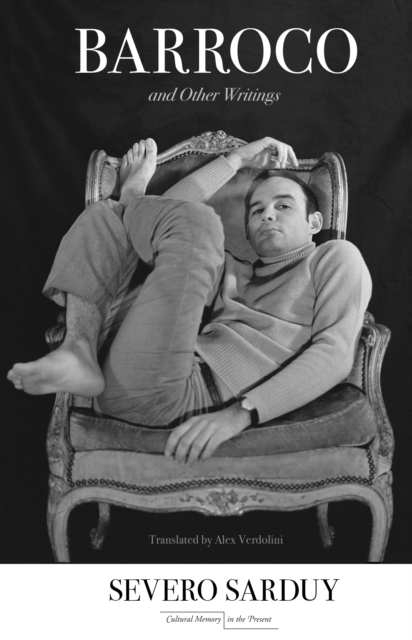
Severo Sarduy was among the most important figures in twentieth-century Latin American fiction and a major representative of the literary tendency to which he gave the name Neobaroque.