Dieses eBook: "Die Metaphysik der Sitten" ist mit einem detaillierten und dynamischen Inhaltsverzeichnis versehen und wurde sorgfältig korrekturgelesen.
This book presents the foundations of classical Chinese aesthetic discourse - roughly from the Bronze Age to the early Middle Ages - with the following animating questions:What is art?
Discover the eloquence and insight of the philosopher Nagarjuna, held by tradition to be a second Buddha, in this concise instruction for a king that is considered a masterpiece of Buddhist literature.
This book offers an in-depth and updated examination of the nature of haecceity-that primitive entity which explains why something is distinct from other things.
Hegel: Lectures on Philosophy gathers the mature reflections through which Georg Wilhelm Friedrich Hegel elaborates philosophy as a systematic account of reality, history, spirit, and reason.
Why would Rene Descartes, the father of modern rationalist philosophy, choose "e;meditations"e;-a term and genre associated with religious discourse and practice-for the title of his magnum opus that lays the metaphysical foundations for his reform of all knowledge, including mathematics and sciences?
The first book to offer an overview, at once introductory and comprehensive, of the philosophical thought of Owen Barfield, sometimes known as the first and last Inkling and as the British Heidegger.
Dans son œuvre intitulée 'Arthur Schopenhauer: L'Art d'avoir toujours raison', l'auteur explore le concept de la dialectique et de la rhétorique, offrant aux lecteurs une analyse approfondie des stratégies pour convaincre et persuader.
In 'Meditations of Marcus Aurelius', the Roman Emperor reflects on Stoic philosophy through a series of personal writings addressing self-improvement, inner peace, and living a virtuous life.
Late Antiquity was an era of remarkable change as beliefs were shaped and reshaped by the competing philosophies of traditional Greco-Roman religion, Middle and Neoplatonist philosophy, and the theology of the early Church.
This book offers an in-depth and updated examination of the nature of haecceity-that primitive entity which explains why something is distinct from other things.
Die von Thiemo Breyer, Inga Römer und Michela Summa herausgegebenen »Phänomenologischen Forschungen« sind ein international offenes Forum für die Publikation aller im weitesten Sinne phänomenologisch orientierten Arbeiten.
A Winner of the 2024 Association for Jewish Studies' Jordan Schnitzer First Book Publication AwardThis book contains a collection of eight annotated translations of responsa,alongside the original Hebrew texts, focusing on the post-expulsion Spanish-Portuguese communities of the sixteenth to seventeenth centuries.
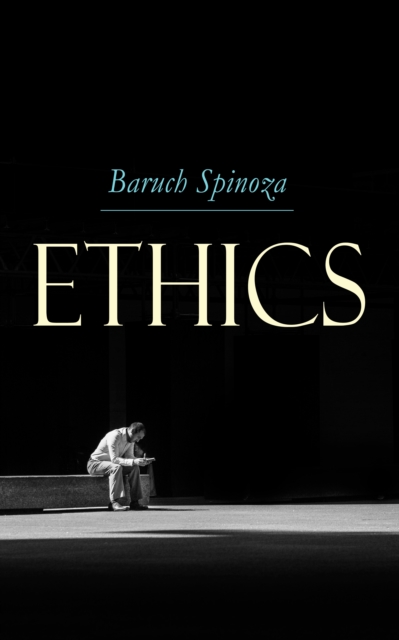
Baruch Spinoza's Ethics is a monumental work of seventeenth-century philosophy, composed in the austere "e;geometrical"e; style of definitions, axioms, propositions, and demonstrations.
The debate over Allah's attribute-the "e;nature"e; and the inner articulation of Allah-is one of the focal debates in the intellectual history of Islam.
The Philosophers Libraryfeatures the most important philosophy manuscripts and books as stepping stones to take your through the history of philosophy.