Volume XXI Special Issue, 2023Part 1: Phenomenological Perspectives on Aesthetics and ArtPart 2: Heidegger and Contemporary French PhilosophyAim and Scope: The New Yearbook for Phenomenology and Phenomenological Philosophy provides an annual international forum for phenomenological research in the spirit of Husserl's groundbreaking work and the extension of this work by such figures as Reinach, Scheler, Stein, Heidegger, Sartre, Levinas, Merleau-Ponty and Gadamer.
This book considers diverse philosophical topics unified by the identification of false moves commonly found in modern philosophy, mainstream Anglo-American philosophy, and social theory.
This book considers diverse philosophical topics unified by the identification of false moves commonly found in modern philosophy, mainstream Anglo-American philosophy, and social theory.
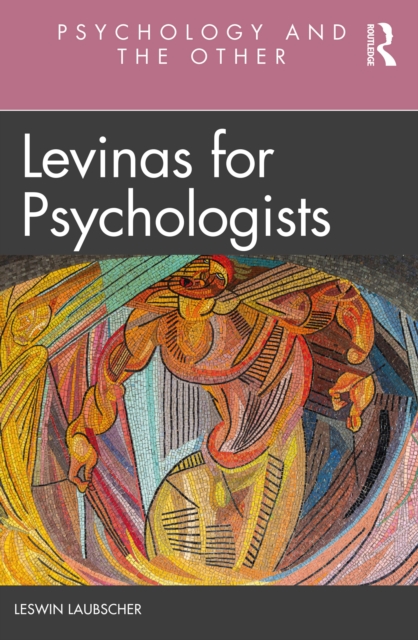
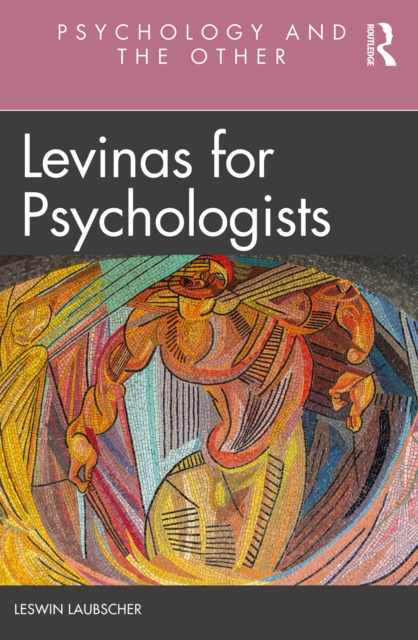
Levinas for Psychologists provides a rigorous, yet accessible, examination of Emmanuel Levinas's philosophy and its implications for psychology and the human and social sciences.
Thich Om legt dar, warum die Ewigkeit, das, was außerhalb unseres Begreifens liegt, keine grausame, böse ist, sonderm im Gegenteil eine unendlich zärtliche.
This Palgrave Handbook showcases how the phenomenological approach, especially but not only as developed by Alfred Schutz, can make important contributions to the theoretical analysis of macro-social phenomena such as the state, history, culture and interculturality, class relations and struggles, social movements and protests, capitalism, democracy, and digitalization processes.
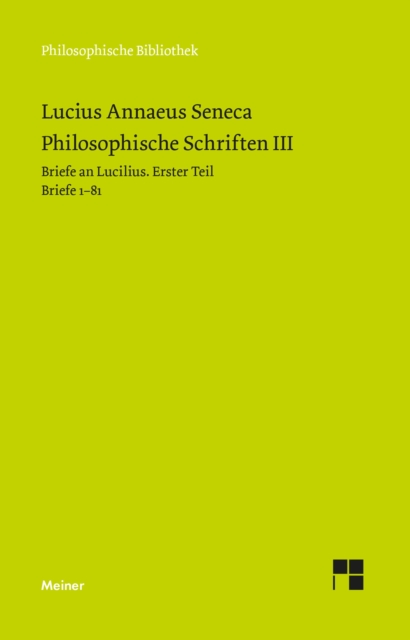
Für die so unwahrscheinliche Verwirklichung der Utopie Platons, Staatslenker sollten Philosophen und Philosophen sollten Staatslenker sein, gibt der römische Schriftsteller und Politiker Lucius Annaeus Seneca eines der außergewöhnlichsten wie einflussreichsten Beispiele in der Geschichte der abendländischen Kultur.
Abortion and Reproductive Rights in Slovenia: A Case of Resistance provides a detailed and in-depth analysis of the situation of sexual and reproductive rights in Slovenia.
«El profesor Gottlieb Söhngen, mentor académico y supervisor de la tesis de doctorado de Joseph Ratzinger, estaba convencido de que era imposible prepararse adecuadamente para hacer teología sin contar también con la filosofía: 'No importa cuán largo sea el camino de la filosofía, nunca es una desviación respecto a la teología; más bien, permite a uno embarcarse en el trabajo teológico eficaz más pronto que tarde'.
The author claims that concerning the "e;progress"e; and "e;development"e; of the technoscientific mind in the application of artificial intelligence, the anthropological definition of man has become not only outdated and ineffective, but "e;man"e; has become "e;superfluous"e; for the logic of the digital age.
Heinrichs "goldene Kette des Seienden" ist ein umfangreiches, aus 10 Büchern bestehendes Werk, das sich nach einem im Mittelalter bewährten enzyklopädischen Muster von Gott bis zum Menschen und seiner Seele über den Himmel, die Atmosphäre und die drei Bereiche der irdischen Welt (Mineralien, Pflanzen, Tiere) erstreckt.
Sofern es im phänomenologischen Sinne nur Sein geben kann, wenn es Erscheinen gibt, ist unsere Seinserfahrung an eine originär leibliche Subjektivität gebunden, welche als Lebenserprobung jeder Seinsbegegung transzendental vorausliegt.
This Palgrave Handbook showcases how the phenomenological approach, especially but not only as developed by Alfred Schutz, can make important contributions to the theoretical analysis of macro-social phenomena such as the state, history, culture and interculturality, class relations and struggles, social movements and protests, capitalism, democracy, and digitalization processes.
«El profesor Gottlieb Söhngen, mentor académico y supervisor de la tesis de doctorado de Joseph Ratzinger, estaba convencido de que era imposible prepararse adecuadamente para hacer teología sin contar también con la filosofía: 'No importa cuán largo sea el camino de la filosofía, nunca es una desviación respecto a la teología; más bien, permite a uno embarcarse en el trabajo teológico eficaz más pronto que tarde'.
Wer sich mit den Theorien oder Positionen von Philosophinnen und Philosophen auseinandersetzen will, kommt nicht umhin, ihre Texte entweder als Ganzschriften oder in Auszügen zu lesen, sie zu analysieren, zu interpretieren und Stellung zu ihnen zu beziehen.
Für die so unwahrscheinliche Verwirklichung der Utopie Platons, Staatslenker sollten Philosophen und Philosophen sollten Staatslenker sein, gibt der römische Schriftsteller und Politiker Lucius Annaeus Seneca eines der außergewöhnlichsten wie einflussreichsten Beispiele in der Geschichte der abendländischen Kultur.
Dieses eBook: "Über den Begriff der Zahl: Psychologische Analysen" ist mit einem detaillierten und dynamischen Inhaltsverzeichnis versehen und wurde sorgfältig korrekturgelesen.
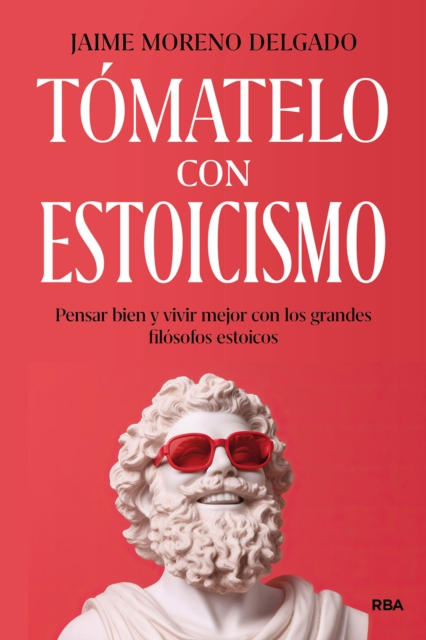
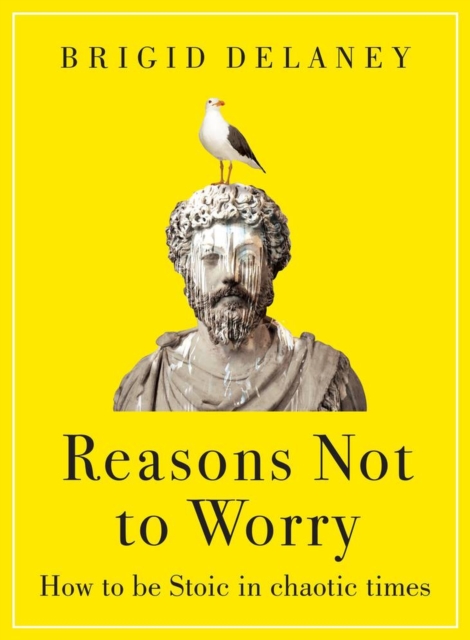
Reasons Not to Worry is an accessible introduction to the Stoic principles of virtue, moderation and self-discipline, adapting this ancient knowledge to inspire practical advice for everyday life.
This collection of chapters, written by prominent scholars in their respective fields, re-examines the nature of self-awareness in both Western and Eastern philosophy, inquires into its diverse and variable modes, and significantly broadens the framework of its analysis.
This book traces the origin and evolvement of two Chinese characters "e;wenxue"e;(literature) by using the methods of conceptual history and historical and cultural semantics, and by taking the evolution and changes of the concept of the these two characters and their interpretations in the west as a window, and re-examining the contemporary morphology of concept evolution in the historical context of concept generation and development to discover the historical and cultural connotations hidden behind the characters, so as to embark on a vivid journey to explore the history of literary thought, discipline and culture.
Für die so unwahrscheinliche Verwirklichung der Utopie Platons, Staatslenker sollten Philosophen und Philosophen sollten Staatslenker sein, gibt der römische Schriftsteller und Politiker Lucius Annaeus Seneca eines der außergewöhnlichsten wie einflussreichsten Beispiele in der Geschichte der abendländischen Kultur.
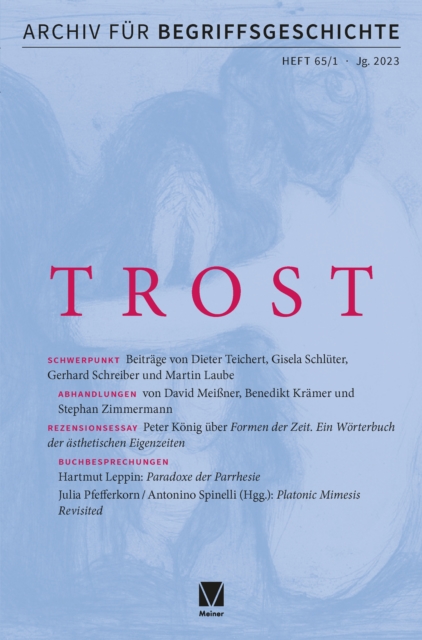
Im Schwerpunkt dieses Heftes werfen Dieter Teichert, Gisela Schlüter, Gerhard Schreiber und Martin Laube einige Schlaglichter auf die noch ungeschriebene Begriffsgeschichte von Trost.
Levinas for Psychologists provides a rigorous, yet accessible, examination of Emmanuel Levinas's philosophy and its implications for psychology and the human and social sciences.