This book synthesizes Jacques Derrida's hauntology and spectrality with affect theory, in order to create a rhetorical framework analyzing the felt absences and hauntings of written and oral texts.
Promoting cultural understanding in a globalized world, this collection offers a new perspective on Western philosophy and religion through the voices of Chinese scholars.
This book delves deep into the Social Construction of Theory, comparative epistemology and intellectual history to stress the interrelationship between diverse cultures during the colonial period and bring forth convincing evidence of how the 19th century was shaped.
This book probes the relationship between Martin Heidegger and theology in light of the discovery of his Black Notebooks, which reveal that his privately held Antisemitism and anti-Christian sentiments were profoundly intertwined with his philosophical ideas.
This book approaches the construction of complex and transgressive 'pervert' characters in mainstream (not 'art'), adult-oriented (not pornographic) cinema.
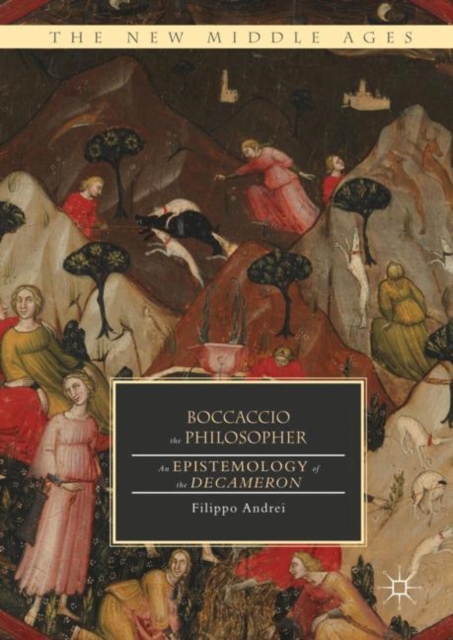
This book explores the tangled relationship between literary production and epistemological foundation as exemplified in one of the masterpieces of Italian literature.
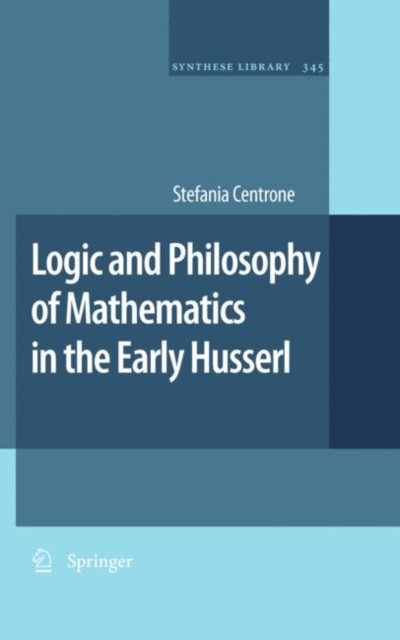
Logic and Philosophy of Mathematics in the Early Husserl focuses on the first ten years of Edmund Husserl's work, from the publication of his Philosophy of Arithmetic (1891) to that of his Logical Investigations (1900/01), and aims to precisely locate his early work in the fields of logic, philosophy of logic and philosophy of mathematics.
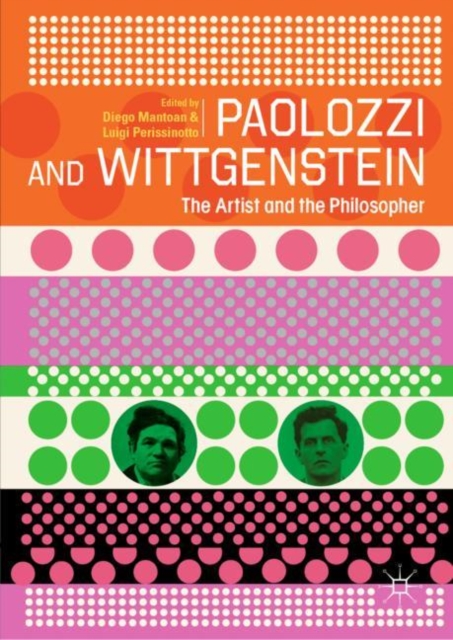
This impressive edited collection investigates the relationship between British Pop Art pioneer Eduardo Paolozzi and the philosopher Ludwig Wittgenstein.
This book examines the concept of post-truth and the impact it is having on contemporary life, bringing out both its philosophical and political dimensions.
This book brings together the work of Ludwig Wittgenstein and Jacques Lacan around their treatments of 'astonishment,' an experience of being struck by something that appears to be extraordinarily significant.
In this book, Paul Crittenden offers a critical guide to the problematic origins of biblical teaching about the afterlife and the way in which it was subsequently developed by Church authorities and theologians-Origen, Augustine, and Thomas Aquinas in particular.
This book offers a new and original hypothesis on the origin of modal ontology, whose roots can be traced back to the mathematical debate about incommensurable magnitudes, which forms the implicit background for Plato's later dialogues and culminates in the definition of being as dynamis in the Sophist.
This book aids in the rehabilitation of the wrongfully deprecated work of William Parry, and is the only full-length investigation into Parry-type propositional logics.
This collection of original essays brings together a world-class lineup of philosophers to provide the most comprehensive critical treatment of Ted Honderich's philosophy, focusing on three major areas of his work: (1) his theory of consciousness; (2) his extensive and ground-breaking work on determinism and freedom; and (3) his views on right and wrong, including his Principle of Humanity and his judgments on terrorism.
This book summarizes the author's extensive research on Confucian morality issues and focuses on elaborating the extremely important and unique role of moral thought in Confucian ideology.
This profound exploration of one of the core notions of philosophy-the concept of existence itself-reviews, then counters (via Meinongian theory), the mainstream philosophical view running from Hume to Frege, Russell, and Quine, summarized thus by Kant: "e;Existence is not a predicate.
This book presents the first full translation of the correspondence of Leo Strauss and Gerhard Kruger, showing for each the development of key and influential ideas, along with seven interpretative essays by leading Strauss scholars.
From Aristotle to Cognitive Neuroscience identifies the strong philosophical tradition that runs from Aristotle, through phenomenology, to the current analytical philosophy of mind and consciousness.
Mindfulness for the High Performance World provides a unique approach to mindfulness training, built upon the principles of Buddhist philosophy written in line with the Dalai Lama's description of meditation and mindfulness as "e;Science of the Mind"e;.
This book defines theatricality and performativity through metaphors of texture and weaving, drawn mainly from anthropologist Tim Ingold and philosopher Stephen C.
This book explores the possibility of philosophical praxis by weaving an ontological thread through four principal thinkers: Heidegger, Schelling, Goethe, and Heraclitus.
This volume offers perspectives on the theme of surprise crossing philosophical, phenomenological, scientific, psycho-physiology, psychiatric, and linguistic boundaries.
This book is about Positioning Theory (Davies & Harre, 1990) and its potential applications in bilingual and multilingual contexts involving teachers, learners, speakers, and users of a second/foreign or additional language.
This text presents and addresses the philosophical movement of antiphilosophy working thru the texts of Christian thinkers such as Pascal and Kierkegaard.
This volume offers a critical examination of the later philosophical views of Vladimir Solov'ev, arguably Russia's most famous and most systematic philosopher.