While humanists agreed on identifying the main requirement of the historical genre with truthfulness, they disagreed on their notions of historical truth.
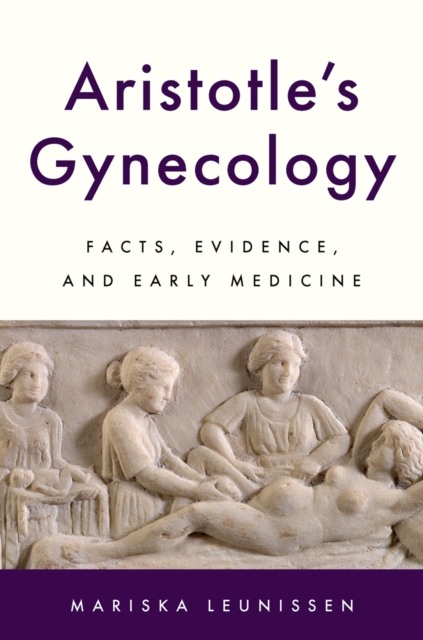
In Aristotle's Gynecology, Mariska Leunissen examines Aristotle's methods for the establishment of gynecological facts within his natural science, arguing that many of the gynecological phenomena at stake, such as menstruation and the nature of menstrual blood, the role of female pleasure during sex and women's experiences of erotic dreams, and their knowledge of conception and their experiences of (false) pregnancy and childbirth, were-mostly for socio-cultural reasons-not at all or not immediately accessible for a male natural scientific observer such as Aristotle.
In All Things Act, Mercedes Valmisa argues that there is no such thing as an individual action and that all actions are constituted and performed by a diverse array of entities.
This volume gathers together for the first time the philosophical journal articles that appeared during Leibniz's lifetime under his name or which would have been easily attributed to him due to other identifying marks.
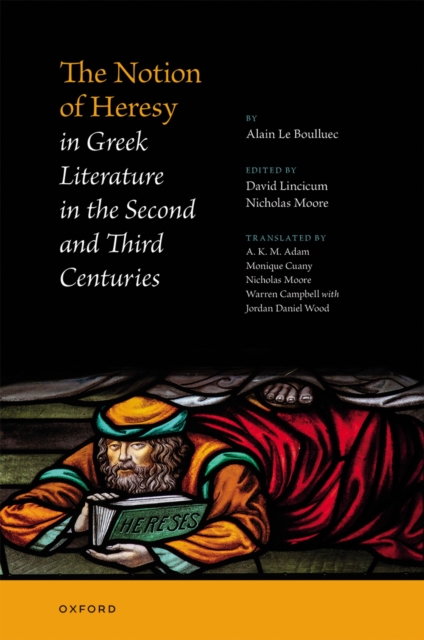
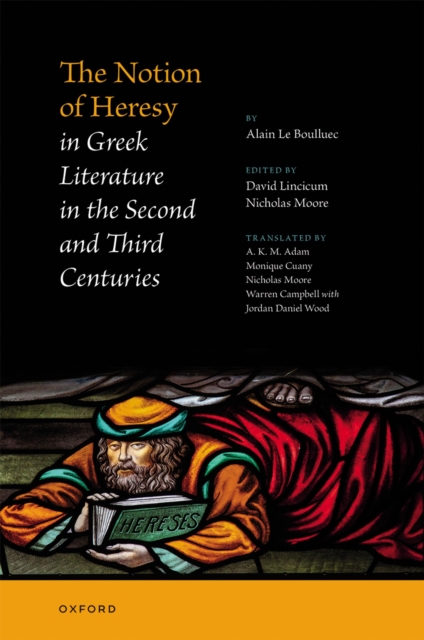
Inspired by analogies betwen the construction of heresy and the representation of madness described by Michael Foucault in in Histoire de la folie a l'age classique (Madness and Civilization), The Notion of Heresy in Greek Literature in the Second and Third Centuries demonstrates how the concept of heresy emerges in the work of Justin Matyr.
Inspired by analogies betwen the construction of heresy and the representation of madness described by Michael Foucault in in Histoire de la folie a l'age classique (Madness and Civilization), The Notion of Heresy in Greek Literature in the Second and Third Centuries demonstrates how the concept of heresy emerges in the work of Justin Matyr.
The writings of ancient and medieval Christian mystics were rediscovered in the twentieth century, and today they are read more widely than ever before.
For over a century, the Danish thinker Soren Kierkegaard (1813-55) has been at the center of a number of important discussions, concerning not only philosophy and theology, but also, more recently, fields such as social thought, psychology, and contemporary aesthetics, especially literary theory.
For over a century, the Danish thinker Soren Kierkegaard (1813-55) has been at the center of a number of important discussions, concerning not only philosophy and theology but also, more recently, fields such as social thought, psychology, and contemporary aesthetics, especially literary theory.
Every day we seem to make and act upon all kinds of free choices - some of them trivial, and some so consequential that they may change the course of our life, or even the course of history.
Every day we seem to make and act upon all kinds of free choices - some of them trivial, and some so consequential that they may change the course of our life, or even the course of history.
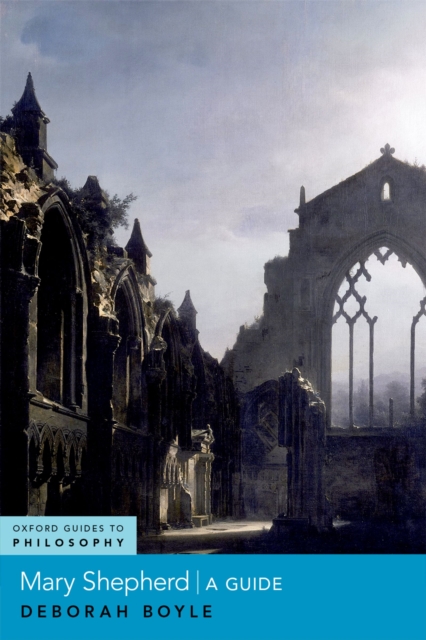
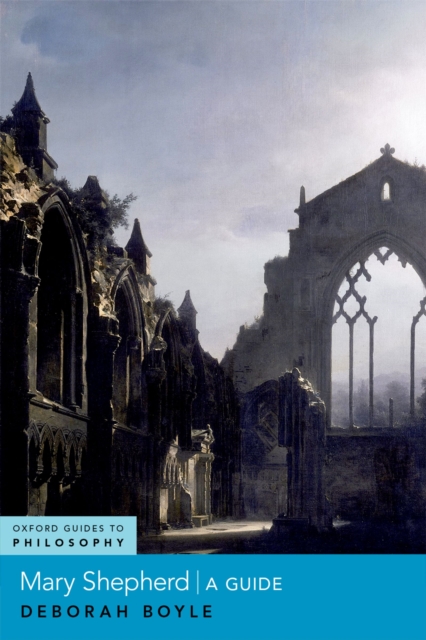
Scottish philosopher Lady Mary Shepherd (1777-1847) wrote two books that she conceived as one unified project: Essay Upon the Relation of Cause and Effect (1824) and Essays on the Perception of an External Universe (1827).
Scottish philosopher Lady Mary Shepherd (1777-1847) wrote two books that she conceived as one unified project: Essay Upon the Relation of Cause and Effect (1824) and Essays on the Perception of an External Universe (1827).
The scientific discovery that chaotic systems embody deep structures of order is one of such wide-ranging implications that it has attracted attention across a spectrum of disciplines, including the humanities.