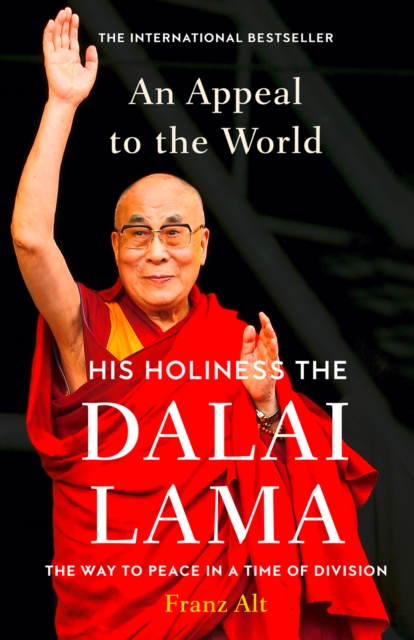
In An Appeal to the World, His Holiness the 14th Dalai Lama of Tibet illuminates the way to peace in our time, arguing for a form of universal ethics that goes beyond religion - values we all share as humans that can help us create unity and peace to heal our world.
In Vigilant Faith: Passionate Agnosticism in a Secular World, Daniel Boscaljon takes up the contemporary challenges to faith by skepticism and secularism.
Online supplement,"e;Mulsow: Additions to Notes drawn from the 2002 edition of Moderne aus dem Untergrund"e;: full versions of nearly 300 notes that were truncated in the print edition.
An Archaeology of Disbelief traces the origin of secular philosophy to pre-Socratic Greek philosophers who proposed a physical universe without supernatural intervention.
His tenth book, The Progressive Revolution (Volume V)-continues his legal, historical and literary series based on Natural Law, Natural Rights and the original political philosophy of the constitutional Framers and original jurisprudence of the U.
In today's world, we are witnessing both the spread of a hopeful secular humanism and the persistence of cultural traditions that mindlessly glorify humans and are paving the path to environmental collapse.
The Continuing Legacy of Simone Weil analyzes the core work of Simone Weil and her views on the nature of the human condition, humanity's relationship with God, and the objective state of our world.
Aligning Values and Politics argues that empowering individuals for self-actualization is an indispensable tool for attaining freedom; therefore, politics must align with the promotion of self-actualization.
Essays on Aesthetic Genesis is a collection of essays written on Jeff Mitscherling's work in realist phenomenology, Aesthetic Genesis: The Origin of Consciousness in the Intentional Being of Nature.
Erman Kaplama explores the principle of transition (Ubergang) from metaphysics to physics developed by Kant in his unfinished magnum opus, Opus Postumum.
Introduction by Peter Gay Translated and edited by Walter Kaufmann Commentary by Martin Heidegger, Albert Camus, and Gilles Deleuze One hundred years after his death, Friedrich Nietzsche remains the most influential philosopher of the modern era.
Preserved by Arabic mathematicians and canonized by Christian scholars, Aristotle’s works have shaped Western thought, science, and religion for nearly two thousand years.
This collection of essays and thoughts covers such areas as basic Christian thought, which includes traditional family morality and a great concern for alleviating poverty and promoting social justice, political thought comparing the need for a system which includes both socialist and capitalist elements, and the need for values in our society, which has come to emphasize money, power, and greed as philosophical goals and values, though they are not.
From Balewa's declaration, 'Today is Independence Day,' to Azikiwe's impassioned plea, 'Let us bind the nation's wound and let us heal the breaches of the past so that in forging our nation there shall emerge on this continent a hate-free, fear-free, and greed-free people,' to Buhari's patriotic fervor, 'This generation [of Nigerians].
Animal Minds, Animal Souls, Animal Rights explores the thinking of philosophers and theologians about controversies concerning animal consciousness and animal rights.
In Aesthetic Genesis, the author argues for a reversal of the most fundamental tenet of phenomenology-namely, that all consciousness is intentional (that is, directed toward an object).
The Fate of Transcendentalism examines the mid-nineteenth-century flowering of American transcendentalism and shows the movement's influence on several subsequent writers, thinkers, and artists who have drawn inspiration and energy from the creative outpouring it produced.
In Conscientious Thinking, David Bosworth cuts through all the noise of today's political dysfunction and cultural wars to sound the deeper causes of our discontent.
Examining inequality through the lenses of moral traditionsRising inequality has attracted a great deal of attention in recent years from scholars and politicians, but the moral dimensions of inequality tend to be ignored.