This work is a large, powerfully illustrated interdisciplinary natural sciences volume, the first of its kind to examine the critically important nature of ecological paradox, through an abundance of lenses: the biological sciences, taxonomy, archaeology, geopolitical history, comparative ethics, literature, philosophy, the history of science, human geography, population ecology, epistemology, anthropology, demographics, and futurism.
Neurotechnologies such as brain-computer interfaces (BCIs), which allow technical devices to be used with the power of thought or concentration alone, are no longer a futuristic dream or, depending on the viewpoint, a nightmare.
This book addresses current issues in the neuroscience and ethics of dementia care, including philosophical as well as ethical legal, and social issues (ELSIs), issues in clinical, institutional, and private care-giving, and international perspectives on dementia and care innovations.
This book provides an applied model of corruption to identify, analyse, and assess the ethics of major types of corruption in the media involving practices such as cash-for-comment, media release journalism, including video news releases (VNRs), fake news, deep fakes, and staged news.
This 3rd edition of Food and Agricultural Biotechnology in Ethical Perspective updates Thompson's analysis to reflect the next generation of biotechnology, including synthetic biology, gene editing and gene drives.
This novel contributed volume advances the current debate on free will by bridging the divide between analytic and historically oriented approaches to the problem.
This book gathers the peer-reviewed proceedings of the 1st congress on Geoethics & Groundwater Management (GEOETH&GWM'20), held in Porto, Portugal, in an online format on 18-22 May 2020.
This interdisciplinary volume brings together specialists from different backgrounds to deliver expert views on the relationship between morality and emotion, putting a special emphasis on issues related to emotional shocks.
This book defends the much-disputed view that emotions are what Hume referred to as 'original existences': feeling states that have no intentional or representational properties of their own.
This book situates Ralph Waldo Emerson in the tradition of philosophy as "e;spiritual exercise"e;, arguing that the defining feature of his literary philosophy is the conviction that there is an inherent link between moral persuasion and literary excellence.
This book brings together a number of essays that are optimistic about the ways certain neuroscientific insights might advance philosophical ethics, and other essays that are more circumspect about the relevance of neuroscience to philosophical ethics.
This collection explores the arguments related to veg(etari)anism as they play out in the public sphere and across media, historical eras, and geographical areas.
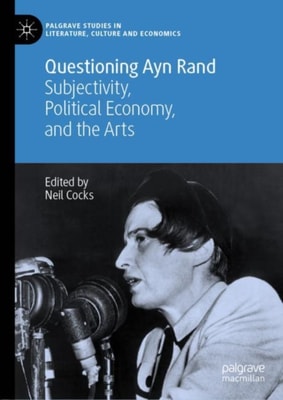
Questioning Ayn Rand: Subjectivity, Political Economy, and the Arts offers a sustained academic critique of Ayn Rand's works and her wider Objectivist philosophy.
Practitioners are increasingly adopting a personalised medicine approach to individually tailored patient care, especially disease diagnosis and treatment with the use of biomarkers.
This book covers a varied spectrum of ethical topics, ranging from the fundamental considerations regarding ethical values, to the rationale of obligation, and the ethical management of societal and personal affairs.
Derrida and Textual Animality: For a Zoogrammatology of Literature analyses what has come to be known, in the Humanities, as 'the question of the animal', in relation to literary texts.
This book brings together international experts from a wide variety of disciplines, in order to understand the impact that digital technologies have had on our well-being as well as our understanding of what it means to live a life that is good for us.
This book considers the efficacy of the common regulatory model of the licensing regime as a means of regulating animal use in England, with a particular focus on wild animals and the regime's ability to ensure animal welfare needs are met.
This interdisciplinary book brings philosophers and non-philosophers to the table to address questions of water ethics, specifically in terms of how moral questions inform decision making around water security at local, national, and international scales.
This book critically examines how Walt Disney Animation Studios has depicted - and sometimes failed to depict - different forms of harming and objectifying non-human animals in their films.
I write because I am concerned that I and my agricultural colleagues have avoided addressing the moral dimension of the environmental and social problems we have contributed to.
Peace and War: Historical, Philosophical, and Anthropological Perspectives is an accessible, higher-level critical discussion of philosophical commentaries on the nature of peace and war.
This book uses the concepts of freedom, indeterminism, and fallibilism to solve, in a unified way, problems of free will, knowledge, reasoning, rationality, personhood, ethics and politics.
This book provides occupational health (OH) professionals with a theoretical basis for addressing the ethical issues that they confront in their practice.
The book offers the first comprehensive account of the debate on true courage as it was raging in ancient Greece, from the times when the immensely influential Homeric epics, the Iliad and the Odyssey, were composed, to the period of the equally influential author, Aristotle.