This book explores the major differences between the kinds of risk encountered in different sectors of industry - production (including agriculture) and services - and identifies the main features of accidents within different industries.
This book offers a unique method for teaching ethics and social/political philosophy by combining primary texts and resource material along with three philosophical novels so that students can apply the abstract principles to real-life situations.
This book presents a collection of essays exploring the legal, economic, socio-environmental, and ethical dimensions of human-animal interaction in Brazil.
This book offers a broad and diverse reflection of the ways in which child poverty could be conceptualised, and the ways in which it is intertwined with childhood as a specific social condition.
In this book, author Svein Olaf Thorbjornsen probes the question: What is at stake for human beings in a society dominated by competition, particularly economic competition?
This innovative book proposes that what we think of as "e;moral conscience"e; is essentially the exercise of reflective judgment on the goods and ends arising in interpersonal relations, and that such judgment constitutes a form of taste.
In consequence of significant social, political, economic, and demographic changes several wildlife species are currently growing in numbers and recolonizing Europe.
Design Cybernetics: Navigating the NewDesign cybernetics offers a way of looking at ourselves curious, creative, and ethical humans as self-organising systems that negotiate their own goals in open-ended explorations of the previously unknown.
This volume brings together a collection of essays that explore in a new way how unacknowledged moral concerns are integral to debates in the philosophy of mind.
The Internet of Things (IoT) is a network of devices and smart things that provides a pervasive environment in which people can interact with both the cyber and physical worlds.
This book brings together the work of Ludwig Wittgenstein and Jacques Lacan around their treatments of 'astonishment,' an experience of being struck by something that appears to be extraordinarily significant.
This book offers a compelling examination of our moral and epistemic obligations to be reasonable people who seek to understand the social reality of those who are different from us.
This wide-ranging book examines the new dynamics of corporate social responsibility (CSR) and the impact they have had on the transformation of business corporations.
This book gives a voice to debates surrounding social science research ethics in Africa and brings them together in a coherent form to assist readers in being at the forefront of the discussions.
This book highlights some of the most pressing safety, ethical, legal and societal issues related to the diverse contexts in which robotic technologies apply.
This is the first book to outline a basic philosophy of ecology using the standard categories of academic philosophy: metaphysics, axiology, epistemology, aesthetics, ethics, and political philosophy.
With a Foreword by Dan Rebellato, this book offers up a detailed exploration of Scottish playwright David Greig's work with particular attention to globalization, ethics, and the spectator.
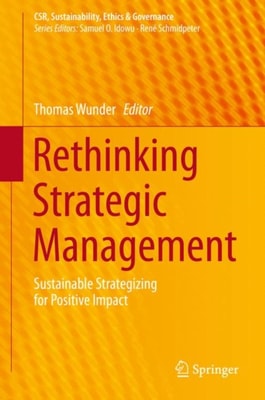
This book offers innovative ideas and frameworks for sustainable strategizing to advance business by scaling-up its positive impact, which is so urgently needed at this time in the 21st century.
This book outlines and circumvents two serious problems that appear to attach to Kant's moral philosophy, or more precisely to the model of rational agency that underlies that moral philosophy: the problem of experiential incongruence and the problem of misdirected moral attention.
This book provides a systematic analysis of the ethical implications of traditional and complementary medicine (T&CM), focusing on pragmatic solutions.