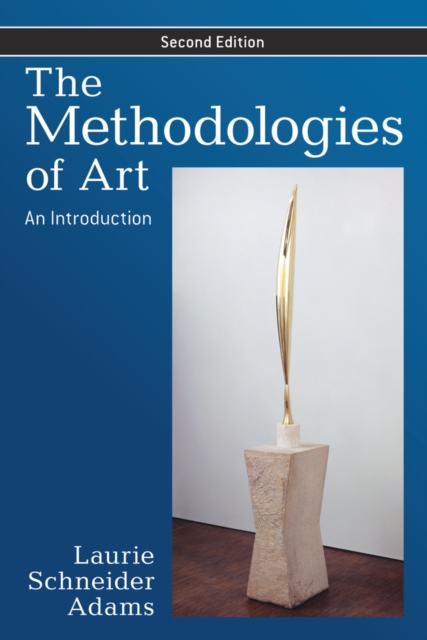
This book addresses issues in the philosophy of art through the lenses of the three broad areas of philosophy: metaphysics, epistemology, and axiology.
In The (Magic) Kingdom of God, Michael Budde offers a multidisciplinary analysis of the "e;global culture industries"e;-increasingly powerful, centralized corporate conglomerates in television, advertising, marketing, movies, and the like-and their impact on Christian churches in industrialized countries.
Inspired by the philosophy of Wittgenstein and his idea that the purpose of real philosophical thinking is not to discover something new, but to show in a strikingly different light what is already there, this book provides philosophical readings of a number of 'arthouse' and Hollywood films.
Inspired by the philosophy of Wittgenstein and his idea that the purpose of real philosophical thinking is not to discover something new, but to show in a strikingly different light what is already there, this book provides philosophical readings of a number of 'arthouse' and Hollywood films.
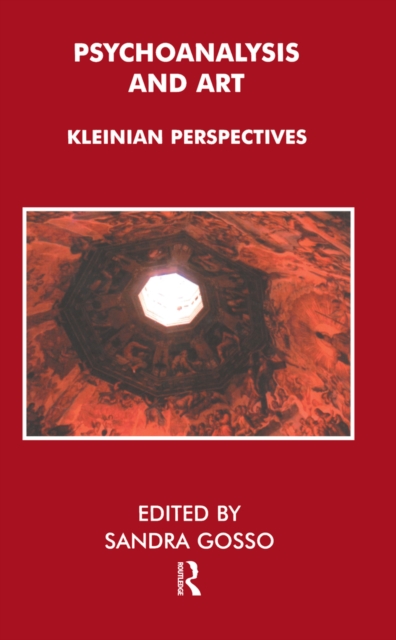
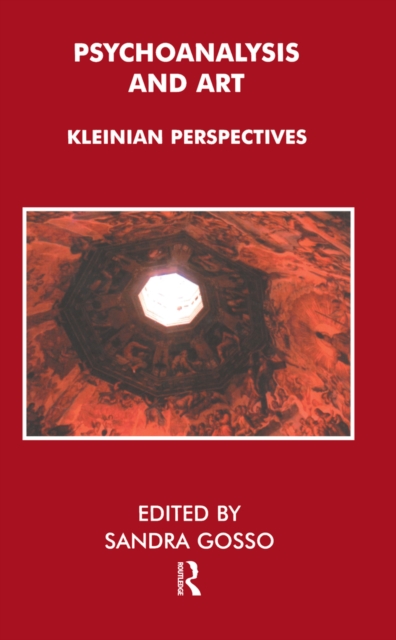
This essential edition brings together a collection of classic papers from key figures in Kleinian and post-Kleinian thought that explore the relationship between psychoanalysis and art.
This essential edition brings together a collection of classic papers from key figures in Kleinian and post-Kleinian thought that explore the relationship between psychoanalysis and art.
Perception of expression distinguishes our cognitive activity in a pervasive, significant and peculiar way, and manifests itself paradigmatically in the vast world of artistic production.
Perception of expression distinguishes our cognitive activity in a pervasive, significant and peculiar way, and manifests itself paradigmatically in the vast world of artistic production.
This collection of essays challenges the prevailing assumption that eighteenth-century German philosophy prior to Kant was largely defined by post-Leibnizian rationalism and, accordingly, a low esteem of the cognitive function of the senses.
This collection of essays challenges the prevailing assumption that eighteenth-century German philosophy prior to Kant was largely defined by post-Leibnizian rationalism and, accordingly, a low esteem of the cognitive function of the senses.
First published in 1927, this translation of Kulpes a Einleitung in die Philosophie, 1895, covered psychology, logic, ethics, esthetics and general philosophy.
First published in 1927, this translation of Kulpes a Einleitung in die Philosophie, 1895, covered psychology, logic, ethics, esthetics and general philosophy.
*Winner of the American Society for Aesthetics 2019 Outstanding Monograph Prize*Until now, research on art schools has been largely occupied with the facts of particular schools and teachers.
*Winner of the American Society for Aesthetics 2019 Outstanding Monograph Prize*Until now, research on art schools has been largely occupied with the facts of particular schools and teachers.
This book advances an enactivist theory of aesthetics through the study of inscrutable artworks that challenge us to think because we do not know what to think about them.
This book advances an enactivist theory of aesthetics through the study of inscrutable artworks that challenge us to think because we do not know what to think about them.
Published in 1998, the main aim of this book is to use a naturalistic, evolutionary approach to solve some of the most important problems in philosophy.
Published in 1998, the main aim of this book is to use a naturalistic, evolutionary approach to solve some of the most important problems in philosophy.
This work outlines a new methodology for film analysis based on the radical materialist thought of Baruch Spinoza, re-evaluating contemporary cognitive media theory and philosophical theories on the emotional and intellectual aspects of film experience.
This work outlines a new methodology for film analysis based on the radical materialist thought of Baruch Spinoza, re-evaluating contemporary cognitive media theory and philosophical theories on the emotional and intellectual aspects of film experience.
First published in 1998, this volume is a study of Asger Jorn's attempt to formulate the 'first complete revision of the existing philosophical system' from the standpoint of the artist in the period 1961-67.
First published in 1998, this volume is a study of Asger Jorn's attempt to formulate the 'first complete revision of the existing philosophical system' from the standpoint of the artist in the period 1961-67.
In Ethical and Aesthetic Explorations of Systemic Practice, the four co-authors come together to rhizomatically consider how systemic theories can be reinvigorated in the present day.
In Ethical and Aesthetic Explorations of Systemic Practice, the four co-authors come together to rhizomatically consider how systemic theories can be reinvigorated in the present day.
This book offers the first comprehensive critical study of David Hume's Four Dissertations of 1757, containing the Natural History of Religion, the Dissertation on the Passions, and the two essays Of Tragedy and Of the Standard of Taste.
This book offers the first comprehensive critical study of David Hume's Four Dissertations of 1757, containing the Natural History of Religion, the Dissertation on the Passions, and the two essays Of Tragedy and Of the Standard of Taste.