The Thinker's Guide to the Art of Socratic Questioning introduces readers to powerful methods of inquiry that pinpoint underlying beliefs and systems of logic.
How to Read a Paragraph introduces the importance of purposeful skilled reading and lays out methods by which to develop close reading skills using the tools of critical thinking.
Critical Thinking, 2nd Edition is about becoming a better thinker in every aspect of your lifeas a professional, as a consumer, citizen, friend, or parent.
In The Thinker's Guide to Ethical Reasoning, Richard Paul and Linda Elder present the vital role of ethics in the creation and ultimate success of cooperative societies.
Written by international authorities on critical thinking, this book details an integrated, universal concept of critical thinking that is both substantive and applicable to any and every situation in which human thinking is necessary.
In How to Improve Student Learning, critical thinking pioneer Richard Paul and educational psychologist Linda Elder distill decades of teaching experience into thirty methods to increase student comprehension and engagement in any area of study.
The Thinker's Guide to Scientific Thinking focuses on developing the intellectual skills inherent in the well-cultivated practice of every area of scientific research and study.
Written by two of the leading experts in the field, this introductory text presents critical thinking as a process for taking charge of and responsibility for one's thinking.
This powerful book introduces core critical thinking concepts and principles as an empowering problem-solving framework for every profession, course of study, and indeed every area of life.
The Thinker's Guide to Fallacies introduces the concept of mental trickery and shows readers how to discern and see through forty-four different types of fallacies.
The Aspiring Thinker's Guide to Critical Thinking introduces concepts and strategies for developing essential reasoning skills and intellectual character.
This volume comprises a selection of contributions to the theorizing about argumentation that have been presented at the 9th conference of the International Society for the Study of Argumentation (ISSA), held in Amsterdam in July 2018.
This volume contains 21 new and original contributions to the study of formal semantics, written by distinguished experts in response to landmark papers in the field.
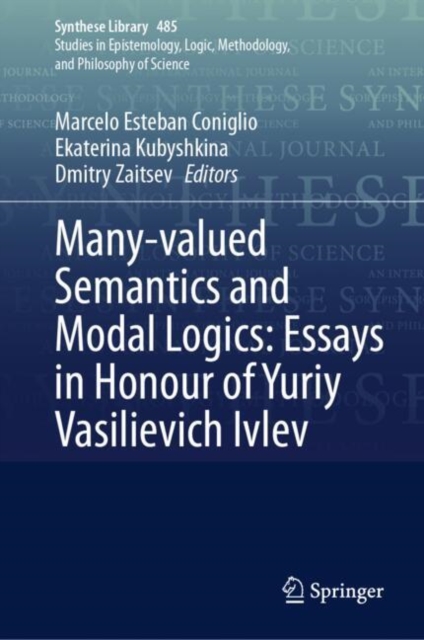
Edited in collaboration with FoLLI, the Association of Logic, Language and Information this book constitutes the refereed proceedings of the 28th Workshop on Logic, Language, Information and Computation, WoLLIC 2022, Iasi, Romania, in September 2022.
This book develops a novel generalization of possible world semantics, called 'world line semantics', which recognizes worlds and links between world-bound objects (world lines) as mutually independent aspects of modal semantics.
This book provides an overview of the confluence of ideas in Turing's era and work and examines the impact of his work on mathematical logic and theoretical computer science.
Using both Father Kevin Wall's eidetic matrix of "e;the relational unity of being"e; and Edith Stein's remarkable synoptic view of intentionality in both Aquinas and Husserl, this book uncovers purely logical ground for a subalternate eidetic science called "e;convergent phenomenology,"e; itself located at the inmost depths of Husserlian phenomenology.