Kraft und Stoff war mit 21 deutschen Auflagen innerhalb von nur fünfzig Jahren und zahlreichen Übersetzungen in andere Sprachen ein für seine Zeit ungewöhnlich erfolgreicher Bestseller.
How all philosophical explanations of human consciousness and the fundamental structure of the cosmos are bizarreand why that's a good thingDo we live inside a simulated reality or a pocket universe embedded in a larger structure about which we know virtually nothing?
How all philosophical explanations of human consciousness and the fundamental structure of the cosmos are bizarreand why that's a good thingDo we live inside a simulated reality or a pocket universe embedded in a larger structure about which we know virtually nothing?
Dorothea Olkowski's exploration of the philosophy of Gilles Deleuze clarifies the gifted French thinker's writings for specialists and nonspecialists alike.
One of the seventeenth century's most important thinkers, Gottfried Wilhelm Leibniz exercised enormous influence on the philosophy of Herder, Feuerbach, and Hegel as well as on the writings of Schiller and Goethe.
Immanuel Kant's groundbreaking Critique of Pure Reason inaugurated a new way of understanding the world that continues to impact philosophy to the present day.
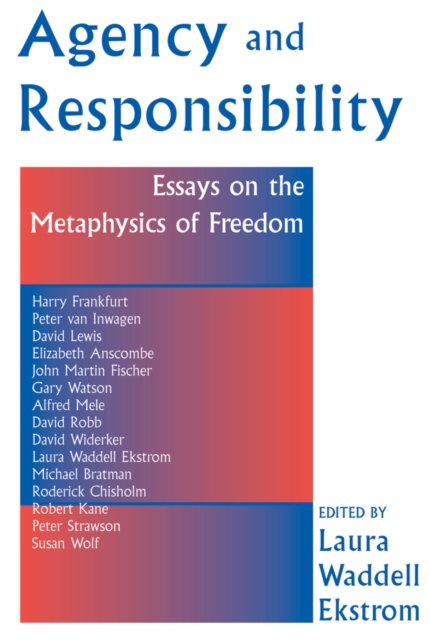
A companion volume to Free Will: A Philosophical Study, this new anthology collects influential essays on free will, including both well-known contemporary classics and exciting recent work.
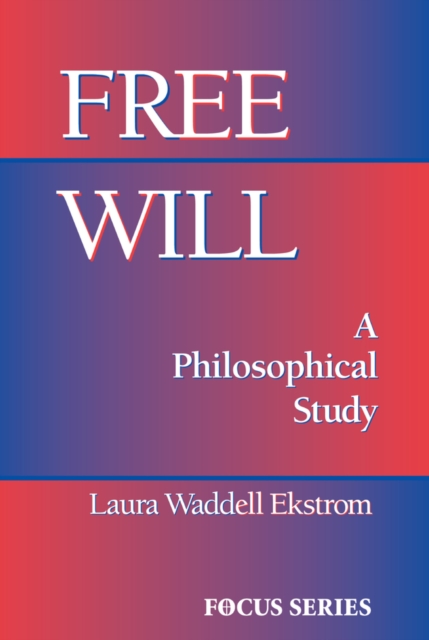
In this comprehensive new study of human free agency, Laura Waddell Ekstrom critically surveys contemporary philosophical literature and provides a novel account of the conditions for free action.
In this short text, a distinguished philosopher turns his attention to one of the oldest and most fundamental philosophical problems of all: How it is that we are able to sort and classify different things as being of the same natural class?
Immanuel Kant's groundbreaking Critique of Pure Reason inaugurated a new way of understanding the world that continues to impact philosophy to the present day.
A companion volume to Free Will: A Philosophical Study, this new anthology collects influential essays on free will, including both well-known contemporary classics and exciting recent work.
In this comprehensive new study of human free agency, Laura Waddell Ekstrom critically surveys contemporary philosophical literature and provides a novel account of the conditions for free action.
In this short text, a distinguished philosopher turns his attention to one of the oldest and most fundamental philosophical problems of all: How it is that we are able to sort and classify different things as being of the same natural class?
First published in 1998, Taking on Wittgensteinianism themes, but also using, or relying on several mathematical results, Slater in this book explores the idea of realism and further argues how in a philosophical viewpoint is incorrect.
First published in 1998, Taking on Wittgensteinianism themes, but also using, or relying on several mathematical results, Slater in this book explores the idea of realism and further argues how in a philosophical viewpoint is incorrect.
This book, first published in 1978, is a radical approach to the philosophical distinction between Being and beings, in which the life of Socrates is used as the metaphor for the theoretical life, in contrast to the continuous historical interest in that life as an object for biographical reconstruction and description.
This book, first published in 1978, is a radical approach to the philosophical distinction between Being and beings, in which the life of Socrates is used as the metaphor for the theoretical life, in contrast to the continuous historical interest in that life as an object for biographical reconstruction and description.
Thisness Presentism outlines and defends a novel version of presentism, the view that only present entities exist and what is present really changes, a view of time that captures a real and objective difference between what is past, present, and future, and which offers a model of reality that is dynamic and mutable, rather than static and immutable.