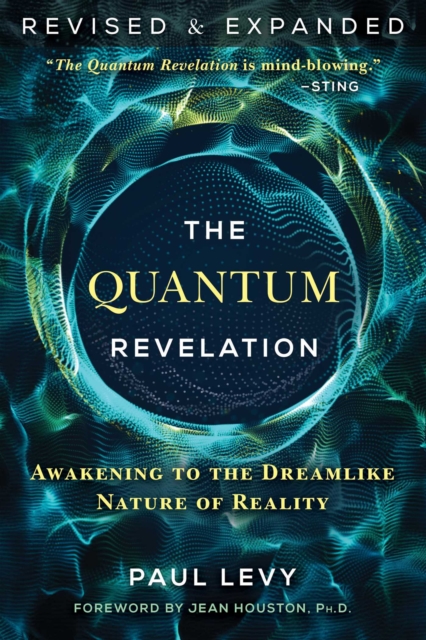
Shows how the revelations emerging from quantum physics can wake us up from the disempowering spell of the scientific materialist worldview and help dispel the collective madness that has befallen our species Explains for readers with no physics background why quantum physics is, in the words of Albert Einstein, so uncommonly important that it should be everyones concern Shows how quantum physics can help us awaken to the malleable, dreamlike nature of reality, a realization that unlocks the creative spirit within usExplaining the world-transforming effects of quantum physics, Paul Levy shows how discoveries in this fieldwidely considered the greatest in the history of sciencecan wake us up from the disempowering spell of the reductionist, materialist worldview, thereby helping to dispel the collective madness that has befallen our species.
In the section on laws of nature, Psillos considers both the regularity view of laws and laws as relations among universals as well as alternative approaches to laws.
Paul O'Grady clearly distinguishes five main kinds: relativism about truth, relativism about logic, ontological relativism, epistemological relativism, and, finally, relativism about rationality.
Universals begins with a taxonomy of extreme nominalist, moderate nominalist, and realist positions on properties, outlining the way each handles the phenomena of predication, resemblance, and abstract reference.
The rule-following debate, in its concern with the metaphysics and epistemology of linguistic meaning and mental content, goes to the heart of the most fundamental questions of contemporary philosophy of mind and language.
The book includes chapters on forms of natural realism, theories of perceptual experience, representationalism, the argument from illusion, phenomenological senses, types of perceptual content, the representationalist/intentionalist thesis, and adverbialist accounts of perceptual experience.
In the first part of the book, Dale Jacquette explores questions of pure philosophical ontology: what is meant by the concept of being, why does something exist rather than nothing, and why there is only one logically contingent actual world.
The idea of a possible world that differs in some way from our "e;actual"e; world - a world where, for example, the grass is red or no people exist - can help us analyse and understand a wide range of philosophical concepts, such as counterfactuals, properties, modality, and the notions of possibility and necessity.
The intellectual trends Good discusses include what he calls the New Sectarianism, which rejects individuality in favour of collective identities based on race, gender, and sexual preference; Presentism, which rejects the notion of history as a continuous narrative in favour of seeing the past as interpretable in any way that suits the political interests of the present; and a "e;hermeneutic of suspicion,"e; in which literary texts are seen as masks for discreditable political motives.
Starting with Frege's foundational theories of sense and reference, Miller provides an introduction to the formal logic used in all subsequent philosophy of language.
The first is that a miracle, understood as an event produced by a transcendent agent overriding the usual course of nature, involves a violation of the laws of nature.
The Distant Relation breaks down the artificial division between philosophy and literature by weaving contemporary philosophic arguments through close readings of Carpentier, Rulfo, Paz, and Garcia Marquez.
What becomes of the sublime today, in a philosophy that discards the old oppositions between body and mind and embeds human reason in the creative evolution of life?
In Philosophical Essays concerning Human Families, Stanley Vodraska describes a principle of moral practice that he calls "e;the principle of familial preference.
This original book enters the undeveloped territory of feminist metaphysics and offers a bold and unusual contribution to debates about identity, essence and self.
The world is populated with many different objects, to which we often attribute properties: we say, for example, that grass is green, that the earth is spherical, that humans are animals, and that murder is wrong.
In this engaging and wide-ranging new book, Nikk Effingham provides an introduction to contemporary ontology - the study of what exists - and its importance for philosophy today.
A bold reevaluation of Spinoza that reveals his powerful, inclusive vision of religion for the modern ageSpinoza is widely regarded as either a God-forsaking atheist or a God-intoxicated pantheist, but Clare Carlisle says that he was neither.
The philosophical theory of scientific explanation proposed here involves a radically new treatment of causality that accords with the pervasively statistical character of contemporary science.
When we read that scientists have come close to pinpointing the "e;origin of the universe"e; by means of a Big Bang cosmology, or are engaged in formulating a "e;theory of everything,"e; as in current ten-dimensional superstring theories of particle physics, can we doubt that such inquiries or their results inevitably raise important philosophical questions?
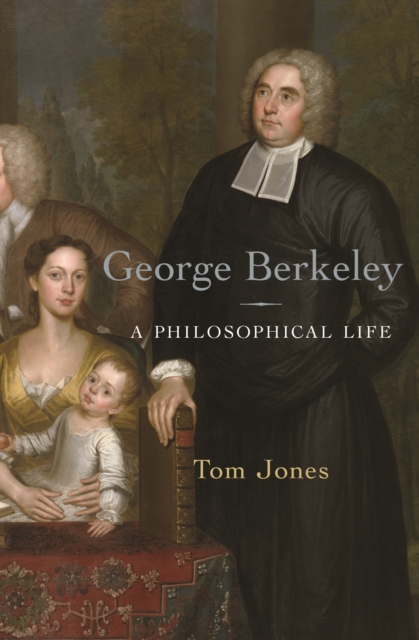
A comprehensive intellectual biography of the Enlightenment philosopherIn George Berkeley: A Philosophical Life, Tom Jones provides a comprehensive account of the life and work of the preeminent Irish philosopher of the Enlightenment.
From Pulitzer Prize-finalist Steven Nadler, an engaging guide to what Spinoza can teach us about life's big questionsIn 1656, after being excommunicated from Amsterdam's Portuguese-Jewish community for "e;abominable heresies"e; and "e;monstrous deeds,"e; the young Baruch Spinoza abandoned his family's import business to dedicate his life to philosophy.
Hailed by the Washington Post as "e;a sure-footed and witty guide to slippery ethical terrain,"e; a philosophical exploration of AI and the future of the mind that Astronomer Royal Martin Rees calls "e;profound and entertaining"e;Humans may not be Earth's most intelligent beings for much longer: the world champions of chess, Go, and Jeopardy!
A new way of understanding the essence of moral obligationThe Moral Nexus develops and defends a new interpretation of moralitynamely, as a set of requirements that connect agents normatively to other persons in a nexus of moral relations.