Jean Grondin completes the first history of metaphysics and respects both the analytical and the Continental schools while transcending the theoretical limitations of each.
Michael Dummett's three John Dewey Lectures-"e;The Concept of Truth,"e; "e;Statements About the Past,"e; and "e;The Metaphysics of Time"e;-were delivered at Columbia University in the spring of 2002.
This book finds Heidegger's Aristotle interpretation integral to his idea of leading metaphysics back to its own presuppositions, and his reflection on art as necessitating a revision of this interpretation.
This book pushes nihilism to its ultimate conclusion by linking revisionary naturalism in Anglo-American philosophy with anti-phenomenological realism in French philosophy.
This first comparative study of the philosophers and literary critics, Walter Benjamin and Mikhail Bakhtin, focuses on the two thinkers' conceptions of experience and form, investigating parallels between Bakhtin's theories of responsibility, dialogue, and the novel, and Benjamin's theories of translation, montage, allegory, and the aura.
Engaging with current research in the philosophy of emotions, both analytic and continental, the author argues that reductionist accounts of emotions leave us in a state of poverty regarding our understanding of our world and of ourselves.
These previously unpublished essays present the newest developments in the thought of philosophers working on action and its explanation, focusing on a wide range of interlocking issues relating to agency, deliberation, motivation, mental causation, teleology, interpretive explanation and the ontology of actions and their reasons.
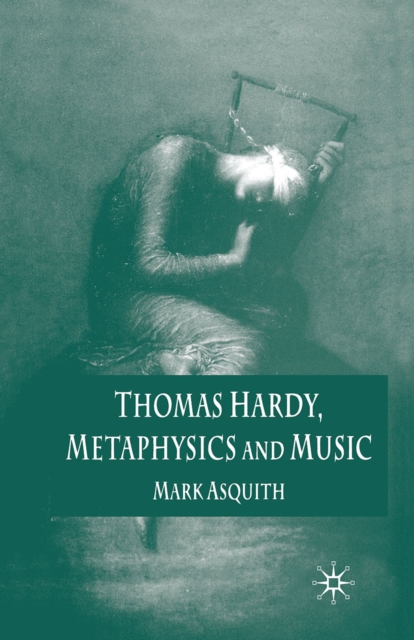
This fascinating new study by Mark Asquith offers an original approach to Hardy's art as a novelist and entirely new readings of certain musical scenes in Hardy's works.
This provocative and critical work addresses the question of why scientific realists and positivists consider experimental physics to be a natural and empirical science.
Laplace (1849-1827) was the famous French astronomer and mathematician who outspokenly proposed that every occurrence is in every respect determined by laws of nature - that all that exists is determinate.
Reading Mill begins with the idea that political theory, as it is understood and practised in Anglophone Universities, is not one practice but a set of four alternative practices marked by divergent ontologies and epistemologies.
Responding to growing interest in the Kantian tradition and in issues concerning space and time, this volume offers an insightful and original contribution to the literature by bringing together analytical and phenomenological approaches in a productive exchange on topical issues such as action, perception, the body, and cognition and its limits.
The first book in English to offer a systematic survey of Bolzano's philosophical logic and theory of knowledge, it offers a reconstruction of Bolzano's views on a series of key issues: the analysis of meaning, generality, analyticity, logical consequence, mathematical demonstration and knowledge by virtue of meaning.
The first book-length study of metaphysical nihilism: an analytical treatment of one of the most intriguing and fundamental questions in contemporary analytic metaphysics: Could there have been nothing at all?
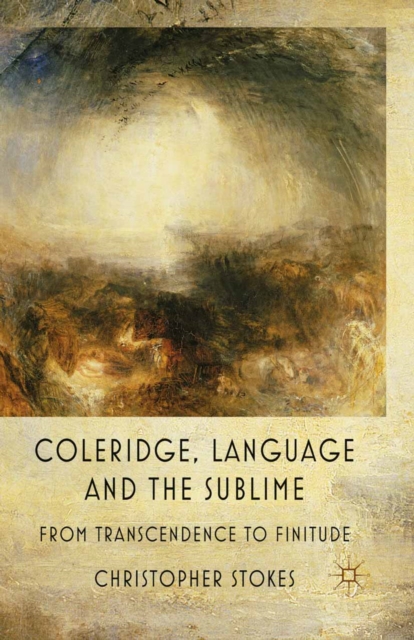
Traversing the themes of language, terror and representation, this is the first study to engage Coleridge through the sublime, showing him to have a compelling position in an ongoing conversation about finitude.
Early Modern Metaphysical Literature illuminates now-obscured aspects of cultural negotiation and denaturalization germane to numerous Metaphysical texts.
Featuring contributions by leading academics this collection is a companion to one of the most intricate of Deleuze's philosophical texts, articulating Leibnizian thought within the context of Baroque expressionism, characterized by its interdisciplinary approach to philosophy.
Duncan Pritchard offers students not only a new exploration of topics central to current epistemological debate, but also a new way of doing epistemology.
Introduces the reader to Whitehead's complex and often misunderstood metaphysics by showing that it deals with questions about the nature of causation originally raised by the philosophy of Leibniz.
In this sequel to the highly acclaimed Scientific Realism: How Science Tracks Truth , Psillos discusses recent developments in scientific realism and explores realist theses and commitments.
Engages with one of the oldest philosophical problems-the relationship between thought and being-and offers a fresh perspective with which to approach the long history of this puzzle.
"e;[An] important essay by a philosopher who more convincingly than any other I can think of demonstrates the continuing significance of his vocation in the life of our culture.
Sir Peter Strawson (1919-2006) was one of the leading British philosophers of his generation and an influential figure in a golden age for British philosophy between 1950 and 1970.