Suppose you knew that, though you yourself would live your life to its natural end, the earth and all its inhabitants would be destroyed thirty days after your death.
Suppose you knew that, though you yourself would live your life to its natural end, the earth and all its inhabitants would be destroyed thirty days after your death.
Adrian Bardon's A Brief History of the Philosophy of Time is a short introduction to the history, philosophy, and science of the study of time-from the pre-Socratic philosophers through Einstein and beyond.
Adrian Bardon's A Brief History of the Philosophy of Time is a short introduction to the history, philosophy, and science of the study of time-from the pre-Socratic philosophers through Einstein and beyond.
The relative merits and demerits of historically prominent views about truth, such as the correspondence theory, coherentism, pragmatism, verificationism, and instrumentalism have been subject to much attention, and have fueled the long-lived debate over which of these views is the most plausible.
This book is the first comprehensive attempt to solve what Hartry Field has called "e;the central problem in the metaphysics of causation"e;: the problem of reconciling the need for causal notions in the special sciences with the limited role of causation in physics.
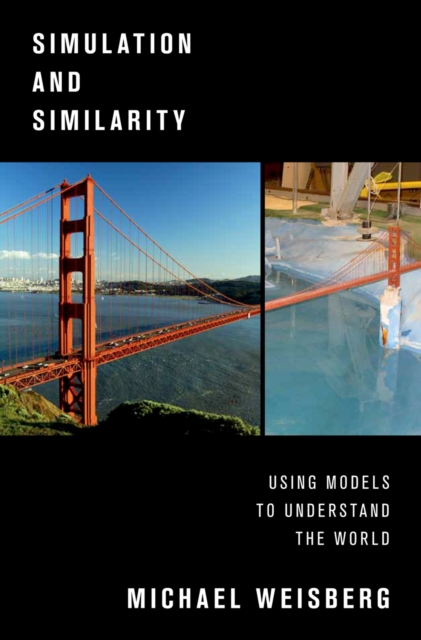
Simulation and Similarity is an account of modeling and idealization in modern scientific practice, focusing on concrete, mathematical, and computational models.
Since the middle of the twentieth century, virtue ethics has enriched the range of philosophical approaches to normative ethics, often drawing on the work of the ancient Greeks, who offered accounts of the virtues that have become part of contemporary philosophical ethics.
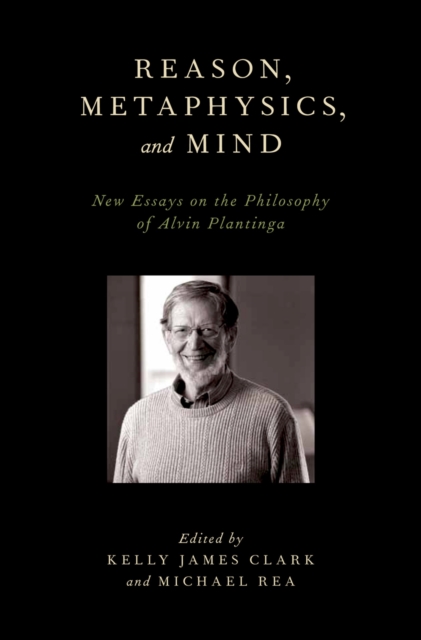
In May 2010, philosophers, family and friends gathered at the University of Notre Dame to celebrate the career and retirement of Alvin Plantinga, widely recognized as one of the world's leading figures in metaphysics, epistemology, and the philosophy of religion.
A venerable tradition in the metaphysics of science commends ontological reduction: the practice of analysis of theoretical entities into further and further proper parts, with the understanding that the original entity is nothing but the sum of these.
An entertaining history of the idea of nothing - including absences, omissions, and shadows - from the Ancient Greeks through the 20th centuryHow can nothing cause something?
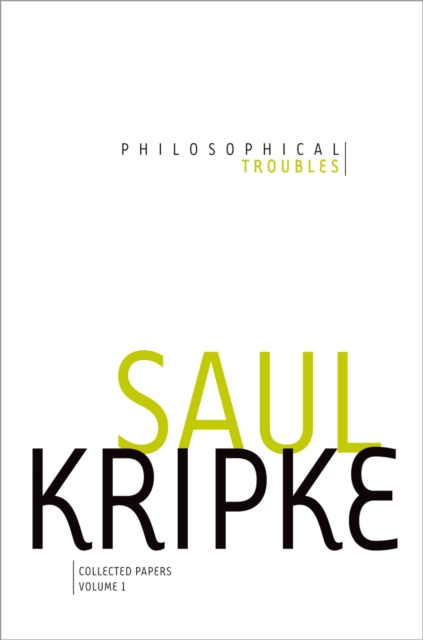
This important new book is the first of a series of volumes collecting the essential articles by the eminent and highly influential philosopher Saul A.
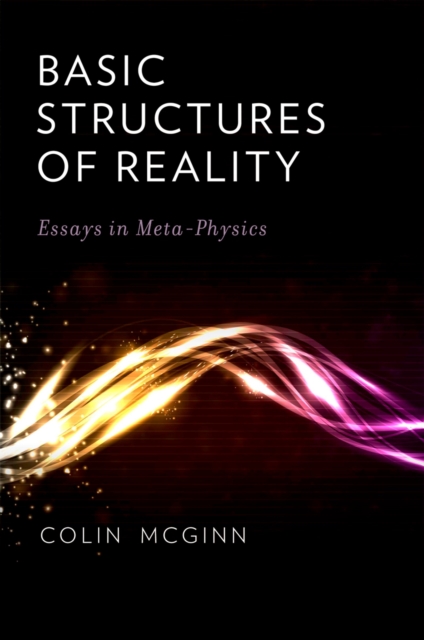
In Basic Structures of Reality, Colin McGinn deals with questions of metaphysics, epistemology, and philosophy of mind from the vantage point of physics.
This edited volume is a comprehensive presentation of views on the relations between metaphysics and logic from Aristotle through twentieth century philosophers who contributed to the return of metaphysics in the analytic tradition.
Gerd Gigerenzer's influential work examines the rationality of individuals not from the perspective of logic or probability, but from the point of view of adaptation to the real world of human behavior and interaction with the environment.
Ordinary language and scientific language enable us to speak about, in a singular way (using demonstratives and names), what we recognize not to exist: fictions, the contents of our hallucinations, abstract objects, and various idealized but nonexistent objects that our scientific theories are often couched in terms of.
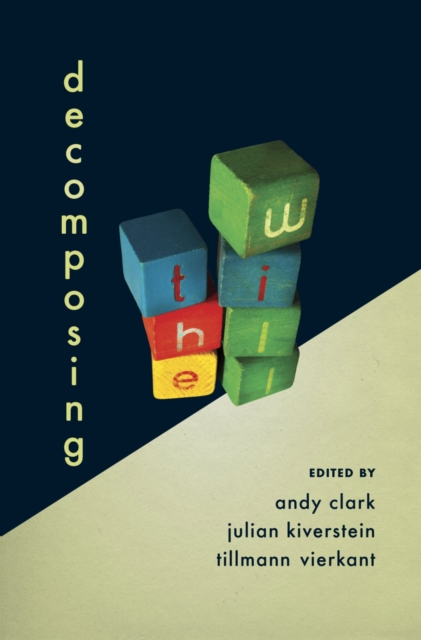
Each of the following claims has been defended in the scientific literature on free will and consciousness: your brain routinely decides what you will do before you become conscious of its decision; there is only a 100 millisecond window of opportunity for free will, and all it can do is veto conscious decisions, intentions, or urges; intentions never play a role in producing corresponding actions; and free will is an illusion.
Arguments that ordinary inanimate objects such as tables and chairs, sticks and stones, simply do not exist have become increasingly common and increasingly prominent.
From the time of Locke, discussions of personal identity have often ignored the question of our basic metaphysical nature: whether we human people are biological organisms, spatial or temporal parts of organisms, bundles of perceptions, or what have you.
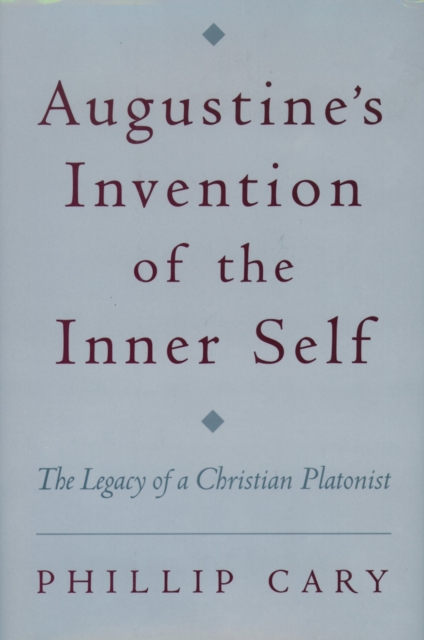
In this book, Phillip Cary argues that Augustine invented the concept of the self as a private inner space-a space into which one can enter and in which one can find God.
There is growing evidence from the science of human behavior that our everyday, folk understanding of ourselves as conscious, rational, responsible agents may be radically mistaken.
This important new book is the first of a series of volumes collecting the essential articles by the eminent and highly influential philosopher Saul A.
According to the libertarian position on free will, people sometimes exercise free will, but this freedom is incompatible with the truth of causal determinism.