Atheists are frequently demonized as arrogant intellectuals, antagonistic to religion, devoid of moral sentiments, advocates of an "e;anything goes"e; lifestyle.
There are many insightful discussions of Hegel's practical philosophy that emphasize the uniqueness of his expressivist and social theory of agency, but few recognize that these two aspects of Hegel's theory of the will are insufficient to avoid the traditional problem of free will.
In recent decades, memory has become one of the major concepts and a dominant topic in philosophy, sociology, politics, history, science, cultural studies, literary theory, and the discussions of trauma and the Holocaust.
Eli Hirsch has contributed steadily to metaphysics since his ground-breaking (and much cited) work on identity through time (culminating in the 1982 OUP book The Concept of Identity).
Ordinary language and scientific language enable us to speak about, in a singular way (using demonstratives and names), what we recognize not to exist: fictions, the contents of our hallucinations, abstract objects, and various idealized but nonexistent objects that our scientific theories are often couched in terms of.
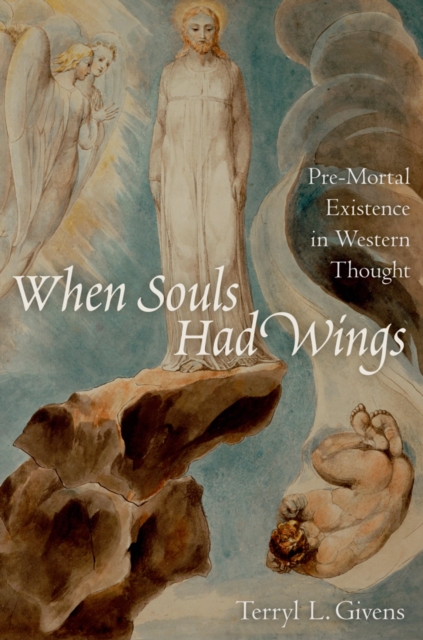
The idea of the pre-existence of the soul has been extremely important, widespread, and persistent throughout Western history--from even before the philosophy of Plato to the poetry of Robert Frost.
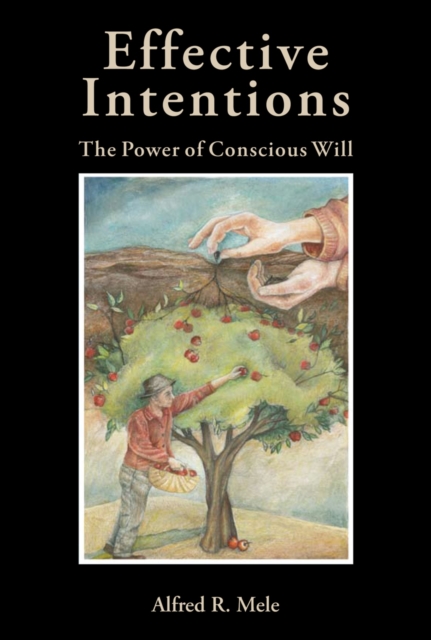
Each of the following claims has been defended in the scientific literature on free will and consciousness: your brain routinely decides what you will do before you become conscious of its decision; there is only a 100 millisecond window of opportunity for free will, and all it can do is veto conscious decisions, intentions, or urges; intentions never play a role in producing corresponding actions; and free will is an illusion.
Since the late 1970's, the main research program for understanding intentionalitya "e;the mind's ability to direct itself onto the worlda "e;has been based on the attempt naturalize intentionality, in the sense of making it intelligible how intentionality can occur in a perfectly natural, indeed entirely physical, world.
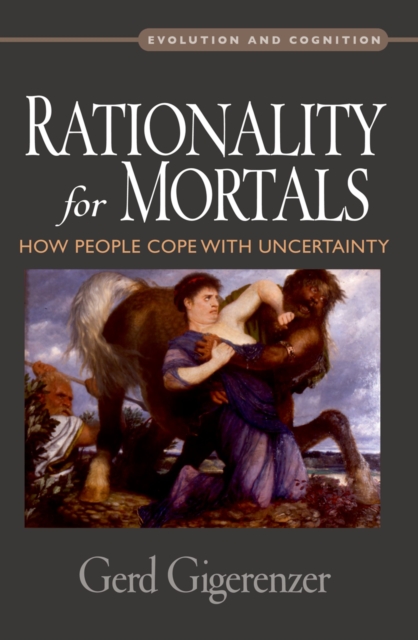
Gerd Gigerenzer's influential work examines the rationality of individuals not from the perspective of logic or probability, but from the point of view of adaptation to the real world of human behavior and interaction with the environment.
Using the tools of contemporary analytic philosophy, Georges Dicker here examines both the destructive and the constructive sides of Berkeley's thought, against the background of the mainstream views that he rejected.
Attempts to understand various aspects of the empirical world often rely on modelling processes that involve a reconstruction of systems under investigation.
This book reconstructs Spinoza's theory of the human mind against the backdrop of the twofold notion that subjective experience is explainable and that its successful explanation is of ethical relevance, because it makes us wiser, freer, and happier.
In nine new essays, distinguished philosophers of science take on outstanding philosophical issues that arise in the exploration of the foundations of contemporary, especially physical scientific theories.
Peter Unger's provocative new book poses a serious challenge to contemporary analytic philosophy, arguing that to its detriment it focuses the predominance of its energy on "e;empty ideas.
Peter Unger's provocative new book poses a serious challenge to contemporary analytic philosophy, arguing that to its detriment it focuses the predominance of its energy on "e;empty ideas.
In a 2005 editorial in the British newspaper The Guardian, Kant was declared "e;the undefeated heavyweight philosophy champion of the world"e; because he had the "e;insight .
This volume is focused on understanding a key idea in modern semantics-direct reference-and its integration into a general semantics for natural language.
This book is a systematic study of Descartes' theory of causation and its relation to the medieval and early modern scholastic philosophy that provides its proper historical context.