Arguments that ordinary inanimate objects such as tables and chairs, sticks and stones, simply do not exist have become increasingly common and increasingly prominent.
George Berkeley notoriously claimed that his immaterialist metaphysics was not only consistent with common sense but that it was also integral to its defense.
Wayne Waxman here presents an ambitious and comprehensive attempt to link the philosophers of what are known as the British Empiricists--Locke, Berkeley, and Hume--to the philosophy of German philosopher Immanuel Kant.
From the time of Locke, discussions of personal identity have often ignored the question of our basic metaphysical nature: whether we human people are biological organisms, spatial or temporal parts of organisms, bundles of perceptions, or what have you.
Atheists are frequently demonized as arrogant intellectuals, antagonistic to religion, devoid of moral sentiments, advocates of an "e;anything goes"e; lifestyle.
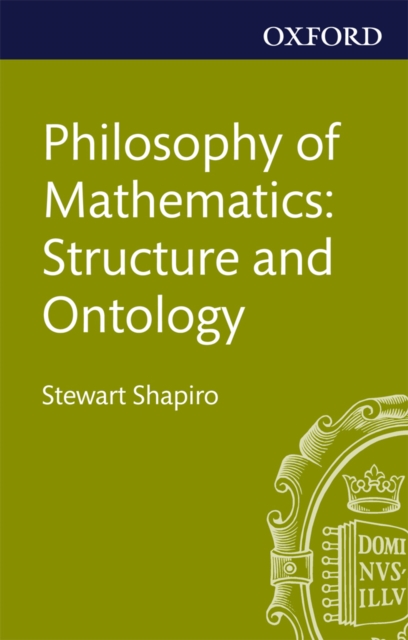
If we must take mathematical statements to be true, must we also believe in the existence of abstracta eternal invisible mathematical objects accessible only by the power of pure thought?
The revival of Leibniz studies in the past twenty-five years has cast important new light on both the context and content of Leibniz's philosophical thought.
The work of Thomas Aquinas has always enjoyed a privileged position as a pillar of Catholic theology, but for centuries his standing among western philosophers was less sure.
This provocative book refurbishes the traditional account of freedom of will as reasons-guided "e;agent"e; causation, situating its account within a general metaphysics.
This intellectual biography of Immanuel Kant's early years-- from 1746 when he wrote his first book, to 1766 when he lost his faith in metaphysics --makes an outstanding contribution to Kant scholarship.
In this book, Phillip Cary argues that Augustine invented the concept of the self as a private inner space-a space into which one can enter and in which one can find God.
During the past two decades, debates over the viability of commonsense psychology have occupied center stage in both cognitive science and the philosophy of mind.
This collection presents some of the most vital and original recent writings on Descartes, Spinoza, and Leibniz, the three greatest rationalists of the early modern period.
Bold and pioneering, this book makes a detailed historical and systematic case that Descartes's theory of knowledge is an elegant and powerful combination of a priori, naturalistic, and dialectical elements meriting serious consideration by both contemporary analytic philosophers and postmodern thinkers.
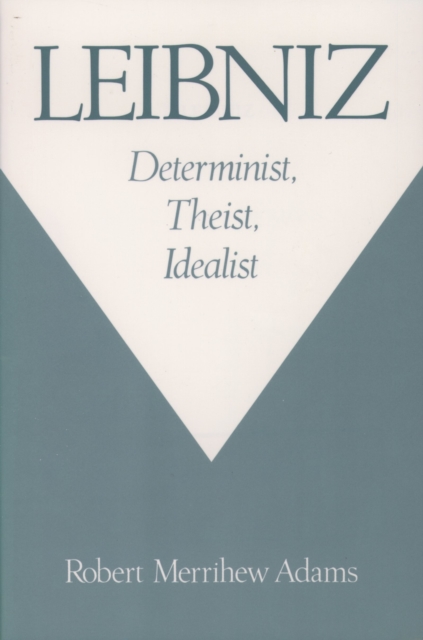
Legendary since his own time as a universal genius, Gottfried Wilhelm Leibniz (1646-1716) contributed significantly to almost every branch of learning, from mathematics to ecumenical theology.
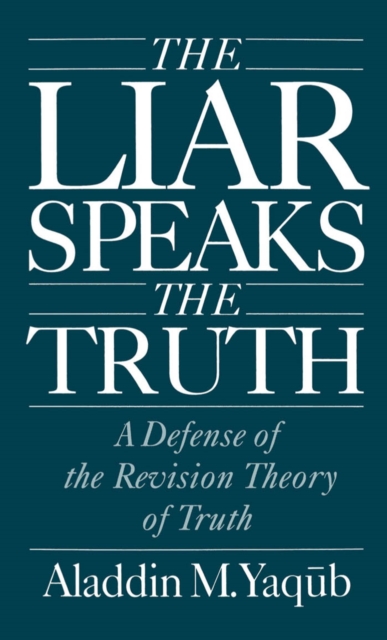
In this book, YaqA b describes a simple conception of truth and shows that it yields a semantical theory that accommodates the whole range of our seemingly conflicting intuitions about truth.
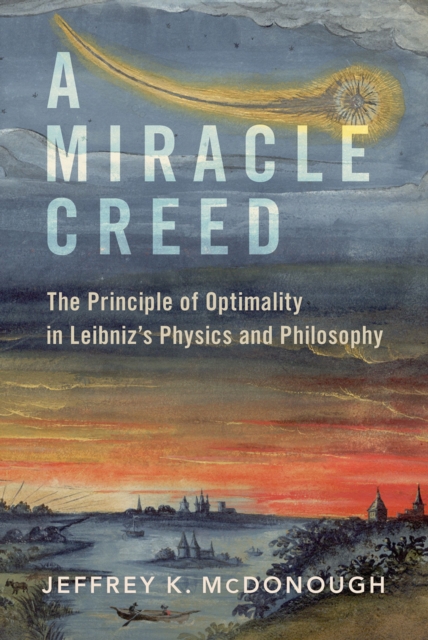
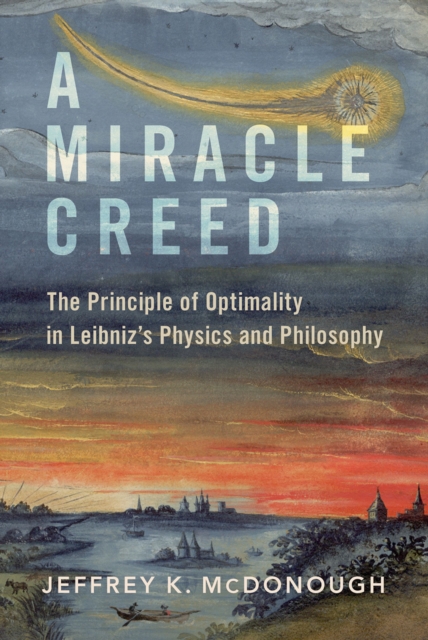
A rival to Isaac Newton in mathematics and physics, Gottfried Wilhelm Leibniz believed that our world--the best of all possible worlds--must be governed by a principle of optimality.
A rival to Isaac Newton in mathematics and physics, Gottfried Wilhelm Leibniz believed that our world--the best of all possible worlds--must be governed by a principle of optimality.
Are human beings purely material creatures, or is there something else to them, an immaterial part that does some (or all) of the thinking, and might even be able to outlive the death of the body?
Are human beings purely material creatures, or is there something else to them, an immaterial part that does some (or all) of the thinking, and might even be able to outlive the death of the body?
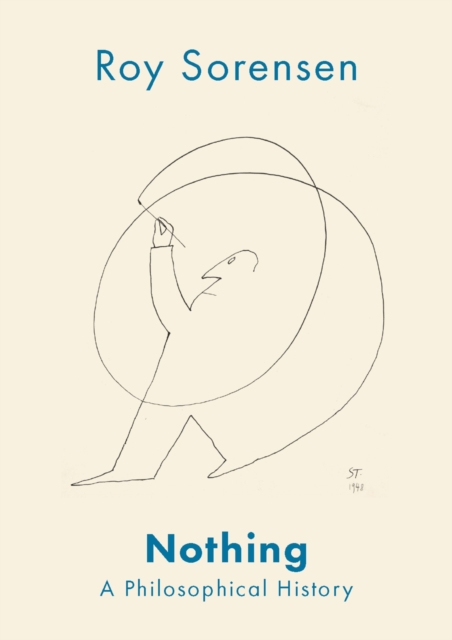
An entertaining history of the idea of nothing - including absences, omissions, and shadows - from the Ancient Greeks through the 20th centuryHow can nothing cause something?
This book investigates the thought of two of the most influential philosophers of antiquity, Plato and his predecessor Anaxagoras, with respect to their metaphysical accounts of objects and their properties.
This book investigates the thought of two of the most influential philosophers of antiquity, Plato and his predecessor Anaxagoras, with respect to their metaphysical accounts of objects and their properties.
In this collection of new and previously published essays, noted philosopher Eric Schliesser offers new interpretations of the signifance of Isaac Newton's metaphysics on his physics and the subsequent development of philosophy more broadly.
In this collection of new and previously published essays, noted philosopher Eric Schliesser offers new interpretations of the signifance of Isaac Newton's metaphysics on his physics and the subsequent development of philosophy more broadly.