The central question in this book is why it seems reasonable for the words of our language to divide up the world in ordinary ways rather than other imaginable ways.
The traditional disputants in the free will discussion--the libertarian, soft determinist, and hard determinist--agree that free will is a coherent concept, while disagreeing on how the concept might be satisfied and whether it can, in fact, be satisfied.
From the days of discovery, when America was for Europeans more dream than reality, to our own days of disillusionment and faltering hope, poets, philosophers, historians, novelists, and theologians have drawn on religious themes and motifs to express the meaning of their encounter with America.
In this comprehensive study of Wittgenstein's modal theorizing, Bradley offers a radical reinterpretation of Wittgenstein's early thought and presents both an interpretive and a philosophical thesis.
This volume collects some influential essays in which Simon Blackburn, one of our leading philosophers, explores one of the most profound and fertile of philosophical problems: the way in which our judgments relate to the world.
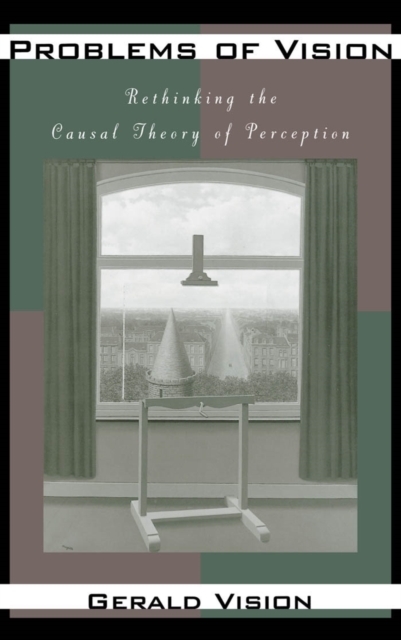
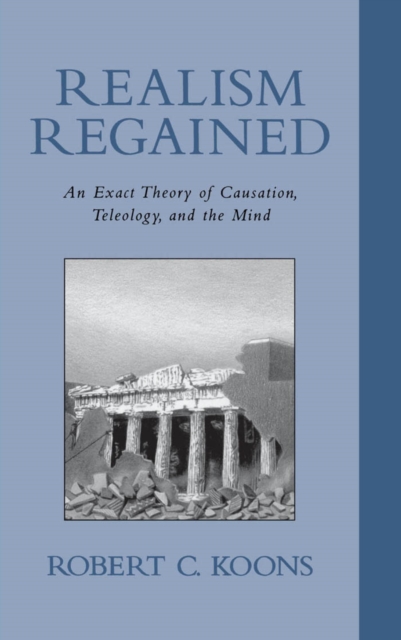
In this book Gerald Vision argues for a new causal theory, one that engages provocatively with direct realism and makes no use of a now discredited subjectivism.
This original analysis examines the three leading traditional solutions to the dilemma of divine foreknowledge and human free will--those arising from Boethius, from Ockham, and from Molina.
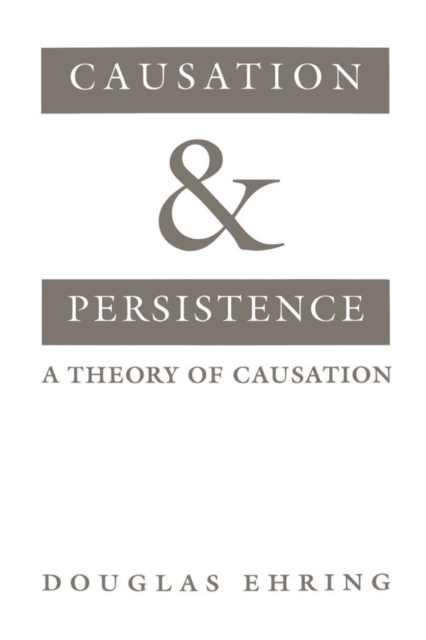
Ehring shows the inadequacy of received theories of causation, and, introducing conceptual devices of his own, provides a wholly new account of causation as the persistence over time of individual properties, or "e;tropes.
The correspondence between Leibniz and Samuel Clarke was the most influential philosophical exchange of the eighteenth century, and indeed one of the most significant such exchanges in the history of philosophy.
This book explores a central question of moral philosophy, addressing whether we are morally responsible for certain kinds of actions, intentional omissions, and the consequences deriving therefrom.
Since the beginning of philosophy, philosophers have sought objective knowledge: knowledge of things whose existence does not depend on one's conceiving of them.
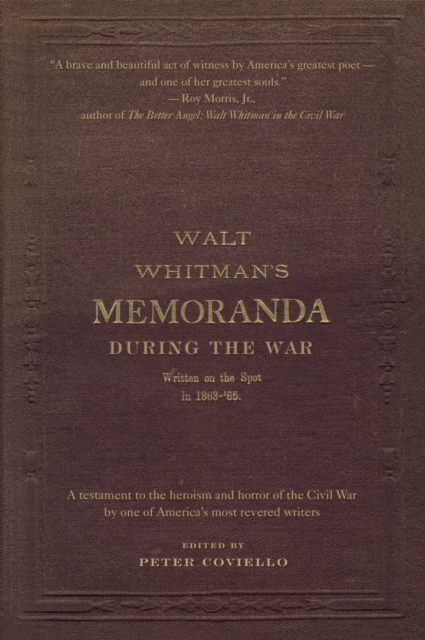
In December of 1862, having read his brother's name in a casualty list, Walt Whitman rushed from Brooklyn to the war front, where he found his brother wounded but recovering.
This rigorous examination of Kant's Critique of Pure Reason provides a comprehensive analysis of the major metaphysical and epistemological questions of Kant's most famous work.
The doctrine of hell presents the most intractable version of the problem of evil, for though it might be argued that ordinary pain and evil can somehow be compensated for by the course of future experience, the pain and suffering of hell leads nowhere.
Oxford Studies in Philosophy of Mind presents cutting-edge work in the philosophy of mind, combining invited articles and articles selected from submissions.
Oxford Studies in Philosophy of Mind presents cutting-edge work in the philosophy of mind, combining invited articles and articles selected from submissions.
Oxford Studies in Agency and Responsibility is a series of volumes presenting outstanding new work on a set of connected themes, investigating such questions as:A* What does it mean to be an agent?
Oxford Studies in Agency and Responsibility is a series of volumes presenting outstanding new work on a set of connected themes, investigating such questions as:A* What does it mean to be an agent?
In this book, Arthur gives fresh interpretations of Gottfried Leibniz's theories of time, space, and the relativity of motion, based on a thorough examination of Leibniz's manuscripts as well as his published papers.
In this book, Arthur gives fresh interpretations of Gottfried Leibniz's theories of time, space, and the relativity of motion, based on a thorough examination of Leibniz's manuscripts as well as his published papers.