This book uses mathematical models of language to explain why there are certain gaps in language: things that we might expect to be able to say but can't.
At the heart of Immanuel Kant's critical philosophy is an epistemological and metaphysical position he calls transcendental idealism; the aim of this book is to understand this position.
At the heart of Immanuel Kant's critical philosophy is an epistemological and metaphysical position he calls transcendental idealism; the aim of this book is to understand this position.
Oxford Studies in Agency and Responsibility is a series of volumes presenting outstanding new work on a set of connected themes, investigating such questions as: What does it mean to be an agent?
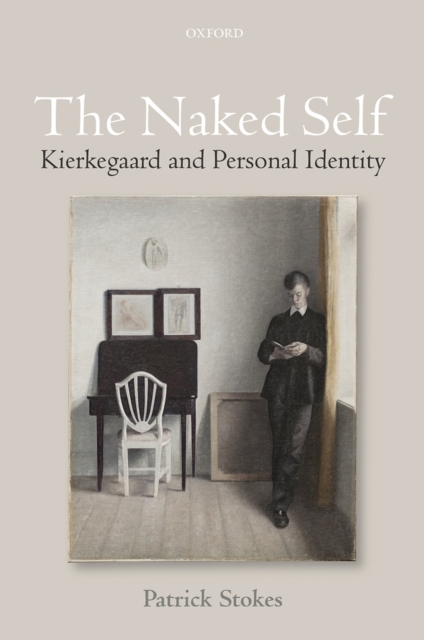
Across his relatively short and eccentric authorial career, Soren Kierkegaard develops a unique, and provocative, account of what it is to become, to be, and to lose a self, backed up by a rich phenomenology of self-experience.
Since the ground-breaking work of Saul Kripke, David Lewis, and others in the 1960s and 70s, one dominant interest of analytic philosophers has been in modal truths, which concerns the questions of what is possible and what is necessary.
Chance and Temporal Asymmetry presents a collection of cutting-edge research papers in the metaphysics of science, tackling the perplexing philosophical problems raised by recent progress in the physics and metaphysics of chance and time.
In recent years philosophers have produced important books on nearly all the major arts: the novel and painting, music and theatre, dance and architecture, conceptual art and even gardening.