When we read that scientists have come close to pinpointing the "e;origin of the universe"e; by means of a Big Bang cosmology, or are engaged in formulating a "e;theory of everything,"e; as in current ten-dimensional superstring theories of particle physics, can we doubt that such inquiries or their results inevitably raise important philosophical questions?
A bold reevaluation of Spinoza that reveals his powerful, inclusive vision of religion for the modern ageSpinoza is widely regarded as either a God-forsaking atheist or a God-intoxicated pantheist, but Clare Carlisle says that he was neither.
Presenting the first comprehensive, in-depth study of hyperintensionality, this book equips readers with the basic tools needed to appreciate some of current and future debates in the philosophy of language, semantics, and metaphysics.
Dieses Buch bietet erstmals den Versuch, die digitale Technologie, das Internet und die digitale Kommunikation umfassender zu verstehen und in einem größeren interdisziplinären Kontext zu interpretieren.
This book offers a comprehensive critique of the Kantian principle that 'objects conform to our cognition' from the perspective of a Copernican world-view which stands diametrically opposed to Kant's because founded on the principle that our cognition conforms to objects.
This volume offers an introduction to consciousness research within philosophy, psychology and neuroscience, from a philosophical perspective and with an emphasis on the history of ideas and core concepts.
Mit der rekonstruierenden Textanalyse der Preisschrift über die Fortschritte der Metaphysik (1804) und der drei Kritiken hat der Autor den Begriff der „eigentlichen Metaphysik“ Kants zum Inhalt.
This book offers a new and original hypothesis on the origin of modal ontology, whose roots can be traced back to the mathematical debate about incommensurable magnitudes, which forms the implicit background for Plato's later dialogues and culminates in the definition of being as dynamis in the Sophist.
This collection of original essays brings together a world-class lineup of philosophers to provide the most comprehensive critical treatment of Ted Honderich's philosophy, focusing on three major areas of his work: (1) his theory of consciousness; (2) his extensive and ground-breaking work on determinism and freedom; and (3) his views on right and wrong, including his Principle of Humanity and his judgments on terrorism.
This book brings together the debate concerning personal identity (in metaphysics) and central topics in biomedical ethics (conception of birth and death; autonomy, living wills and paternalism).
This profound exploration of one of the core notions of philosophy-the concept of existence itself-reviews, then counters (via Meinongian theory), the mainstream philosophical view running from Hume to Frege, Russell, and Quine, summarized thus by Kant: "e;Existence is not a predicate.
This book presents a chronology of thirty definitions attributed to the word, term, phrase, and concept of "e;documentary"e; between the years 1895 and 1959.
Against the backdrop of a historical debate between science and philosophy with regard to the nature of time, this book argues that our commonsense understanding of time is inadequate-especially for education.
This book presents the history of metaphysics through transcendental phenomenology and interpretations of Kant, Fichte, Cohen, Windelband, Rickert, Husserl, Scheler, and Heidegger.
This engaging volume sheds light on the central role the turn to the body plays in the philosophies of Spinoza and Nietzsche, providing an ideal starting point for understanding their work.
'Informative, accessible, and fun to read- this is an excellent reference guide for undergraduates and anyone wanting an introduction to the fundamental issues of metaphysics.
Critically evaluating and synthesizing all the previous research on the phenomenology of Czech philosopher Jan Patocka, the book brings a new voice into contemporary philosophical discussions.
This book argues that Kant develops a theory of perception in the Critique of Judgment from which one can redefine his entire project, viewing and using aesthetics as its backbone, from the transcendental aesthetic of the First Critique to the Critique of Taste in the Third.
"e;[An] important essay by a philosopher who more convincingly than any other I can think of demonstrates the continuing significance of his vocation in the life of our culture.
Engages with one of the oldest philosophical problems-the relationship between thought and being-and offers a fresh perspective with which to approach the long history of this puzzle.
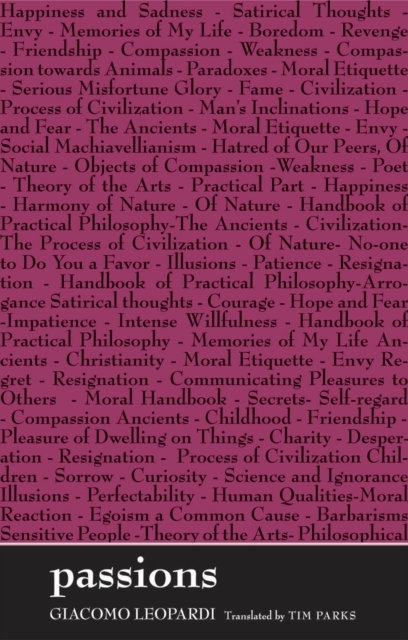
Selections from Leopardi’s prose masterwork, Zibaldone, one of the great intellectual diaries in European literature, expertly translated by Tim ParksRevenge—Revenge is so sweet one often wishes to be insulted so as to be able to take revenge, and I don’t mean just by an old enemy, but anyone, or even (especially when in a really bad mood) by a friend.
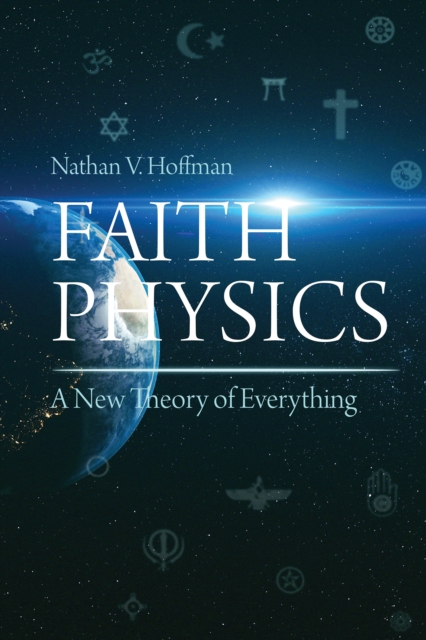
Faith Physics is a new Theory of Everything (ToE) combining ancient spiritual wisdom and modern quantum physics findings to deliver a belief system that is both intellectually sound and spiritually satisfying.
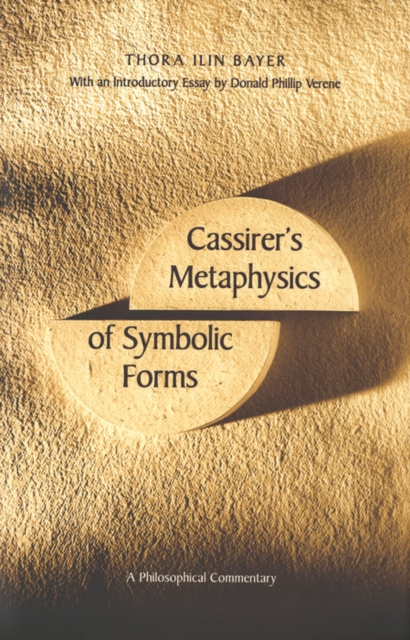
This book—the first commentary on Ernst Cassirer’s Metaphysics of Symbolic Forms—provides an introduction to the metaphysical views that underlie the philosopher’s conceptions of symbolic form and human culture.
This book critically assesses arguments for the existence of the God of classical theism, develops an innovative account of objects' persistence, and defends new arguments against classical theism.