Available here for the first time in English, "e;Reality and Its Order"e; is a remarkable philosophical text by Werner Heisenberg, the father of quantum mechanics and one of the leading scientists of the 20th century.
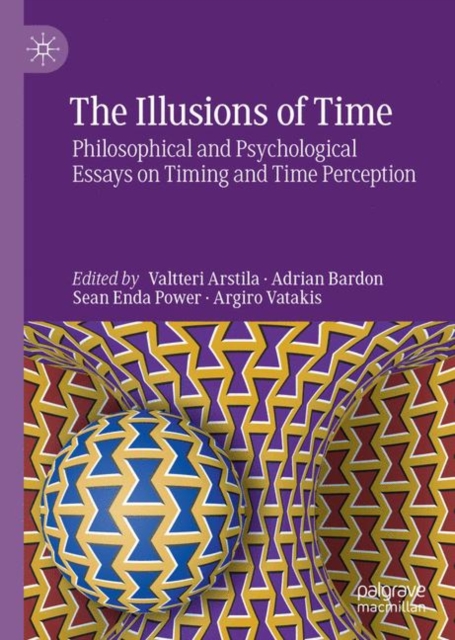
Against the backdrop of a historical debate between science and philosophy with regard to the nature of time, this book argues that our commonsense understanding of time is inadequate-especially for education.
Building from foundations of modern science and cosmic evolution, as well as psychological and philosophical perspectives of value and meaning, this book explores some of humanity's biggest questions: Is the Universe about something ?
Critically evaluating and synthesizing all the previous research on the phenomenology of Czech philosopher Jan Patocka, the book brings a new voice into contemporary philosophical discussions.
This engaging volume sheds light on the central role the turn to the body plays in the philosophies of Spinoza and Nietzsche, providing an ideal starting point for understanding their work.
This compelling book defends realism concerning the aesthetic-in particular, concerning the aesthetic properties of works of art (including works of literature).
This book offers a solution for the problem of structure and agency in sociological theory by developing a new pair of fundamental concepts: metric and nonmetric.
This book explores how philosophical realisms relate to psychoanalytical conceptions of the Real, and in turn how the Lacanian framework challenges basic philosophical notions of object and reality.
This anthology aims to present the fundamental philosophical issues and tools required by the reflection within and upon geography and Geographic Information Systems (GIS) .
This book explores the themes within, and limits of, a dialogue between Martin Heidegger's philosophy of being and Jacques Lacan's post-Freudian metapsychology.
This book reconstructs the rise and fall of Wilhelm Wundt's fortunes, focusing for the first time on the role of Richard Avenarius as catalyst for the so-called "e;positivist repudiation of Wundt.
This book identifies and expands upon the link between ontology and education, exposing a lack of ontological inquiry as the vital missing element in the study and practice of modern education today.
Dieses eBook: "Die Weisheit des Brahmanen" ist mit einem detaillierten und dynamischen Inhaltsverzeichnis versehen und wurde sorgfältig korrekturgelesen.
In this small book, theoretical physicist Gerard 't Hooft (Nobel prize 1999), philosopher Emanuele Severino (Lincei Academician), and theologian Piero Coda (Pontifical Lateran University) confront one another on a topic that lies at the roots of quantum mechanics and at the origin of Western thought: Determinism and Free Will.
This edited volume brings together contributions from prominent scholars to discuss new approaches to Plato's philosophy, especially in the burgeoning fields of Platonic ontology and psychology.
Presenting the first comprehensive, in-depth study of hyperintensionality, this book equips readers with the basic tools needed to appreciate some of current and future debates in the philosophy of language, semantics, and metaphysics.
This book challenges the widespread assumption that a necessary preliminary to qualitative research is the formulation of ontological and epistemological beliefs.
This anthology aims to present the fundamental philosophical issues and tools required by the reflection within and upon geography and Geographic Information Systems (GIS) .
C'est le XIXe siècle, dans la mesure où il a fait de la mécanique l'archétype des sciences expérimentales, sources de toute action technique efficace, qui a pratiquement identifié « science » et « déterminisme » …
Le principe de causalité se comprend communément comme une relation de cause à effet, qui permet de formuler des explications concernant un phénomène ou un événement.