During the last three decades, there have been enormous advances in our understanding of the neural mechanisms of selective attention at the network as well as the cellular level.
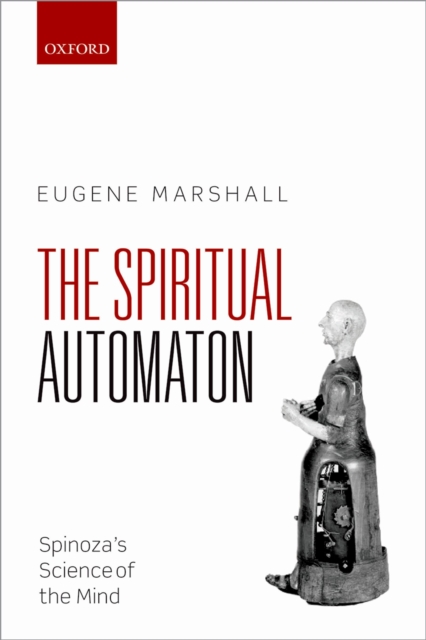
Eugene Marshall presents an original, systematic account of Spinoza's philosophy of mind, in which the mind is presented as an affective mechanism, one that, when rational, behaves as a spiritual automaton.
The analysis of the connections between truth, meaning, thought, and action poses a major philosophical challenge--one that Donald Davidson addressed by establishing a unified theory of language and mind.
In recent decades there has been a shift in focus from psychological and social problems-what might be called the "e;dark side"e; of humanity-to human well-being and flourishing.
Metasemantics comprises new work on the philosophical foundations of linguistic semantics, by a diverse group of established and emerging experts in the philosophy of language, metaphysics, and the theory of content.
Since the 1980s, MRI scanners have told us much about brain function and played an important role in the clinical diagnosis of a number of conditions - both in the brain and the rest of the body.
Many different features of the world figure consciously in our perceptual experiences, in the sense that they make a subjective difference to those experiences.
This handbook provides a critical guide to the most central proposition in modern linguistics: the notion, generally known as Universal Grammar, that a universal set of structural principles underlies the grammatical diversity of the world's languages.
This handbook provides a critical guide to the most central proposition in modern linguistics: the notion, generally known as Universal Grammar, that a universal set of structural principles underlies the grammatical diversity of the world's languages.
Mind, Brain, and Free Will presents a powerful new case for substance dualism (the theory that humans consist of two parts body and soul) and for libertarian free will (that humans have some freedom to choose between alternatives, independently of the causes which influence them).
Since the 1980s, MRI scanners have told us much about brain function and played an important role in the clinical diagnosis of a number of conditions - both in the brain and the rest of the body.
Aristotle is considered by many to be the founder of 'faculty psychology'--the attempt to explain a variety of psychological phenomena by reference to a few inborn capacities.
Paul Horwich develops an interpretation of Ludwig Wittgenstein's later writings that differs in substantial respects from what can already be found in the literature.