A lively and provocative account of Bernard Mandeville and the work that scandalized and appalled his contemporariesand made him one of the most influential thinkers of the eighteenth centuryIn 1714, doctor, philosopher and writer Bernard Mandeville published The Fable of the Bees, a humorous tale in which a prosperous hive full of greedy and licentious bees trade their vices for virtues and immediately fall into economic and societal collapse.
A lively and provocative account of Bernard Mandeville and the work that scandalized and appalled his contemporariesand made him one of the most influential thinkers of the eighteenth centuryIn 1714, doctor, philosopher and writer Bernard Mandeville published The Fable of the Bees, a humorous tale in which a prosperous hive full of greedy and licentious bees trade their vices for virtues and immediately fall into economic and societal collapse.
Invaluable wisdom on living a good life from the founder of modern economicsAdam Smith is best known today as the founder of modern economics, but he was also an uncommonly brilliant philosopher who was especially interested in the perennial question of how to live a good life.
Invaluable wisdom on living a good life from the founder of modern economicsAdam Smith is best known today as the founder of modern economics, but he was also an uncommonly brilliant philosopher who was especially interested in the perennial question of how to live a good life.
If there is only one book about Mohandas Karamchand Gandhi that you need to read today, make ';Gandhian Thought, New World, New Dimensions' by Ravindra Kumar be the book.
From Hannah Arendt, the author of The Origins of Totalitarianism, her influential essay examining the relationship between violence, power, war and politics'Violence can destroy power; it is utterly incapable of creating it'Why has violence played such a significant role in human history?
Deeply interesting a superb critique of contemporary self-obsession Steven Poole, Guardian'Engrossing bracing incendiary and timely Stuart Jeffries, Daily TelegraphA philosopher explains why the search for identity is meaningless, and how we should escape the self Modern life encourages us to pursue the perfect identity.
In this work, Marcos Del Roio analyses Gramsci's pre-prison political-theoretical activity in light of a radical thesis: that throughout Gramsci's life we see a total continuity between his political praxis and his philosophical reflection.
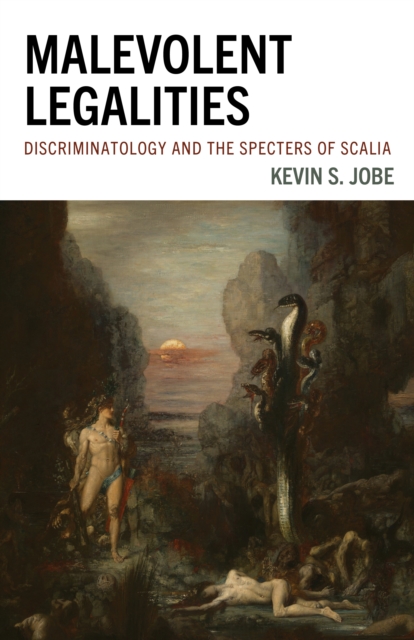
Malevolent Legalities draws upon archival research conducted at the Scalia Papers at the Harvard Law School Historical and Special Collections to examine the influence of Justice Antonin Scalia's judicial philosophy of "e;textualist-originalism"e; on the US Supreme Court's antidiscrimination jurisprudence.
Malevolent Legalities draws upon archival research conducted at the Scalia Papers at the Harvard Law School Historical and Special Collections to examine the influence of Justice Antonin Scalia's judicial philosophy of "e;textualist-originalism"e; on the US Supreme Court's antidiscrimination jurisprudence.
'Glorious' Guardian'Vigorous, rigorous and eminently readable' SPECTATORIn his soaring new book, Niall Kishtainy draws us into the imaginative worlds of Thomas More, the Diggers, William Morris and Extinction Rebellion protestors.
The actions, images and stories within films can impact upon the political consciousness of viewers, enabling their audience to imagine ways of resisting the status quo, politically, economically and culturally.
The actions, images and stories within films can impact upon the political consciousness of viewers, enabling their audience to imagine ways of resisting the status quo, politically, economically and culturally.
The 'end of the world' opens up philosophical questions concerning the very notion of the world, which is a fundamental element of all existential, phenomenological and hermeneutical philosophy.
Written by members of the Social Imaginaries Editorial Collective, these programmatic essays showcase new critical interventions in understandings of social imaginaries and the human condition.
This autobiography is a series of interrelated true-life events and decisions taken by a black philosopher that highlight the human drama unfolding in the inferno of the South African apartheid system.
The devolved and dispersed character of human agency and moral responsibility in the contemporary condition appears linked with the deepening global trauma of 'inhumanism' as a paradox of the Anthropocene.
The politics of everyday life is to be found, time and again, in meandering movements, in making connections across and between things in the rough and tumble of the seemingly banal, fragmentary and quotidian experiences that make up our day-to-day existence.
This book explores Neo-Confucianism and its relationship to politics by examining the life and work of the two iconic figures of the Joseon dynasty Yi Hwang (1501-1570, Toegye) and Yi I (1536-1584, Yulgok).
In his fascinating new book, leading phenomenologist Anthony Steinbock intervenes in contemporary debate around the idea of the gift through a set of critical readings in which he situates the gift in the context of interpersonal relations.
This important collection of essays by Andrew Feenberg presents his critical theory of technology, an innovative approach to philosophy and sociology of technology based on a synthesis of ideas drawn from STS and Frankfurt School Critical Theory.
Can critical theory diagnose ideological delusion and false consciousness from above, or does it have to follow the practices of critique ordinary agents engage in?
The question of the limits of the political permeates the history of western political thought and has been at the forefront of debates in contemporary political philosophy, especially in French and Italian contexts.
Although the concept of productive imagination plays a fundamental role in Kant, German Idealism, Romanticism, Phenomenology and Hermeneutics, the meaning of this central concept remains largely undetermined.
This book sets out the most influential theories of democracy (liberal-egalitarian, deliberative, and cosmopolitan) and argues that they fail to adequately comprehend the cause of politically meaningful inequality on the one hand and the security state on the other.
Examining inequality through the lenses of moral traditionsRising inequality has attracted a great deal of attention in recent years from scholars and politicians, but the moral dimensions of inequality tend to be ignored.
The Bungle Book presents a demythology of six salient concepts central to our modern self-understanding, The "e;suspects"e; of the self, the machine, and God, as well as the "e;senses"e; of home, love, and freedom are subjected to an intense analytical scrutiny that is back-dropped by the work of Gadamer, Heidegger, Lingis, Midgely, and other critical voices.
Dogma's Primrose Path addresses how the perpetual presence of ignorance, poverty, and war throughout the world is accepted by most people as an inevitable consequence of human life given man's incurably evil, greedy, and violent nature.
Decrypting Power aims to reach a unifying concept that allows the connection of the fundamental theses stemming from critical legal studies, Subaltern studies, decolonization, law and society, global political economy, critical geopolitics and theories of de-coloniality.
Our amorous and erotic experiences do not simply bring us pleasure; they shape our very identities, our ways of relating to ourselves, each other and our shared world.
In The Pursuit of Happiness, renowned economist Carol Graham explores what we know about the determinants of happiness and clearly presents both the promise and the potential pitfalls of injecting the "e;"e;economics of happiness"e;"e; into public policymaking.