Ontology of Production presents three essays by the influential Japanese philosopher Nishida Kitaro (1870-1945), translated for the first time into English by William Haver.
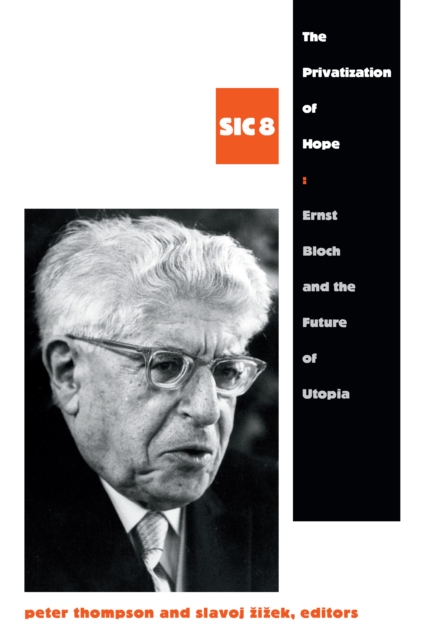
The concept of hope is central to the work of the German philosopher Ernst Bloch (1885-1977), especially in his magnum opus, The Principle of Hope (1959).
An original deep history of the internet that tells the story of the centuries-old utopian dreams behind it-and explains why they have died todayMany think of the internet as an unprecedented and overwhelmingly positive achievement of modern human technology.
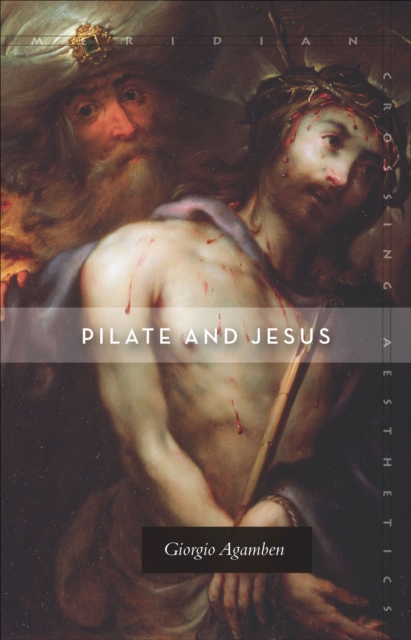
The acclaimed philosopher's penetrating analysis of Pontius Pilate offers provocative and original insight into Western conceptions of judgment and guilt.
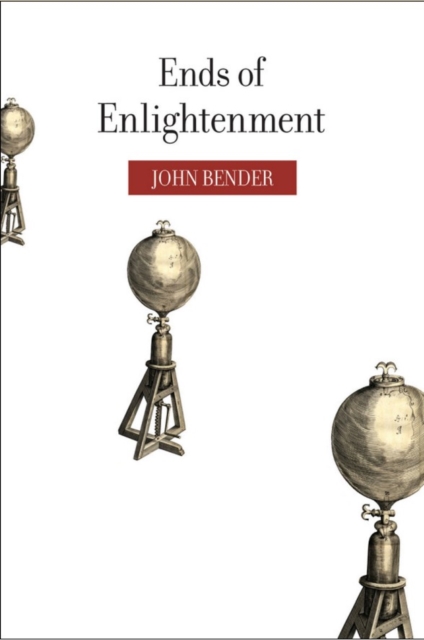
Ends of Enlightenment explores three realms of eighteenth-century European innovation that remain active in the twenty-first century: the realist novel, philosophical thought, and the physical sciences, especially human anatomy.
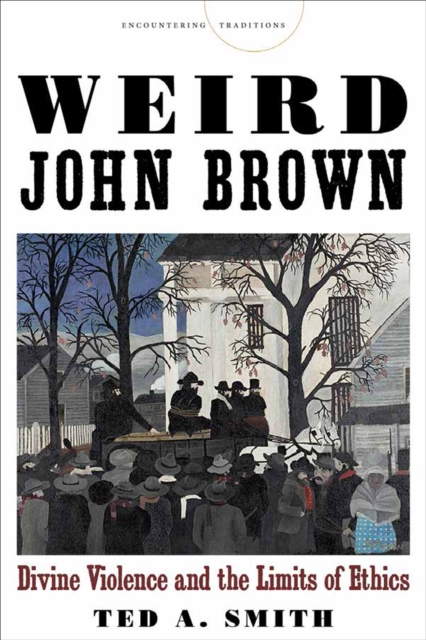
This study of religion and violence "e;forces us to reexamine some of our most cherished self-images of modern liberal democratic societies"e; (Charles Taylor).
Combining theology, politics and historical analysis, "e;theorizes what might be at stake-ethically-for America's current political life"e; (Andrew Taylor, Journal of American History).
In this volume, senior scholars come together to explore how Jewish and African American experiences can make us think differently about the nexus of religion and politics, or political theology.
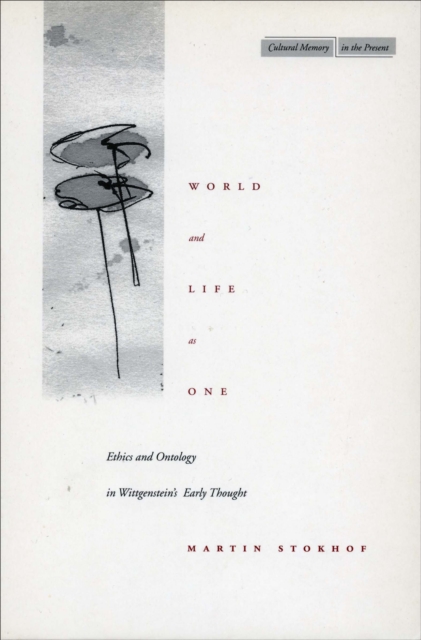
This book explores in detail the relation between ontology and ethics in the early work of Ludwig Wittgenstein, notably the Tractatus Logico-Philosophicus and, to a lesser extent, the Notebooks 1914-1916.
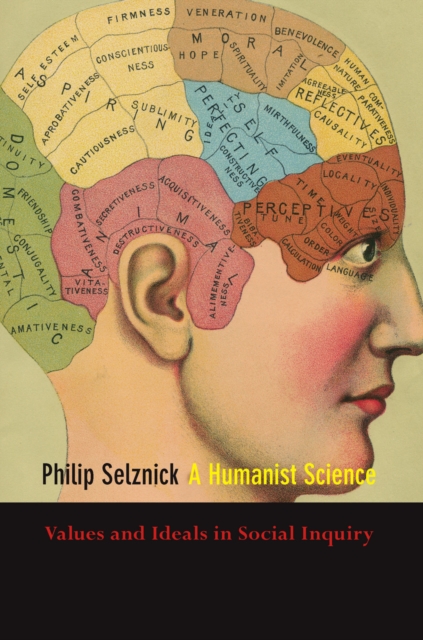
Providing a capstone to Philip Selznick's influential body of scholarly work, A Humanist Science insightfully brings to light the value-centered nature of the social sciences.
In a world dominated by considerations of material and security threats, Japan provides a fascinating case for why, and under what conditions, a state would choose to adopt international norms and laws that are seemingly in direct conflict with its domestic norms.
Our current intellectual system provides us with a far more complete and accurate understanding of nature and ourselves than was available in any previous society.
This book reexamines the historical thinking of Liang Qichao (1873-1929), one of the few modern Chinese thinkers and cultural critics whose appreciation of the question of modernity was based on first-hand experience of the world space in which China had to function as a nation-state.
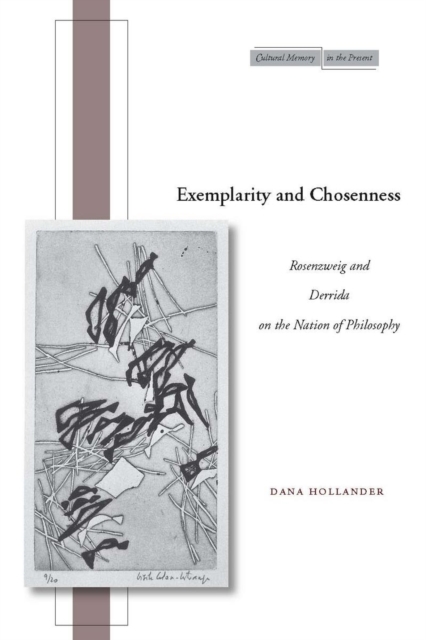
Exemplarity and Chosenness is a combined study of the philosophies of Jacques Derrida (1930-2004) and Franz Rosenzweig (1886-1929) that explores the question: How may we account for the possibility of philosophy, of universalism in thinking, without denying that all thinking is also idiomatic and particular?
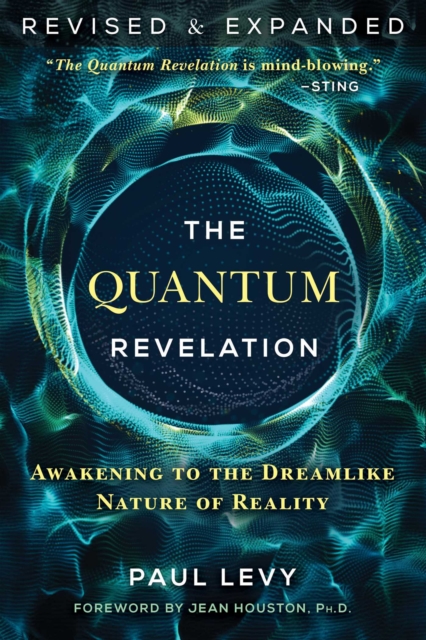
*; Shows how the revelations emerging from quantum physics can wake us up from the disempowering spell of the scientific materialist worldview and help dispel the collective madness that has befallen our species*; Explains for readers with no physics background why quantum physics is, in the words of Albert Einstein, so ';uncommonly important' that ';it should be everyone's concern'*; Shows how quantum physics can help us awaken to the malleable, dreamlike nature of reality, a realization that unlocks the creative spirit within usExplaining the world-transforming effects of quantum physics, Paul Levy shows how discoveries in this fieldwidely considered the greatest in the history of sciencecan wake us up from the disempowering spell of the reductionist, materialist worldview, thereby helping to dispel the collective madness that has befallen our species.
Moral Leadership brings together in one comprehensive volume essays from leading scholars in law, leadership, psychology, political science, and ethics to provide practical, theoretical policy guidance.
Parmenides - Plato - Plato is a Classical Greek philosopher, mathematician, student of Socrates, writer of philosophical dialogues, and founder of the Academy in Athens, the first institution of higher learning in the Western world.
Dieses eBook: "Menschliches, Allzumenschliches (Band 1&2)" ist mit einem detaillierten und dynamischen Inhaltsverzeichnis versehen und wurde sorgfältig korrekturgelesen.
This book presents an important new account of Johann Gottlieb Fichte's Closed Commercial State, a major early nineteenth-century development of Rousseau and Kant's political thought.
Man hört das Wort "Neuroästhetik" und denkt, jetzt erklären uns die Hirnforscher endlich genau, was die Philosophen in ihren Ästhetikbüchern und die Kunstwissenschaftler an den Universitäten und Hochschulen lehren.
The changing face of the liberal creed from the ancient world to todayThe Lost History of Liberalism challenges our most basic assumptions about a political creed that has become a rallying cry-and a term of derision-in today's increasingly divided public square.
Theories of justice are haunted by a paradox: the more ambitious the theory of justice, the less applicable and useful the model is to political practice; yet the more politically realistic the theory, the weaker its moral ambition, rendering it unsound and equally useless.
Niklas Luhmann (1927-1998) was a German sociologist and system theorist who wrote on law, economics, politics, art, religion, ecology, mass media, and love.
In this wide-ranging book, renowned philosopher and cultural theorist Peter Sloterdijk examines art in all its rich and varied forms: from music to architecture, light to movement, and design to typography.
This original book enters the undeveloped territory of feminist metaphysics and offers a bold and unusual contribution to debates about identity, essence and self.
Until recently, "e;continental"e; philosophy has been tied either to the German tradition of phenomenology or to French post-structuralist concerns with the conditions of language and textuality.