From Eduardo Galeano, one of Latin America's greatest living writers, author of the Memory of Fire trilogy, comes Children of the Days a new kind of history that shows us how to remember and how to liveThis book is shaped like a calendar.
'Offers so much pleasure and insight' Guardian'Entertaining, convincing and timely' The TimesA vivid, seminal portrait of the early 1980s: a period that changed Britain foreverThe early 1980s in Britain were a time of hope, and of dread: of Cold War tension and imminent conflict, when crowds in the street could mean an ecstatic national celebration or an inner-city riot.
TLS BOOKS OF THE YEAR 2016'Gray must be one of the best read of contemporary philosophers, trawling insouciantly through high-, middle- and low-brow literature with the sharp-eyed eclecticism of a magpie of genius' John Banville, Guardian'Like Isaiah Berlin with a thing for sci-fi' Tibor Fischer, SpectatorEveryone thinks they want to be free - or do they?
This book takes a dramatically original approach to the history of humanity, using objects which previous civilisations have left behind them, often accidentally, as prisms through which we can explore past worlds and the lives of the men and women who lived in them.
'A gripping work, and a gripping translation' Nicholas Lezard, GuardianNiccol Machiavelli's brutally uncompromising manual of statecraft, The Prince is translated and edited with an introduction by Tim Parks in Penguin Classics As a diplomat in turbulent fifteenth-century Florence, Niccol Machiavelli knew how quickly political fortunes could rise and fall.
George Herbert combined the intellectual and the spiritual, the humble and the divine, to create some of the most moving devotional poetry in the English language.
An extraordinary and challenging synthesis of ideas uniting Quantum Theory, and the theories of Computation, Knowledge and Evolution, Deutsch's extraordinary book explores the deep connections between these strands which reveal the fabric of realityin which human actions and ideas play essential roles.
This hugely influential work marked a turning point in US history and culture, arguing that the nation s expansion into the Great West was directly linked to its unique spirit: a rugged individualism forged at the juncture between civilization and wilderness, which for better or worse lies at the heart of American identity today.
The founding father of modern political philosophy, Thomas Hobbes, living in an era of horrific violence, saw human life as meaningless and cruel; here, he argues the only way to escape this brutality is for all to accept a 'social contract' that acknowledges the greater authority of a Sovereign leader.
Set immediately prior to the trial and execution of Socrates in 399 BC, Theaetetus shows the great philosopher considering the nature of knowledge itself, in a debate with the geometrician Theodorus and his young follower Theaetetus.
'This is a blast of fresh air' Jonathan Clark, TLS'Thank goodness for Gottlieb' Daily Telegraph'A joy to read' EconomistThe author of the celebrated The Dream of Reason vividly explains the rise of modern thought from Descartes to RousseauIn a short period - from the early 1640s to the eve of the French Revolution - Descartes, Hobbes, Spinoza, Locke, Leibniz, and Hume all made their mark on Western thought.
Widely regarded as the father of modern Western philosophy, Descartes sought to look beyond established ideas and create a thought system based on reason.
In this personal and practical guide to moral self-improvement and living a good life, the second-century philosopher Epictetus tackles questions of freedom and imprisonment, stubbornness and fear, family, friendship and love, and leaves an intriguing document of daily life in the classical world.
In this fascinating, provocative account, eminent philosopher John Searle shows how our everyday actions and cultural knowledge are of a metaphysical complexity that is truely staggering.
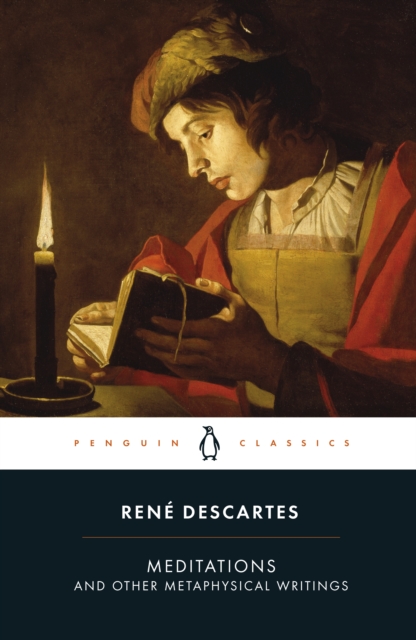
Of all the works of the man claimed by many as the father of modern philosophy, the MEDITATIONS, first published in 1641, must surely be Rene Descartes' masterpiece.
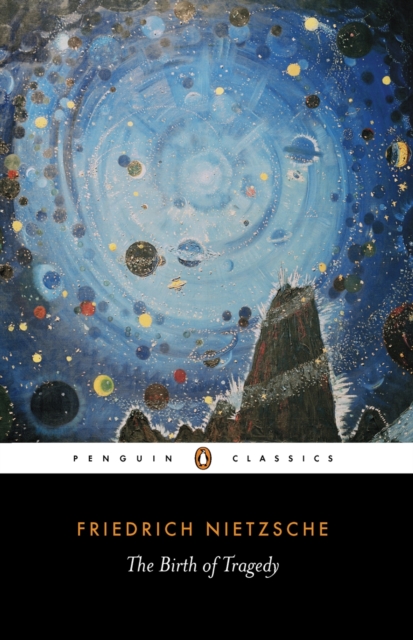
Nietzsche's first published book, The Birth of Tragedy is a compelling argument for the necessity of art in lifeThis landmark work of criticism is fuelled by Nietzsche's enthusiasms for Greek tragedy, the philosophy of Schopenhauer and the music of Wagner, to whom the book was dedicated.
How the utopian tradition offers answers to today's environmental crisesIn the face of Earth's environmental breakdown, it is clear that technological innovation alone won't save our planet.
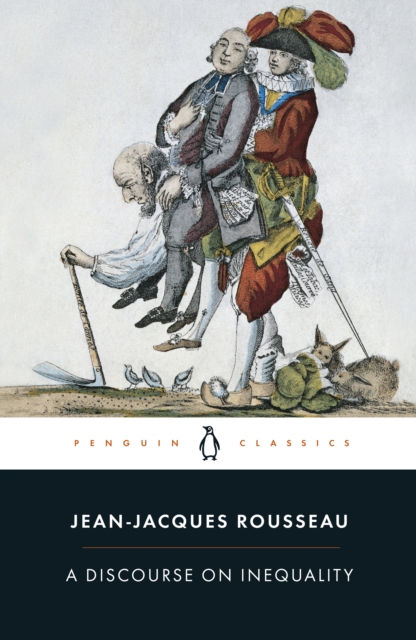
In A Discourse on Inequality Rousseau sets out to demonstrate how the growth of civilization corrupts man s natural happiness and freedom by creating artificial inequalities of wealth, power and social privilege.
In what remains one of his most seminal papers, Freud considers the incompatibility of civilisation and individual happiness, and the tensions between the claims of society and the individual.
The classic translation of the cornerstone work of western philosophyPlato's Republic is widely acknowledged as one of the most influential works in the history of philosophy.
In Either/Or, using the voices of two characters - the aesthetic young man of part one, called simply 'A', and the ethical Judge Vilhelm of the second section - Kierkegaard reflects upon the search for a meaningful existence, contemplating subjects as diverse as Mozart, drama, boredom, and, in the famous Seducer's Diary, the cynical seduction and ultimate rejection of a young, beautiful woman.
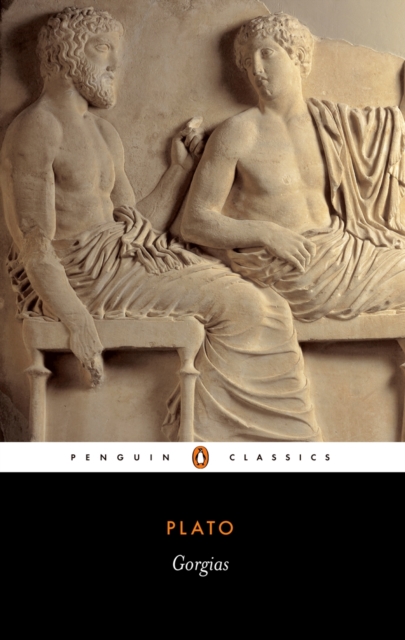
Taking the form of a dialogue between Socrates, Gorgias, Polus and Callicles, GORGIAS debates perennial questions about the nature of government and those who aspire to public office.