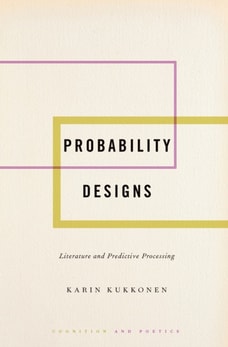
In Probability Designs, Karin Kukkonen proposes a new perspective on the complex role of predictions and probabilities in the dynamics of literary narrative.
In Probability Designs, Karin Kukkonen proposes a new perspective on the complex role of predictions and probabilities in the dynamics of literary narrative.
'Far from being the pious injunction of a Utopian dreamer, the command to love one's enemy is an absolute necessity for our survival'Advocating love as strength and non-violence as the most powerful weapon there is, these sermons and writings from the heart of the civil rights movement show Martin Luther King's rhetorical power at its most fiery and uplifting.
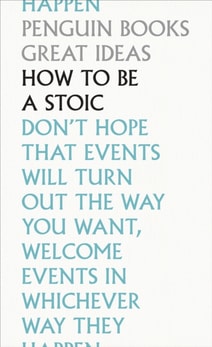
'Don't hope that events will turn out the way you want, welcome events in whichever way they happen'How can we cope when life's events seem beyond our control?
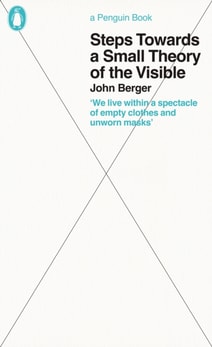
'We live within a spectacle of empty clothes and unworn masks'In this series of remarkable pieces from across his career, John Berger celebrates and dissects the close links between art and society and the individual.
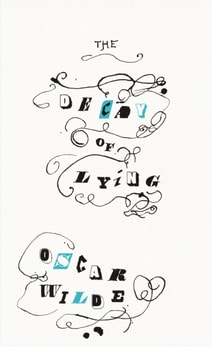
'Life imitates Art far more than Art imitates Life'The two works brought together here, 'The Decay of Lying' and 'The Critic as Artist', are Oscar Wilde's wittiest and most profound writings on aesthetics, in which he proposes that criticism is the highest form of creation and that lying, the telling of a beautiful untruth, is the ultimate aim of art.
CHOSEN AS A BOOK OF THE YEAR BY NEW STATESMAN AND BBC HISTORY MAGAZINE'In this searing book, Priya Satia demonstrates, yet again, that she is one of our most brilliant and original historians' Sunil Amrith, author of Unruly WatersFor generations, the history of the British empire was written by its victors.
'A joy of a book - enriching, illuminating, eclectic and far from a conventional science read' Richard Webb, New Scientist Books of the Year'Carlo Rovelli's imaginative rigour, his lively humour and his beautiful writing are inspiring' Erica WagnerOne of the most inspiring thinkers of our age, the bestselling author of Seven Brief Lessons on Physics transforms the way we think about the world with his reflections on science, history and humanityIn this collection of writings, the logbook of an intelligence always on the move, Carlo Rovelli follows his curiosity and invites us on a voyage through science, history, philosophy and politics.
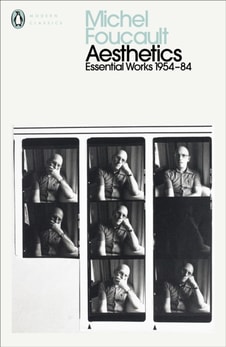
'Foucault leaves no reader untouched or unchanged' Edward SaidAesthetics, the second volume of the complete collection of Michel Foucault's courses, articles and interviews, focuses on the philosophy, literature and art which informed his engagement with ethics and power, including brilliant commentaries on the work of de Sade, Rousseau, Marx, Magritte, Nietzsche, Freud and Wagner.
'Imaginative, illuminating and innovative' The New York Times Book ReviewThe grisly spectacle of public executions and torture of centuries ago has been replaced by the penal system in western society - but has anything really changed?
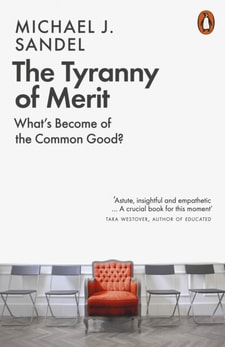
A TLS, GUARDIAN AND NEW STATESMAN BOOK OF THE YEAR 2020The new bestseller from the acclaimed author of Justice and one of the world's most popular philosophers"e;Astute, insightful, and empathetic.
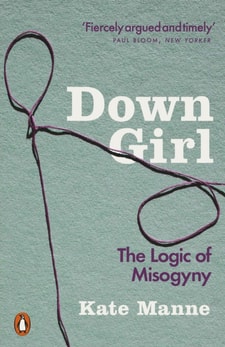
'An important and compelling analysis of a phenomenon that's everywhere' Cordelia Fine, Big Issue'Offers a sharply cut prism through which to view our everyday experience' Afua Hirsch, The TLSA powerful, lucid analysis of the logic of misogyny from a remarkable feminist thinker, Down Girl is essential reading for the #MeToo era.
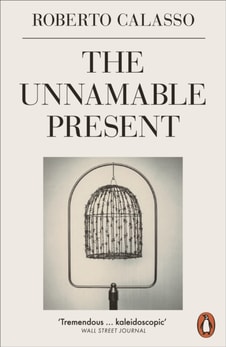
Tourists, terrorists, secularists, hackers, fundamentalists, transhumanists, algorithmicians: in this book Roberto Calasso considers the tribes that inhabit and inform the world today.
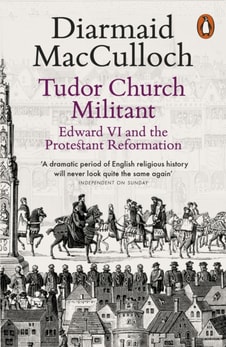
Although the young Edward VI's death in 1553 led to resounding defeat for his Protestant allies, his reign has a significance out of all proportion to its brief six-year span.
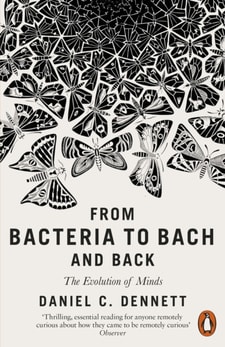
'Required reading for anyone remotely curious about how they came to be remotely curious' Observer'Enthralling' Spectator What is human consciousness and how is it possible?
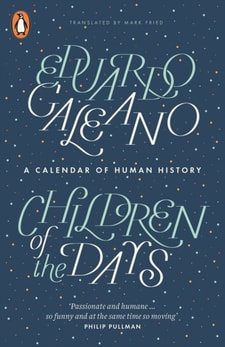
From Eduardo Galeano, one of Latin America's greatest living writers, author of the Memory of Fire trilogy, comes Children of the Days a new kind of history that shows us how to remember and how to liveThis book is shaped like a calendar.
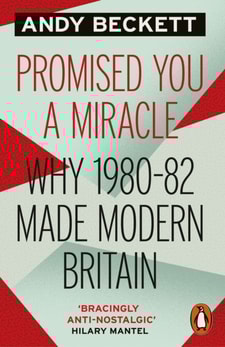
'Offers so much pleasure and insight' Guardian'Entertaining, convincing and timely' The TimesA vivid, seminal portrait of the early 1980s: a period that changed Britain foreverThe early 1980s in Britain were a time of hope, and of dread: of Cold War tension and imminent conflict, when crowds in the street could mean an ecstatic national celebration or an inner-city riot.
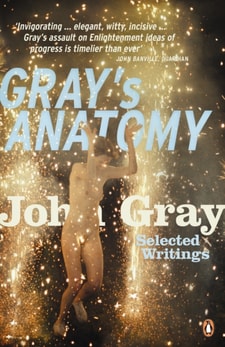
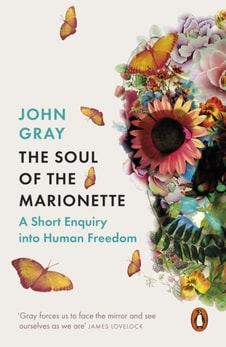
TLS BOOKS OF THE YEAR 2016'Gray must be one of the best read of contemporary philosophers, trawling insouciantly through high-, middle- and low-brow literature with the sharp-eyed eclecticism of a magpie of genius' John Banville, Guardian'Like Isaiah Berlin with a thing for sci-fi' Tibor Fischer, SpectatorEveryone thinks they want to be free - or do they?
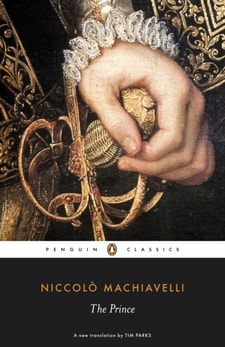
'A gripping work, and a gripping translation' Nicholas Lezard, GuardianNiccol Machiavelli's brutally uncompromising manual of statecraft, The Prince is translated and edited with an introduction by Tim Parks in Penguin Classics As a diplomat in turbulent fifteenth-century Florence, Niccol Machiavelli knew how quickly political fortunes could rise and fall.
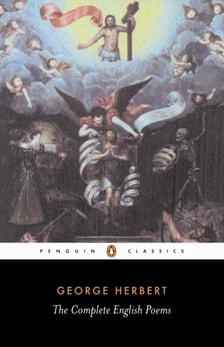
George Herbert combined the intellectual and the spiritual, the humble and the divine, to create some of the most moving devotional poetry in the English language.
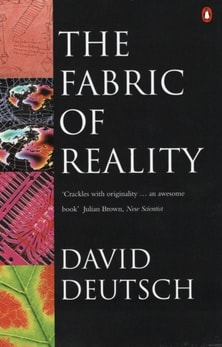
An extraordinary and challenging synthesis of ideas uniting Quantum Theory, and the theories of Computation, Knowledge and Evolution, Deutsch's extraordinary book explores the deep connections between these strands which reveal the fabric of realityin which human actions and ideas play essential roles.
The founding father of modern political philosophy, Thomas Hobbes, living in an era of horrific violence, saw human life as meaningless and cruel; here, he argues the only way to escape this brutality is for all to accept a 'social contract' that acknowledges the greater authority of a Sovereign leader.
Set immediately prior to the trial and execution of Socrates in 399 BC, Theaetetus shows the great philosopher considering the nature of knowledge itself, in a debate with the geometrician Theodorus and his young follower Theaetetus.