This is an interdisciplinary work that philosophically analyzes concepts such as heroism; practical wisdom; honor; Nietzsche's notions of will to power, the overman, and the three metamorphoses; Plato's understanding of love; creating meaning in life; the issue of morally dirty hands in political administration; the relationship between political means and ends; the proper role of positive duties in society; the aspirations of grand strivers; and the linkages between biological, biographical, and autobiographical lives, all in the context of explaining and evaluating the lives and works of fourteen historically significant Italian: Gaius Julius Caesar, Brunetto Latini, Dante Alighieri, Caterina Sforza, Niccolo Machiavelli, Giuseppe Mazzini, Giuseppe Garibaldi, Francesca Cabrini, Gabriele D'Annunzio, Antonio Gramsci, Salvatore Giuliano, Oriana Fallaci, Giovanni Falcone, and Paolo Borsellino.
Living legend Smiraglia has written the first book devoted exclusively to exploring the concept that is commonly referred to as a bibliographic "e;Work.
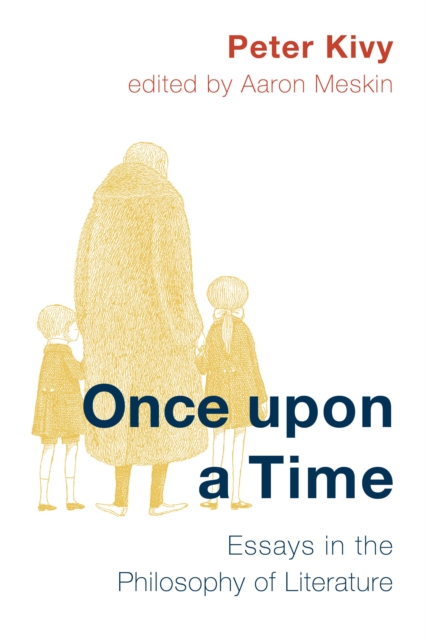
Once Upon a Time is a collection of essays in the philosophy of literature with two central themes: the significance of story -telling for us and the question of whether the novel, perhaps the art form most closely associated with story-telling, is a legitimate source of human knowledge.
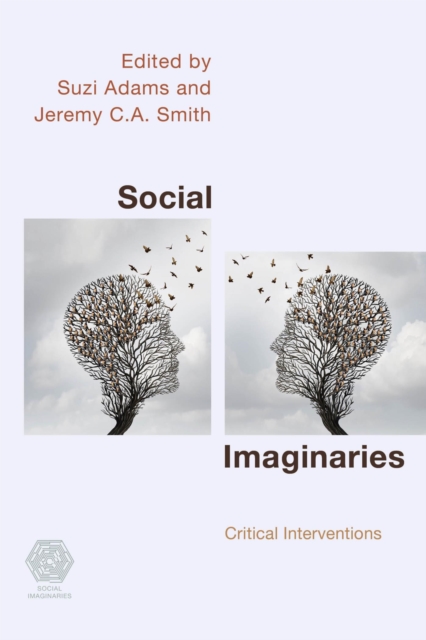
Written by members of the Social Imaginaries Editorial Collective, these programmatic essays showcase new critical interventions in understandings of social imaginaries and the human condition.
By bringing the work of philosophers and psychologists together this volume is an interdisciplinary, though predominantly philosophical, exploration of an often discussed but rarely researched emotion; admiration.
This innovative book is written in an accessible, compact style that sets forth and explains a sound framework for professional ethics that readers can quickly put into practice in analyzing and writing about cases.
This book provides an account of the development of ideas about nature from the Early German Romantics into the philosophies of nature of Schelling and Hegel.
This reference contains more than 600 cross-referenced dictionary entries on utopian thought and experimentation that span the centuries from ancient times to the present.
This autobiography is a series of interrelated true-life events and decisions taken by a black philosopher that highlight the human drama unfolding in the inferno of the South African apartheid system.
This volume takes up the pressing issues of justice and responsibility that arise at the intersection of food and agricultural systems, environmental degradation, and global climate change.
The devolved and dispersed character of human agency and moral responsibility in the contemporary condition appears linked with the deepening global trauma of 'inhumanism' as a paradox of the Anthropocene.
The politics of everyday life is to be found, time and again, in meandering movements, in making connections across and between things in the rough and tumble of the seemingly banal, fragmentary and quotidian experiences that make up our day-to-day existence.
Once a prophet of critical, "e;other"e; thought, Heidegger has now for many become the epitome of the unthinkable, in the light of the Black Notebooks controversy.
This book explores Neo-Confucianism and its relationship to politics by examining the life and work of the two iconic figures of the Joseon dynasty Yi Hwang (1501-1570, Toegye) and Yi I (1536-1584, Yulgok).
The contributors to this volume argue that whilst there is a commonplace superstition conspiracy theories are examples of bad beliefs (and that the kind of people who believe conspiracy theories are typically irrational), many conspiracy theories are rational to believe: the members of the Dewey Commission were right to say that the Moscow Trials of the 1930s were a sham; Woodward and Bernstein were correct to think that Nixon was complicit in the conspiracy to deny any wrongdoing in the Watergate Hotel break in; and if we either accept the terrorist events of 9/11 were committed by Al-Qaeda, or that the Bush Administration was responsible, then it seems we are endorsing some theory about a conspiracy to commit an act of terror on American soil.
In his fascinating new book, leading phenomenologist Anthony Steinbock intervenes in contemporary debate around the idea of the gift through a set of critical readings in which he situates the gift in the context of interpersonal relations.
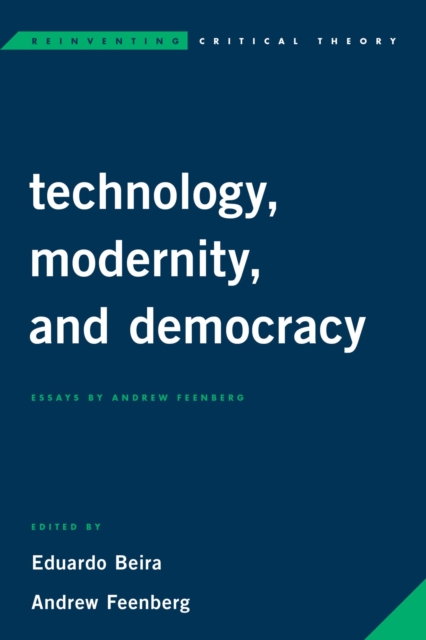
This important collection of essays by Andrew Feenberg presents his critical theory of technology, an innovative approach to philosophy and sociology of technology based on a synthesis of ideas drawn from STS and Frankfurt School Critical Theory.
Can critical theory diagnose ideological delusion and false consciousness from above, or does it have to follow the practices of critique ordinary agents engage in?
The question of the limits of the political permeates the history of western political thought and has been at the forefront of debates in contemporary political philosophy, especially in French and Italian contexts.
Although the concept of productive imagination plays a fundamental role in Kant, German Idealism, Romanticism, Phenomenology and Hermeneutics, the meaning of this central concept remains largely undetermined.
This book sets out the most influential theories of democracy (liberal-egalitarian, deliberative, and cosmopolitan) and argues that they fail to adequately comprehend the cause of politically meaningful inequality on the one hand and the security state on the other.
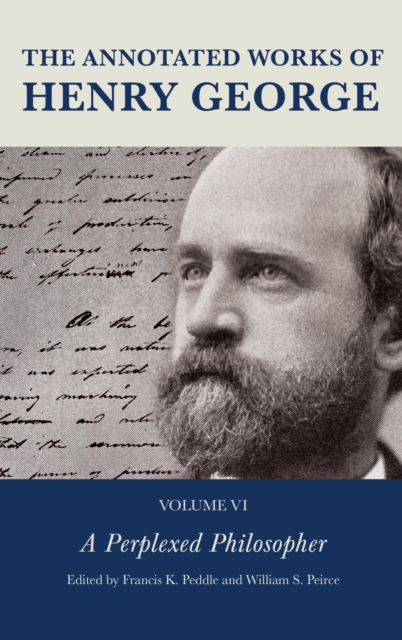
Henry George (1839-1897) rose to fame as a social reformer and economist amid the industrial and intellectual turbulence of the late nineteenth century.
Jackie Leach Scully argues that bioethics cannot avoid the task of considering the moral meaning of disability in humans - beyond simply regulating reproductive choices or new areas of biomedical research.
Jackie Leach Scully argues that bioethics cannot avoid the task of considering the moral meaning of disability in humans - beyond simply regulating reproductive choices or new areas of biomedical research.
Examining inequality through the lenses of moral traditionsRising inequality has attracted a great deal of attention in recent years from scholars and politicians, but the moral dimensions of inequality tend to be ignored.
Seamus Heaney's unexpected death in August 2013 brought to completion his body of work, and scholars are only now coming to understand the full scale and importance of this extraordinary career.
"e;This above all: To thine own self be true,"e; is an ideal-or pretense-belonging as much to Hamlet as to the carefully choreographed realms of today's politics and social media.