Inspired by the philosophical framework of Deleuze and Guattari in relation to affect, Affective Connections disavows the dominant oppositional discourse around representation to offer an affirmative approach to perception, cognition and experience.
The Concept of Resistance in Italy brings together experts from different fields to reflect in a new, comprehensive critical approach, on an event that has shaped the young Italian nation from the onset of Fascism in the early 20s.
In The Value of Literature, Rafe McGregor employs a unique approach - the combination of philosophical work on value theory and critical work on the relationship between form and content - to present a new argument for, and defence of, literary humanism.
Against Value in the Arts and Education proposes that it is often the staunchest defenders of art who do it the most harm, by suppressing or mollifying its dissenting voice, by neutralizing its painful truths, and by instrumentalizing its ambivalence.
A popular cliche in contemporary public discourse holds that we live in a time of increasing uncertainty; that the next catastrophe is perpetually imminent and yet increasingly beyond our capacity to foresee.
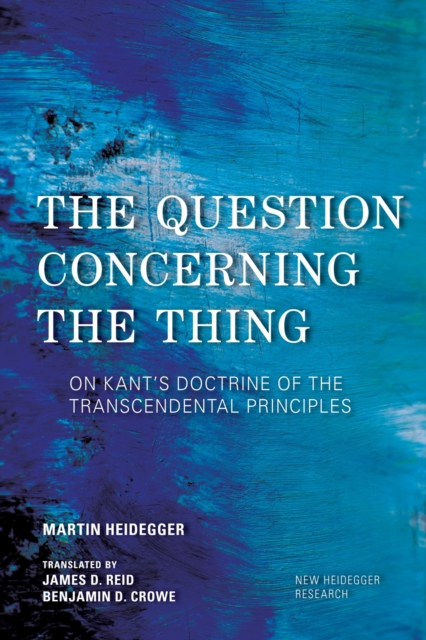
The Question Concerning the Thing presents a full English translation of a lecture course first delivered by Heidegger at Freiburg University during the Winter Semester of 1935-36 (originally published in German as volume 41 of the Gesamtausgabe).
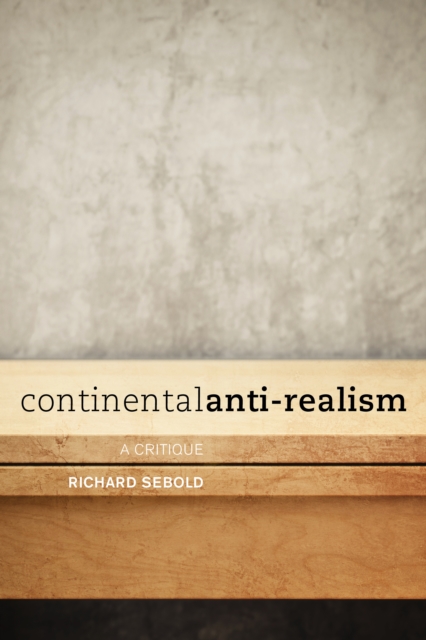
There has been a resurgence of interest in the problem of realism, the idea that the world exists in the way it does independently of the mind, within contemporary Continental philosophy.
A critique of theory through literature that celebrates the diversity of black being, The Desiring Modes of Being Black explores how literature unearths theoretical blind spots while reasserting the legitimacy of emotional turbulence in the controlled realm of reason that rationality claims to establish.
The spatial turn in the Humanities and Social Sciences has produced a considerable body of work which re-assesses space beyond the fixed Cartesian co-ordinates of Modernity and the nation state.
In this important and original book, Johann Michel paves the way for a greater understanding of Paul Ricoeur's philosophy by exploring it in relation to some major figures of contemporary French thought-Bourdieu, Derrida, Deleuze, Foucault and Castoriadis.
In the past few decades, it has become clear that the Western world's relation to nature has led to environmental degradation so wide-ranging that it threatens the existence of human civilizations as we have come to know them.
This highly original collection of essays contributes to a critique of the common understanding of modernity as an enlightened project that provides rational grounds for orientation in all aspects and dimensions of the world.
The Future of Social Epistemology: A Collective Vision sets an agenda for exploring the future of what we - human beings reimagining our selves and our society - want, need and ought to know.
Is it possible to incite a turn towards Media Philosophy, a field that accounts for the autonomy of media, for machine agency and for the new modalities of thought and subjectivity that these enable, rather than dwelling on representations, audiences and extensions of the self?
Affective Critical Regionality offers a new approach to developing a sharper, more nuanced understanding of the relations between place, space, memory and affect.
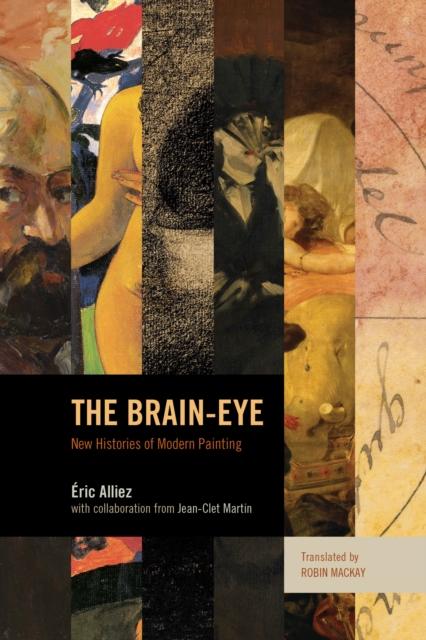
A detailed and inventive study of the thinking at work in modern painting, drawing on a formidable body of scholarly evidence to challenge modernist and phenomenological readings of art history, The Brain-Eye presents a series of interlinked 'case studies' in which philosophical thought encounters the hallucinatory sensations unleashed by 'painter-researchers.
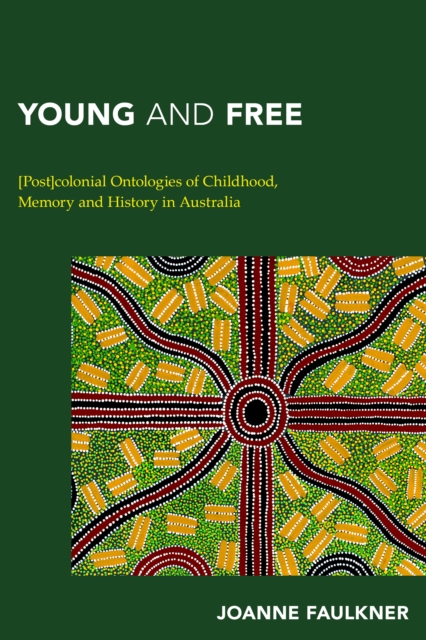
Tracing the complex yet intimate relationship between a present-day national obsession with childhood and a colonial past with which Australia as a nation has not adequately come to terms, Young and Free draws on philosophy, literature, film and testimony.
Representative democracy has long been problematic and subject to erosion through the introduction of components of direct democracy (referenda, voter initiatives and systems of recall).
There has been a recent revival of interest in reading Kierkegaard as an ontologist, as a thinker who engages with questions about the kinds of entity or process that constitute ultimate reality.
Revolutionary theories from Marx onward have often struggled to unite the psychological commitments of individuals- understood as ideological- with the larger ethical or political goals of a social movement.
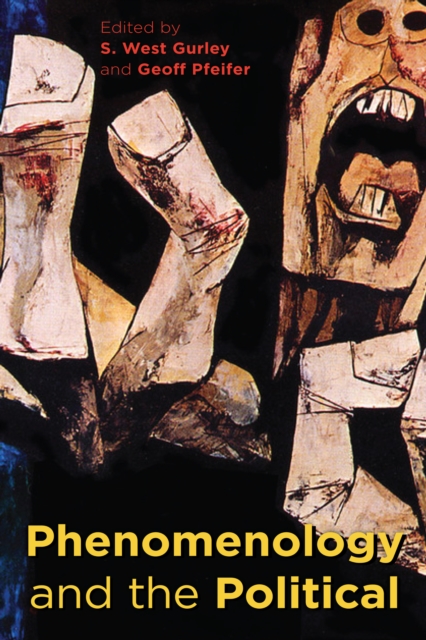
This timely volume brings together a diverse group of expert authors in order to investigate the question of phenomenology's relation to the political.
The Dimensions of Difference departs from traditional takes on feminist film criticism, and in particular from the psychoanalytical focus on the gaze, to examine the question of sexual difference through three axes: space, time, and bodies.