The Russian president's landmark speeches, interviews and policies borrow heavily from great Russian thinkers past and present, from Peter the Great to Dostoevsky and Solzhenitsyn.
The Russian president's landmark speeches, interviews and policies borrow heavily from great Russian thinkers past and present, from Peter the Great to Dostoevsky and Solzhenitsyn.
Recovering the forgotten discipline of Natural Philosophy for the modern worldThis book argues for the retrieval of 'natural philosophy', a concept that faded into comparative obscurity as individual scientific disciplines became established and institutionalized.
Bayesian ideas have recently been applied across such diverse fields as philosophy, statistics, economics, psychology, artificial intelligence, and legal theory.
Bayesian ideas have recently been applied across such diverse fields as philosophy, statistics, economics, psychology, artificial intelligence, and legal theory.
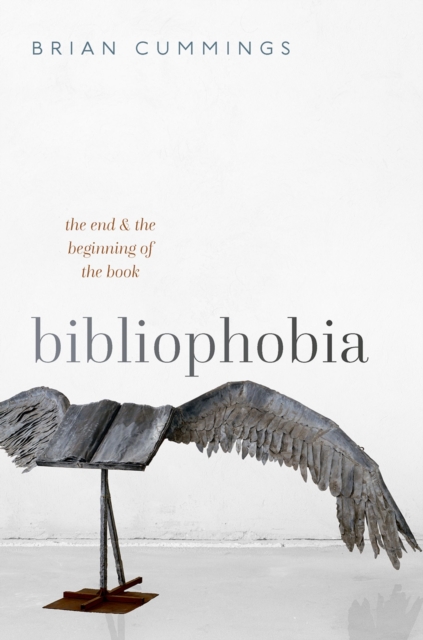
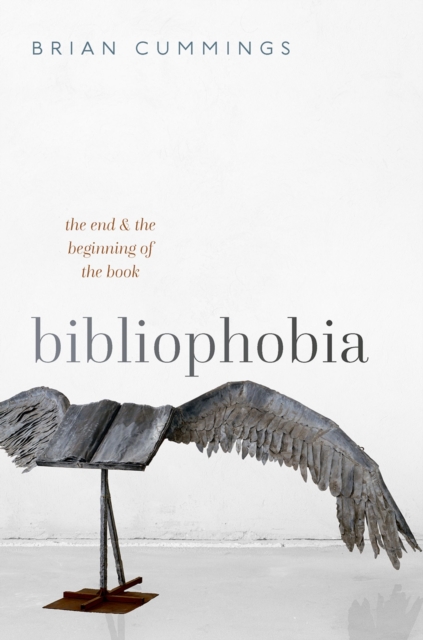
Bibliophobia is a book about material books, how they are cared for, and how they are damaged, throughout the 5000-year history of writing from Sumeria to the smartphone.
Bibliophobia is a book about material books, how they are cared for, and how they are damaged, throughout the 5000-year history of writing from Sumeria to the smartphone.
Immanuel Kant introduced a new paradigm into modern moral philosophy, first with his Groundwork for the Metaphysics of Morals in 1785, followed by his Critique of Practical Reason in 1788, Religion within the Boundaries of Mere Reason in 1793, and Metaphysics of Morals in 1798.
In famously beautiful and laconic prose, Jean-Jacques Rousseau presents us with a forceful picture of a democratic society, in which we live together as free and equal, and our politics focuses on the common good.
Frank Jackson, Philip Pettit, and Michael Smith have been at the forefront of philosophy in Australia for much of the last two decades, and their collaborative work has had widespread influence throughout the world.
James Allen presents an original and penetrating investigation of the notion of inference from signs, which played a central role in ancient philosophical and scientific method.
Philosophical Perspectives on Art presents a series of essays devoted to two of the most fundamental topics in the philosophy of art: the distinctive character of artworks and what is involved in understanding them as art.
There is not one but many ways to picture the world - Australian `x-ray' pictures, cubist collages, Amerindian split-style figures, and pictures in two-point perspective each draw attention to different features of what they represent.
Robert Hanna presents a fresh view of the Kantian and analytic traditions that have dominated continental European and Anglo-American philosophy over the last two centuries, and of the relation between them.
Tyler Burge presents a collection of his seminal essays on Gottlob Frege (1848-1925), who has a strong claim to be seen as the founder of modern analytic philosophy, and whose work remains at the centre of philosophical debate today.
In the last twenty years the concept of the quotidien, or the everyday, has been prominent in contemporary French culture and in British and American cultural studies.
The Law of Non-Contradiction-that no contradiction can be true-has been a seemingly unassailable dogma since the work of Aristotle, in Book Gamma of the Metaphysics.