Simon May presents a fresh and wide-ranging critique of Nietzsche's famous attack on traditional morality, and of his controversial ethics of 'life-enhancement'.
In this book distinguished experts from a range of disciplines (Orientalists, philologists, philosophers, theologians and historians) address a central problem which lies at the heart of the religious and philosophical debate of late antiquity.
The contents of the inaugural volume of Oxford Studies in Metaethics nicely mirror the variety of issues that make this area of philosophy so interesting.
Pragmatism is the view that our philosophical concepts must be connected to our practices - philosophy must stay connected to first order inquiry, to real examples, to real-life expertise.
According to two-dimensional semantics, the meaning of an expression involves two different "e;dimensions"e;: one dimension involves reference and truth-conditions of a familiar sort, while the other dimension involves the way that reference and truth-conditions depend on the external world (for example, reference and truth-conditions might be held to depend on which individuals and substances are present in the world, or on which linguistic conventions are in place).
Seeing, Doing, and Knowing is an original and comprehensive philosophical treatment of sense perception as it is currently investigated by cognitive neuroscientists.
Charles Chihara's new book develops and defends a structural view of the nature of mathematics, and uses it to explain a number of striking features of mathematics that have puzzled philosophers for centuries.
Creations of the Mind presents sixteen original essays by theorists from a wide variety of disciplines who have a shared interest in the nature of artifacts and their implications for the human mind.
Serena Olsaretti brings together new essays by leading moral and political philosophers on the nature of desert and justice, their relations with each other and with other values.
The aesthetics of nature has over the last few decades become an intense focus of philosophical reflection, as it has been ever more widely recognised that it is not a mere appendage to the aesthetics of art.
'Foot stands out among contemporary ethical theorists because of her conviction that virtues and vices are more central ethical notions than rights, duties, justice, or consequences - the primary focus of most other contemporary theorists.
Karl Ameriks here collects his most important essays to provide a uniquely detailed and up-to-date analysis of Kant's main arguments in all three major areas of his work: theoretical philosophy (Critique of Pure Reason), practical philosophy (Critique of Practical Reason), and aesthetics (Critique of Judgment).
However much people want esteem, it is an untradable commodity-- there is no way that you can buy the good opinion of another or sell to others your good opinion of them.
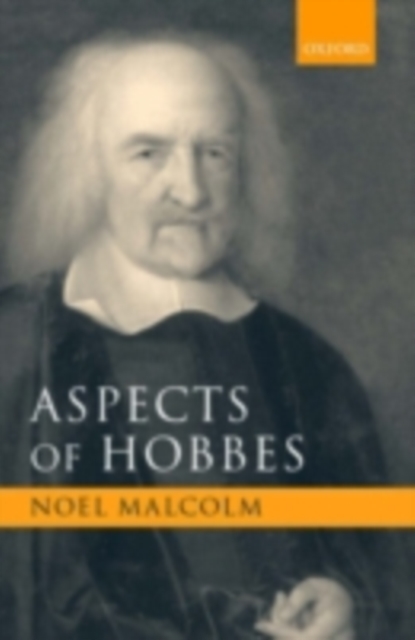
Noel Malcolm, one of the world's leading experts on Thomas Hobbes, presents a set of extended essays on a wide variety of aspects of the life and work of this giant of early modern thought.
This is the ideal introduction to the thought of the third-century AD writer Plotinus, one of the greatest of ancient philosophers, now enjoying a major revival of interest.
In this exploration of new territory between ethics and epistemology, Miranda Fricker argues that there is a distinctively epistemic type of injustice, in which someone is wronged specifically in their capacity as a knower.
Alfred Gell puts forward a new anthropological theory of visual art, seen as a form of instrumental action: the making of things as a means of influencing the thoughts and actions of others.
In the three major religions of the West, God is understood to be a being whose goodness, knowledge, and power is such that it is impossible for any being, including God himself, to have a greater degree of goodness, knowledge, and power.