The Fortress Commentary on the Bible: Old Testament and Apocrypha presents a balanced synthesis of current scholarship, enabling readers to interpret Scripture for a complex and pluralistic world.
John Dominic Crossan and Ben Witherington III, along with a group of diverse scholars, explore points of agreement and disagreement on the message of Jesus.
A selection of the most important sources for the cultural and political context of the early Roman Empire and the New Testament writings, Roman Imperial Texts includes freshly translated public speeches, official inscriptions, annals, essays, poems, and documents of veiled protest from the Empire’s subject peoples —all introduced by Mark Reasoner.
Drawing on the expertise of archaeologists, historians, biblical scholars, and social-science interpreters who have devoted a significant amount of time and energy in the research of ancient Galilee, this accessible volume includes modern general studies of Galilee and of Galilean history, as well as specialized studies on taxation, ethnicity, religious practices, road systems, trade and markets, education, health, village life, houses, and the urban-rural divide.
Roland Boer and Christina Petterson here produce a critical survey showing that the rise of capitalist theory was shaped by the way different economic philosophers—Smith, Hobbes, Grotius, Malthus, Locke––read the Bible.
The Fortress Commentary on the Bible: The New Testament presents a balanced synthesis of current scholarship, enabling readers to interpret Scripture for a complex and pluralistic world.
Increasingly, scholars recognize that prophetic traditions, expressions, and experiences stand at the heart of most religions in the ancient Mediterranean world.
Maps and Meaning is rooted in the authors’ experience as clergy and chaplains and is relevant to those looking for a fresh perspective on biblical narratives related to the role of the priest, patients, soldiers, and others who spend time “outside the camp.
Applying a comprehensive theory of character to the Gospel of John, Cornelis Bennema provides a fresh analysis of both the characters and their responses to Jesus.
When scholars have set Jesus against various conceptions of the messiah and other redemptive figures in early Jewish expectation, those questions have been bound up with the problem of violence, whether the political violence of a militant messiah or the divine violence carried out by a heavenly or angelic figure.
Peterson engages one of the most enduring controversies in current critical scholarship on the Hebrew Bible, the identities and provenances of the authors of the various "e;editions"e; of the Deuteronomistic History.
Although several scholars have written about how Luke portrays Jesus and the apostles as prophets, no one has yet provided a comprehensive theory as to why Luke’s protagonists resemble the prophets.
The "e;dilemma of early Christology,"e; Kaiser observes, is found in the early Christian claims to have "e;seen the Lord"e; and "e;beheld his glory"e; - expressions that in early Judaism would have pointed unequivocally to visions of Israel's God.
It is widely recognized that in some of his letters, Paul develops a Christology based on a comparison between Adam and Christ, and that this Christology has antecedents in Jewish interpretation of Genesis 14.
That Christian missionary efforts have long gone hand-in-hand with European colonization and American imperialist expansion in the nineteenth and twentieth centuries is well recognized.
Since the discovery of the Dead Sea Scrolls, scholars have traced out the rich and complex traditions of biblical interpretation in Second Temple Judaism.
Moving beyond discussions of patriarchy and prescribed "e;womens roles"e; in the Roman worlddiscussions that have relied too much on elite literary sources, in her viewKatherine Bain explores what inscriptional data from Asia Minor can tell us about the actual socioeconomic status of women in the first and second centuries C.
Jesus’ words of indictment and judgment in the Gospel according to Matthew have fueled centuries of Christian anti-Judaism and the horrors of the twentieth-century Holocaust.
This title explores why Christians have different ways of looking at time, at how the life of the church is ordered and organized by days, weeks, seasons, and years.
The "e;Great Whore"e; of the Book of Revelationthe hostile symbolization used to illustrate the authors critique of empirehas attracted considerable attention in Revelation scholarship.
In Portraits of a Mature God, Mark McEntire traced the narrative development of the divine character in the Old Testament, placing the God portrayed at the end of that long story at the center of theological discussion.
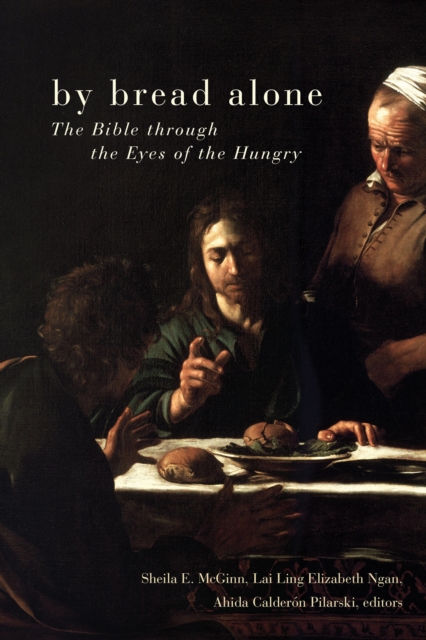
Important ecclesiastical documents have stressed the urgency of addressing world hunger and put in the foreground its natural and historical causes, from famine to global austerity measures and welfare.
Were eunuchs more usually castrated guardians of the harem, as florid Orientalist portraits imagine them, or were they trusted court officials who may never have been castrated?
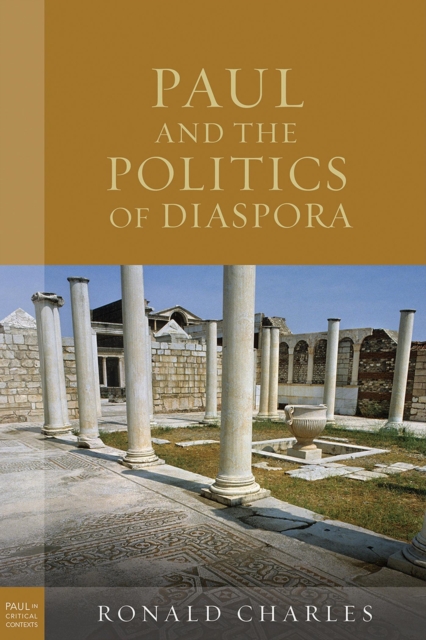
It is a commonplace today that Paul was a Jew of the Hellenistic Diaspora, but how does that observation help us to understand his thinking, his self-identification, and his practice?
Melvin traces the emergence and development of the motif of angelic interpretation of visions from late prophetic literature (Ezekiel 4048; Zechariah 16) into early apocalyptic literature (1 Enoch 1736; 7282; Daniel 78).