Rather than viewing the Apostle Paul's many references to peace and non-retaliation as generalized ethical principles drawn from Paul's background, Jeremy Gabrielson argues that peace and non-retaliation should be understood in relation to Paul's biography of being a violent persecutor of Jesus' followers.
Jesus was a Jew, living in a Jewish culture and under Jewish laws, laws that governed the people of Israel at a time of conflict with their Roman overlords.
In this book, Nicholas Haydock explores the biblical presentation of the Levitical priesthood, drawing out themes that run throughout Scripture and reveal God's intention for the priesthood.
The Bible has the unfortunate legacy of being associated with gross human rights violations as evident in the scriptural justification of apartheid in South Africa as well as slavery in the American South.
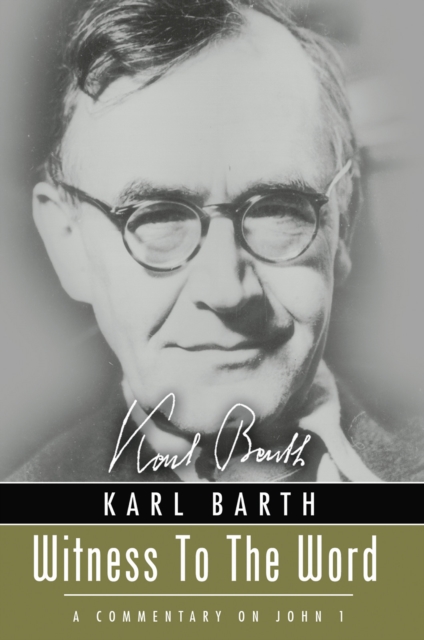
Karl Barth's lectures on the first chapter of the Gospel of John, delivered at Muenster in 1925-26 and at Bonn in 1933, came at an important time in his life, when he was turning his attention more fully to dogmatics.
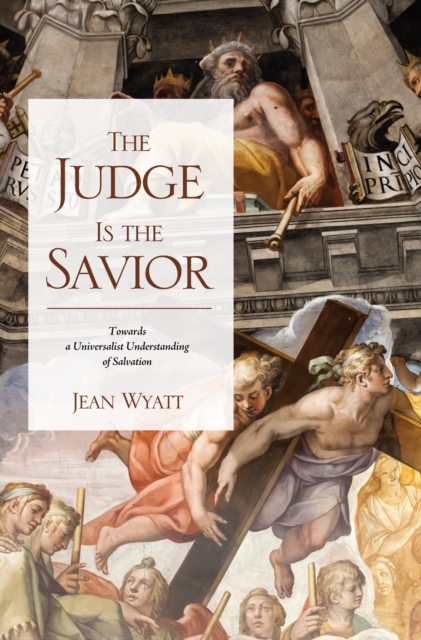
This is a book Jean Wyatt felt compelled to write, as she has for many years wrestled with questions surrounding the love and the justice of God, his salvation and judgment through Jesus Christ, and the effect of our response (or lack of response) to that salvation.
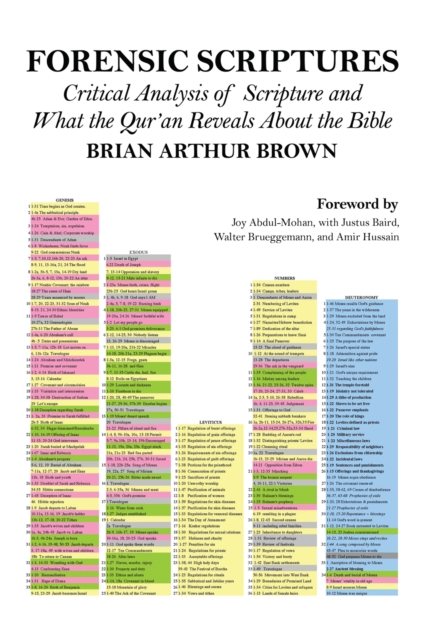
In Forensic Scriptures Brian Arthur Brown presents a long overdue Diagram of Sources of the Pentateuch from Hebrew Scriptures, a new perspective on authorship of the document known as "e;Q"e; in the Christian Scriptures, an acceptable entree into particular disciplines of scriptural criticism for Muslims, and an exciting new paradigm from Islam identifying the role women may have played in production of the Qur'an and the Bible.
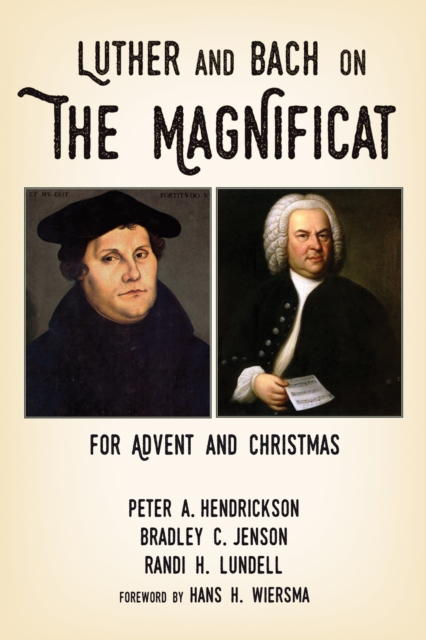
Luther and Bach on the Magnificat: For Advent and Christmas brings together the gifts of Lutheranism's original and most prominent theologian with Lutheranism's most prominent composer/musician as Martin Luther and Johann Sebastian Bach expound in word and music on the Virgin Mary's song of praise in the Gospel of Luke: the Magnificat.
The Three Pillars: How Family Politics Shaped the Earliest Church and the Gospel of Mark, examines how family relationships played a key role in the earliest Christian church.
This book investigates 1 Corinthians 1-4 from a rhetorical and social perspective and explores that a divisive culture of rhetorical and paternal elitism lies behind the schisms and problems identified in the letter.
In this innovative study, Anna Miller challenges prevailing New Testament scholarship that has largely dismissed the democratic civic assembly--the ekklesia--as an institution that retained real authority in the first century CE.
"e;Most of the following essays reveal my interest in the significance of literary forms--both the short literary forms in the Gospels, such as pronouncement stories, and an entire Gospel as a formed narrative.
In this highly readable and engaging commentary on the Gospel of Luke, Diane Chen introduces her readers to the particularities of the world of Jesus, steeped in Jewish history and convictions yet threatened by Roman power and hegemony.
People have used the Bible for a variety of purposes over the course of the past two thousand years; unfortunately, many of those uses have reinforced power structures and systems that oppress and dominate those without privilege.
This collection of essays is a Festschrift for Naymond Keathley, honoring his many contributions to Baylor as Associate Dean of the College of Arts and Sciences, as Senior Vice-Provost, as Interim Director of the Center for International Education, as Interim Chair of the Religion Department, as Professor, and as Director of Undergraduate Studies.