Since the 1960s, biblical scholars have noted a relationship between eschatology and ethics in Luke-Acts, but to date there has been no substantive study of the relationship between these themes.
Is the Christian faith something that can peacefully exist alongside all the other aspects of an ordinary human life, or does it by its very nature turn that life into something else?
In stark contrast to the shrill and nasty interactions among many Christians regarding contentious LGBT issues, this book models a redemptive mode of engagement by featuring respectful conversations among deeply committed Christians who hold to diverging traditional and non-traditional views.
The commentary tradition regarding 1 Corinthians unanimously identifies the "e;weak"e; as Christ-followers whose faith was not yet sufficient to indulge in the eating of idol food with indifference, as if ideally Paul wanted them to become "e;strong"e; enough to do so.
Over fifty years ago, Vatican II's Nostra Aetate 4 drew from Romans 11 to challenge the way Paul's voice has been used to negatively discuss Jews and Judaism.
The dominant portrayals of the apostle Paul are of a figure who no longer valued Jewish identity and behavior, opposing them for both Jew and non-Jew in his assemblies.
Remarkable is how extensively in each parable Jesus provides a subtle but rich array of unexpected possibilities hidden within the hierarchies of power so commonplace in his world.
This book is a collaboration between a biblical scholar (Mary Ann Beavis) and a practical theologian (HyeRan Kim-Cragg) who are concerned with the way that the Bible is portrayed and interpreted in popular culture, including but not limited to the movies.
The Gospel of John has been examined from many different perspectives, but a comprehensive treatment of the theme of worship in this Gospel has not yet appeared.
This first full-scale study of the Evil Eye in the Bible and the biblical communities has traced in four volumes evidence of Evil Eye belief and practice in the ancient world from Mesopotamia (c.
The tension between reading Scripture as primarily a historically situated text on one hand and binding canon addressed to a community of faith on the other constitutes a crucial issue for biblical interpretation.
Although Jesus of Nazareth was a devout first-century Jew, in the twenty-first century he is often lost in the thickets of Christian theology, reflection on the wisdom of his words, and the busyness of church life.
The Old Testament prophets and their writings were hugely instrumental in the formation of the second temple eschatology, so an appreciation of the Old Testament prophetic literature greatly helps us in understanding the life and ministry of Jesus and the rationale of the early church.
Historical-critical scholars have often thought that writing a coherent theology of Isaiah 56-66 is impossible because it contains such historically and ideologically diverse materials.
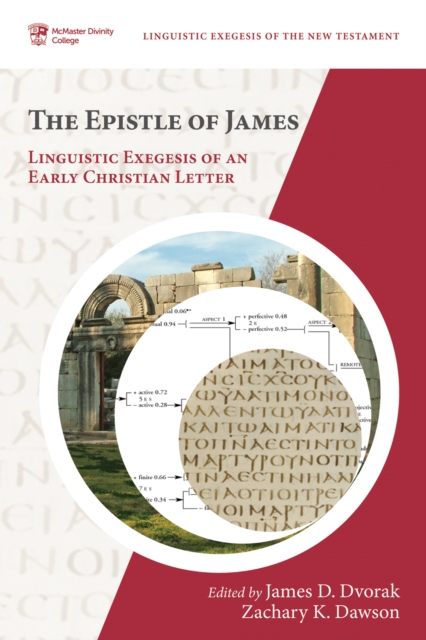
The Epistle of James is a collection of essays that applies to the book of James linguistic methods of analysis that are based on the same theoretical framework, namely Systemic-Functional Linguistics.
The relationship between the church and the scriptures of Israel is fraught with complexities, particularly in regard to how the first Christians read scripture in light of the gospel of Christ.
In this study Heather Gorman analyzes Luke's portrayal of Jesus' death in light of the ancient rhetorical tradition, particularly the progymnasmata and the rhetorical handbooks.
Before the Gospels were written, long before the creeds of the Church were hammered out, Christ followers in Philippi sang a hymn of the Christ who, "e;although he was in the form of God .
Faith and feminism unite in these essays to explore the theology of the Hebrew Bible as testimony to the faith of ancient Israel and as a source for Christian theology and ethics.
In Holiness and the Missio Dei, Andy Johnson takes the reader on a biblical journey that explores the question of what holiness or sanctification has to do with God's mission in the world.
This book aims to provide advanced students of biblical studies, seminarians, and academicians with a variety of intertextual strategies to New Testament interpretation.
After a review of scholarly work on the speeches in Acts, particularly Paul's Pisidian Antioch speech, Morgan-Wynne sets Paul's speech in the context of the first missionary journey and of the rest of Luke-Acts.