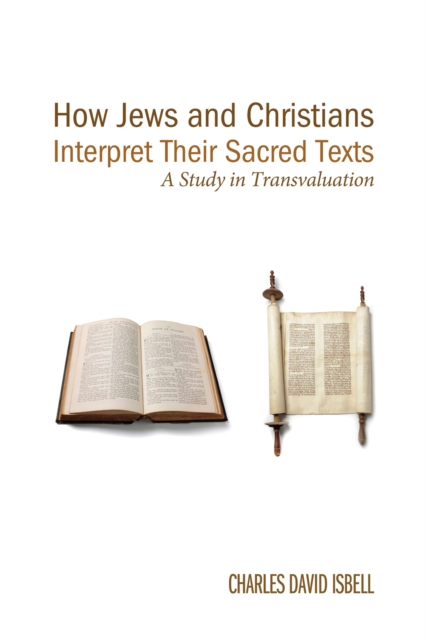
How Jews and Christians Interpret Their Sacred Texts is a comparative textual study that demonstrates the connections between the Hebrew Scriptures, sacred to both Judaism and Christianity, and the Jewish Talmud and Christian New Testament, which respectively became the bases for all modern systems of the two faiths.
As the Christian church moved from its inception in an Eastern/Oriental culture westward across Asia Minor (Turkey) into Greco-Roman culture with primarily a Western philosophy, theology, and values, Jesus' message and Paul's teachings began to be interpreted according to those cultural norms.
In the last few years I've read rants against the evils of feminism from some of the top Evangelical and Fundamentalist Christian leaders who blame women wanting to go to work, go into ministry, and be equals to their husbands for all the social ills happening in our country.
Un estudio cronológico
de los eventos relacionados con el fin de la era cristiana, versículo a
versículo con anexos de importancia para la comprensión integral de este libro
y su relación con las demás revelaciones de la Palabra de Dios.
Dennis Horton highlights the shape and function of the death-and-resurrection motif by applying William Freedman's criteria of a literary motif to the Acts narrative.
Oral and Manuscript Culture in the Bible is the fruit of Professor Loubser's confrontation with how Scripture is read, understood, and used in the Third World situation, which is closer than modern European societies to the social dynamics of the original milieu in which the texts were produced.
Is it possible to make a case that the Gospel of Mark was not composed by a single man from scattered accounts but in a process of people's telling Jesus' story over several decades?
What is the meaning and significance of foreknowledge in the book of 1 Peter, and how does the concept relate to the circumstances of its first recipients?
Ancient Jewish and Christian Scriptures examines the writings included in and excluded from the Jewish and Christian canons of Scripture and explores the social settings in which some of this literature was viewed as authoritative and some was viewed either as uninspired or as heretical.
Early feminist theologians criticized the Christian doctrine of sin for its focus on female sexual purity and its enabling of the marginalization and oppression of women.
In the Bible's introduction are embedded foundational perspectives on "e;who God is"e; and "e;who humans are and what we should be doing"e; that are developed throughout the book.
In this new introduction to the Apostle Paul and his gospel, written especially for lay readers, for beginning students, and for those unsure about what to make of Paul, Michael J.
A helpfully concise commentary on Paul's letter to the early Christians in Rome, which the Apostle wrote just a few years before the outbreak of Nero's persecution.