This book demonstrates that Latin American liberation theology continues to produce substantial biblical exegesis, absorbing theological reflection, and a sharp social critique that enhances the worldwide church.
Paul lies at the core of the constant debate about the opposition between Christianity and Judaism in biblical interpretation and public discourse as well.
The Tradition of the Elders, based on Matt 15:1-20 and Mark 7:1-23, explores how the oral law upheld and promoted the anti-Christian forces of Pharisaism and Sadduceism.
Though many Old Testament scholars prefer no longer to speak of the Elohist source in the Pentateuch, Gnuse seeks to defend the existence of this pentateuchal tradition by responding to scholarly critics, isolating texts belonging to the source and offering a theological assessment of these texts.
The New Testament book of Hebrews offers some of the most memorable passages of Scripture on perseverance, faith, rest, the word of God, angels, divine discipline, salvation, the city of God, and Christ, Son and High Priest.
Amid the torrent of books on leadership that flood the marketplace of contemporary Christianity, UnCorinthian Leadership takes a fresh, challenging, and biblical approach.
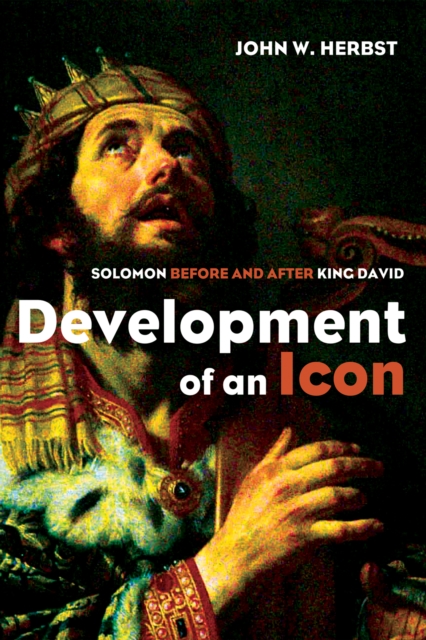
The most extensive royal accounts in the Hebrew Bible are those of kings David (the "e;Succession Narrative,"e; usually identified as 2 Sam 9-20 and 1 Kgs 1-2) and Solomon (the "e;Solomon Story,"e; 1 Kgs 3-11).
This book explores the place of Jerusalem and its Temple in Luke's Gospel, paying attention both to the Third Gospel's narrative and theological dynamics and to the historical and rhetorical milieu in which Luke composed his narrative.
Believing that the needs of beleaguered Christian communities in turbulent times would be best met by resourcing the life of Jesus, Mark wrote a Gospel that was at once plain and subtle, fast-paced and yet profound.
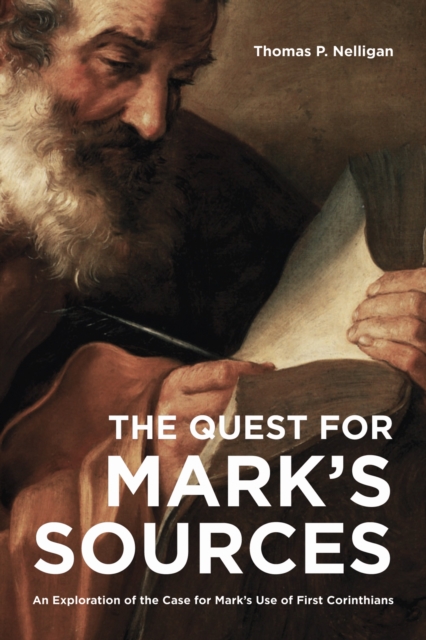
The question of the relationship between the Gospel of Mark and letters of Paul has been ever-present in New Testament scholarship but has never been fully explored.
What does Jesus mean when he says, "e;A disciple is not above his teacher, but each disciple, after being fully trained, will be like his teacher"e; (Luke 6:40)?
Through the use of current intertextual methods and narrative criticism, this book offers a fresh examination of the Son of Man in Mark, developing the conclusions of Morna Hooker's 1967 work, The Son of Man in Mark: A Study of the Background of the Term "e;Son of Man"e; and Its Use in St.
The idea of determinate or single meaning in biblical interpretation has long been considered to be a purely modern idea, indissolubly wedded to the hermeneutics of historical criticism.
The land of Israel is intimately linked to the adventures of the prophets, men like Elijah, Amos, Hosea, Jeremiah, Ezekiel, and the list goes on and on.
Christmas is a charming and memorable season for children, and it is perfectly reasonable for well-informed adults to enjoy cribs, candles, carols, decorated trees, presents, and family feasts.
Faithfulness and the Purpose of Hebrews offers fresh answers to several unresolved questions by employing that branch of social psychology known as social identity theory.
The study of the End Times has been a popular topic for many years, and there are many different positions that are proposed on how to understand the unfolding of God's program.
"e;Vicchio believes that by understanding how much Muslim tradition overlaps with the biblical traditions of Judaism and Christianity, we might begin to expose a wedge of common ground on which understanding and respect might begin to be built.
In this study of Hosea Loren Bliese documents his current research into how the poetics of the Hebrew Bible were enhanced by arranging the counts of words and structures in order to beautify the message.
Everlasting hell and divine judgment, a lake of fire and brimstone--these mainstays of evangelical tradition have come under fire once again in recent decades.