"e;In these meditations upon Scripture, the author quickly, lightly opens up the sacred text to us in a way that--to my knowledge--has never been attempted in the entire history of the Christian faith.
In Read Him Again and Again, Andrew Zack Lewis explores the reception history of the book of Job and the hermeneutical presuppositions of its interpreters.
Struggles for Shalom is a collection of essays by biblical scholars about peace, justice, and violence in ancient Jewish and Christian texts, written to honor the life work of Mennonite scholars Perry B.
This striking collection of scholarly essays highlights the hermeneutic contribution of the French theologian and sociologist Jacques Ellul, revealing him to be one of the twentieth century's most creative and insightful readers of the Bible.
The Bible's Writings: An Introduction for Christians and Jews introduces the reader to the world of Psalms, Proverbs, Job, The Song of Songs, Ruth, Lamentations, Ecclesiastes, Esther, Daniel, Ezra, Nehemiah, and 1 and 2 Chronicles.
Reading the Bible Badly exposes how American Christians misunderstand and misuse the Bible, reading Scripture through "e;lenses"e; that distort its true character.
Luke's narrative of Jesus was presented to Christians who had already heard and read stories of Jesus and the birth of this new movement, Christianity.
The Bible's Prophets: An Introduction for Christians and Jews introduces the reader to the world of Joshua, Judges, 1 and 2 Samuel, 1 and 2 Kings, and the literary prophets: Isaiah, Jeremiah, and Ezekiel, plus the twelve "e;minor"e; prophets: Hosea, Joel, Amos, Obadiah, Jonah, Micah, Nahum, Habakkuk, Zephaniah, Haggai, Zechariah, and Malachi.
The Spirit of Jesus Unleashed on the Church is the third book in a series concerning the restoration of Jesus' people in a world where the marginalized classes longed for reconciliation to God.
The purpose of this book is to help postmodern Westerners understand what the Bible has to say about wealth and possessions, basing itself on the presumption that (a) nobody can understand themselves apart from some recognition of their spiritual roots, and (b) that these roots sink deeper into the pages of the Bible than most Westerners realize.
Too often the negative characterization of "e;others"e; in the biblical text is applied to groups and persons beyond the text whom we wish to define as the Other.
In this clear, practical, and brief commentary, Anthony Thiselton brings to bear his intimate knowledge of Paul's theology, the ancient city of Colossae, and Paul's epistle to the church of that city.
In this book, John Morgan-Wynne examines the very different ways in which Paul's epistles, Hebrews, James, Luke-Acts, John's Gospel, and Matthew's Gospel utitiize the critical figure of Abraham, the father of the people of Israel.
Isaac Mbabazi makes a major contribution to the field of New Testament by arguing that the relevant Matthean theme of interpersonal forgiveness is quite central to the first Gospel.
Embodied Performance presents a methodology by which performer-interpreters can bring their intuitive interpretations to the scholarly conversations about biblical compositions.
This book displays how the nonviolent Word of God made visible in Jesus Christ is expressed in the contemporary idiom of the peaceable grain of the universe.
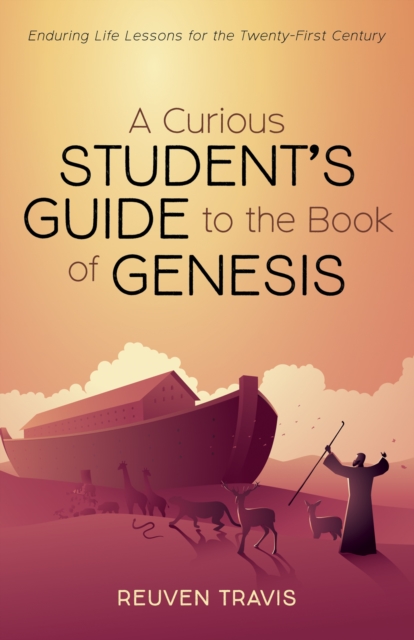
Genesis contains a rich, nuanced text, and yet, when taught to children, it is often done through a series of "e;factoids,"e; such as the number of animals brought into the ark or Esau's red lentil soup.