74 Texte zur Nacht, 74 profilierte Autorinnen und Autoren: Der Band bietet eine einzigartige Sammlung verschiedener Zugänge, Stile, Einfälle und Gedanken.
New insights into how the Book of Samuel offers a timeless meditation on the dilemmas of statecraftThe Book of Samuel is universally acknowledged as one of the supreme achievements of biblical literature.
In 11 essays The Doctrine of Election in Reformed Perspective reflect ongoing investigations concerning the doctrine of election, with special focus on the Synod of Dort 1618-19.
A comprehensive survey of how religions understand death, dying, and the afterlife, drawing on examples from Christian, Jewish, Hindu, Buddhist, and Shamanic perspectives.
A comprehensive survey of how religions understand death, dying, and the afterlife, drawing on examples from Christian, Jewish, Hindu, Buddhist, and Shamanic perspectives.
Faith, Rationality and the Passions presents a fresh and original examination of the relation of religious faith, philosophical rationality and the passions.
Faith, Rationality and the Passions presents a fresh and original examination of the relation of religious faith, philosophical rationality and the passions.
Jeff Wilson started his walk on the Buddha's path as a Zen practitioner - taking up a tradition of vigorous self-effort, intensive meditation, and meticulous attention to rectitude in every action.
The Abhidhamma, the third great division of early Buddhist teaching, expounds a revolutionary system of philosophical psychology rooted in the twin Buddhist insights of selflessness and dependent origination.
All lineages of Tibetan Buddhism today claim allegiance to the philosophy of the Middle Way, the exposition of emptiness propounded by the second-century Indian master Nagarjuna.
Seine Selbstvorstellung als Bischof von Rom, seine Bitte um den Segen und das Gebet des Volkes vor der Spendung seines eigenen Segens, sein Verzicht auf die päpstlichen Gemächer, seine Betonung eines einfachen Lebensstils, sein Eintreten für "eine arme Kirche der Armen".
In this lively and accessible study, David Lyon explores the relationship between religion and postmodernity, through the central metaphor of 'Jesus in Disneyland.
How the rabbis of the Talmud transformed everything into a legal question-and Jewish law into a way of thinking and talking about everythingThough typically translated as "e;Jewish law,"e; the term halakhah is not an easy match for what is usually thought of as law.
A compelling book that casts the Qur'anic encounter with Jews in an entirely new lightIn this panoramic and multifaceted book, Meir Bar-Asher examines how Jews and Judaism are depicted in the Qur'an and later Islamic literature, providing needed context to those passages critical of Jews that are most often invoked to divide Muslims and Jews or to promote Islamophobia.
A bold new interpretation of Augustine's virtue of hope and its place in political lifeWhen it comes to politics, Augustine of Hippo is renowned as one of history's great pessimists, with his sights set firmly on the heavenly city rather than the public square.
A bold reevaluation of Spinoza that reveals his powerful, inclusive vision of religion for the modern ageSpinoza is widely regarded as either a God-forsaking atheist or a God-intoxicated pantheist, but Clare Carlisle says that he was neither.
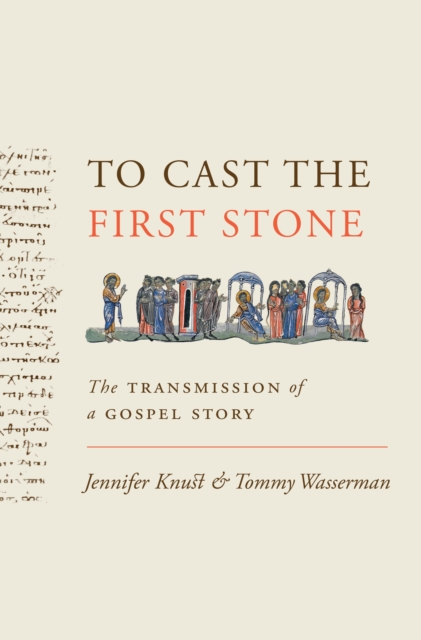
The story of the woman taken in adultery features a dramatic confrontation between Jesus and the Pharisees over whether the adulteress should be stoned as the law commands.
Geprägt von metaethischen Fragestellungen hat sich die philosophische Diskussion wieder intensiv mit der ontologischen und erkenntnistheoretischen Dimension von Werten befasst und der Phänomenologie zu einer Relecture verholfen.
In this major reference work, a team of the world's leading theologians provides a powerful overview of modern theology Covers theology's relation to other disciplines, the history of theology, major themes, key figures and contemporary issues Can be used as the basis for an introductory course or as an essential reference source
"e;If we harbor thoughts of violence or hatred, or seek revenge or retribution, we are contributing to the wounding of the world; if we transform those thoughts into forgiveness and compassion, and then move beyond them to actually make amends or restitution, we are contributing to the healing of the world.
"e;If we harbor thoughts of violence or hatred, or seek revenge or retribution, we are contributing to the wounding of the world; if we transform those thoughts into forgiveness and compassion, and then move beyond them to actually make amends or restitution, we are contributing to the healing of the world.
This engaging book by one of today's best-known Christian writers explores the history of heaven, from its origins in biblical writings to its most recent representations.
Provocative and immensely well informed, The Order of Things represents a substantial and original contribution to the fields of systematic theology, historical theology, and the science and religion dialogue.
Ziel des Handbuches für Kirchen- und Gemeindeentwicklung ist es, von evangelischer (lutherischer und reformierter) Seite aus zentrale Fragestellungen von Kirchen- und Gemeindeentwicklung zu identifi zieren, den gegenwärtigen wissenschaftlichen Stand zu präsentieren und von dort aus Perspektiven für eine innovative Praxis an den verschiedenen Orten und in unterschiedlichen Formen aufzuzeigen.
Vibrates with encouragement for women who want to explore and enjoy the world of booksGladys Hunt, long-time advocate of reading and author of the cherished Honey for a Child's Heart, has written this new book for busy women who want a wider worldview and stimulus for intellectual and emotional growth.
A spirituality based on love, not fear Shares key, inspiring teachings from A Course in Miracles as well as Hinduism, Buddhism, Gnosticism, and the Sefer Yetzirah, the oldest known Kabbalistic text Cites philosophical wisdom from Kant, Blake, Jung, and Gurdjieff, alongside cognitive science, to reveal how the world is not difficult and flawed, but our fear-based mind-sets lead us to see it that way Offers a path to help you regenerate from the fallen state and experience God as infinite love and light In the West, theology has almost always meant Christian theology--a hodgepodge of beliefs that are hard to make sense of.