Although the political interpretation of Paul is still considered something of a novelty in North America and Europe, it is well established in Latin America and among theologians of liberation.
The Texts @ Contexts series gathers scholarly voices from diverse contexts and social locations to bring new or unfamiliar facets of biblical texts to light.
One of the important ecclesial developments over the last century has been the extraordinary rediscovery, retrieval and reinvigoration of the Christian contemplative tradition, a recovery that has been extraordinarily influential Theologians have begun to explore how aspects of the Christian contemplative tradition challenge certain prevalent views about the nature of God, the world, and persons, but this contemplative renaissance also raises crucial questions about a variety of more philosophical arenas such as how we construe the relationship between faith and reason, religious epistemology, theological metaphysics, philosophical hermeneutics and so forth.
When scholars have set Jesus against various conceptions of the messiah and other redemptive figures in early Jewish expectation, those questions have been bound up with the problem of violence, whether the political violence of a militant messiah or the divine violence carried out by a heavenly or angelic figure.
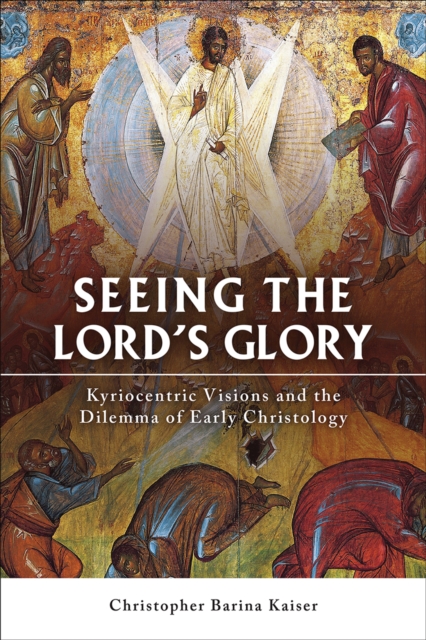
The "e;dilemma of early Christology,"e; Kaiser observes, is found in the early Christian claims to have "e;seen the Lord"e; and "e;beheld his glory"e; - expressions that in early Judaism would have pointed unequivocally to visions of Israel's God.
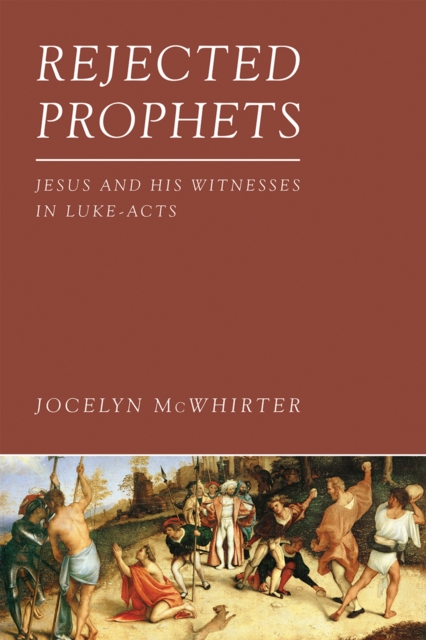
Although several scholars have written about how Luke portrays Jesus and the apostles as prophets, no one has yet provided a comprehensive theory as to why Luke’s protagonists resemble the prophets.
Presuming that the heart of Paul’s gospel announcement was the news that God had raised Jesus from the dead (as indicated in 1 Thessalonians 1:9b-10), Pillar explores the evidence in Paul’s letter and in aspects of the Roman imperial culture in Thessalonica in order to imagine what that proclamation would have evoked for its first hearers.
Fresh translations of early Jewish texts 4 Ezra and 2 Baruch, written in the decades after the Judean War, which saw Jerusalem conquered, the temple destroyed, and Judaism changed forever.
Karoline Lewis draws together the strengths of two exegetical approaches to the Gospel of John in this volume of the Fortress Biblical Preaching Commentaries series.
While most churches offer 'new member classes' and genuinely seek to welcome visitors, too often the end result is a rush to assimilate the newcomer into formal membership and all of the invitations to participation in committees, choirs, or fellowship groups that go along with it.
This book stages an intervention in Reformed readings of the doctrine of providence, particularly around Barths critical interpretation of the tradition stemming from Calvin and Schleiermacher, and provides a critical and constructive assessment of Barths contribution.
As someone approaches the end of their life, it is vitally important that they receive quality care and support, that their wishes are met, and that they are treated with dignity and respect.
For the better part of two centuries, Wesley scholars have been given a picture of the family of John Wesley that focuses positively upon the relationships of John and his brother Charles and his mother Susanna.
This ground-breaking book contains contributions from 12 different religious traditions: Hinduism, African Traditional Religion, Judaism, Jainism, Buddhism, Zoroastrianism, Shintoism, Christianity, Islam, Sikhism, Unitarianism and Baha'i.
A Three-Way Banquet is a concise, clear, straightforward introduction to the way that Christian communities have organized their reading of scripture in worship.
The Sunday Assembly addresses the general principles that have guided the shaping of Evangelical Lutheran Worship, considering that central liturgy of Christian worship, Holy Communion.
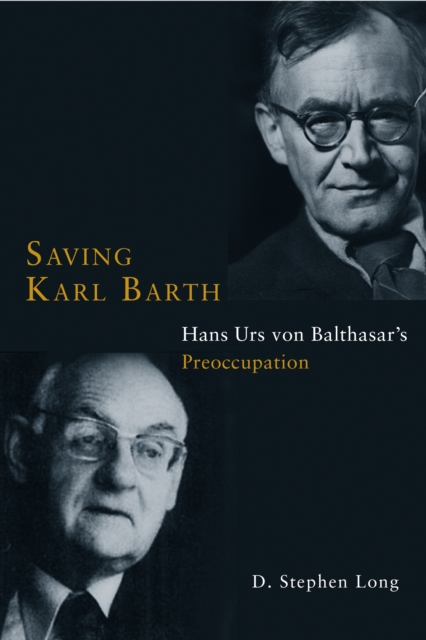
Challenging recent rejections of Hans Urs von Balthasar’s groundbreaking study of Karl Barth’s theology, Stephen Long argues that these interpreters are myopically impatient with the nuances of Balthasar’s reading of Barth and fail to appreciate the longstanding theological friendship that perdured.
In an age when the so-called prosperity gospel holds sway in many Christian communities or the good news of Christ is reduced to feel-good bromides, it would seem that death has little place in contemporary preaching.
This title explores why Christians have different ways of looking at time, at how the life of the church is ordered and organized by days, weeks, seasons, and years.
Jesus’ words of indictment and judgment in the Gospel according to Matthew have fueled centuries of Christian anti-Judaism and the horrors of the twentieth-century Holocaust.
Rebecca Todd Peters argues for an ethic of solidarity as a new model for how people of faith in the first world can live with integrity in the midst of global injustice and shape a more just future.
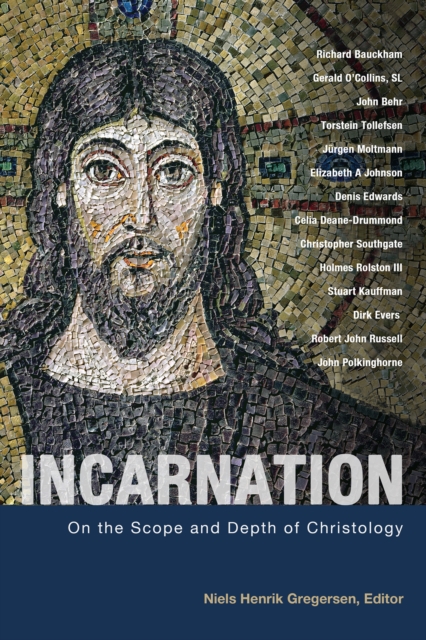
In this volume, prominent scholars take the reader on a journey from New Testament and early church views of incarnation to contemporary understandings of Christology.