Readers have long puzzled over the absence from the Johannine “Last Supper” of any words by Jesus over bread and wine—suggesting to some that John is indifferent or even hostile to sacramental thought or action—and the apparent dislocation to the feeding miracle, in John 6, of Jesus’ declaration that believers must eat his flesh.
Christian Doctrine and the Grammar of Difference argues that the most potent and resourceful theological response to the challenging questions of gender and difference is to be found in a retrieval of a doctrinal framework for feminist theology.
The Sense of the Universe deals with existential and phenomenological reflection upon modern cosmology with the aim to reveal hidden theological commitments in cosmology related to the mystery of human existence.
Written by two leading authors in the field, Social Work and Spirituality provides a critical engagement with the concept of spirituality and a much needed framework for the integration of spiritual care in mainstream practice.
The Coptic Christians of Egypt have traditionally been portrayed as a 'beleaguered minority', persecuted in a Muslim majority state and by the threat of political Islam.
La Vida Sacra: Contemporary Hispanic Sacramental Theology is an original, insightful approach to the sacraments from the perspective and actual practice of Latinos over the centuries.
Integrating Ecofeminism, Globalization, and World Religions addresses the practical relevance of the interconnection of feminism, ecology, and religious theological thought, and will ask questions about the lack of attention to gender issues in both ecological theology and deglobalization theory.
One of Maimonides' classic works, the Treatise on Resurrection is an extended discussion of resurrection, the immortality of the soul, the mysteries of the Messianic Age, and the World to Come.
Just as in his previous volume, The Secrets of Hebrew Words, Rabbi Blech brings readers into the fascinating world of gematria (the reckoning of numbers) and acronyms to uncover the vast profundity hidden in everyday Hebrew language.
The first in-depth psychoanalytic study of the Old and New Testaments, Beyond Yahweh and Jesus centers on God's role in enabling humans to cope with death and the anxieties it evokes.
Preaching the Principal Festivals focuses homiletically on the six primary theological festivals of the church year, sometimes described as the principal festivals: Christmas, Epiphany, Easter, Ascension, Pentecost, and Holy Trinity.
The Texts @ Contexts series gathers scholarly voices from diverse contexts and social locations to bring new or unfamiliar facets of biblical texts to light.
The Texts @ Contexts series gathers scholarly voices from diverse contexts and social locations to bring new or unfamiliar facets of biblical texts to light.
Harbaugh captures your interest with dramatic stories of the inner lives of working pastors, weaving these stories into patterns of meaning from his own reflection and research.
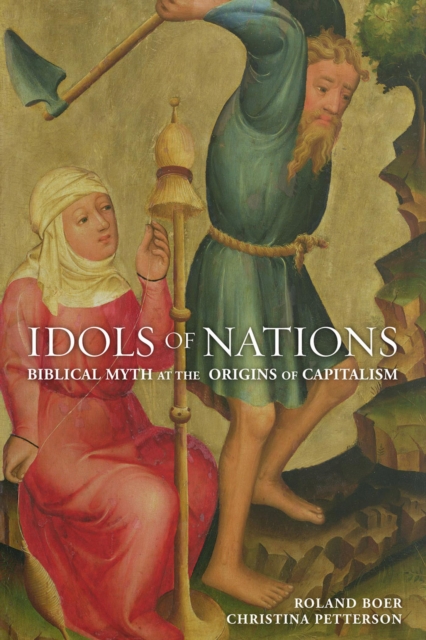
Roland Boer and Christina Petterson here produce a critical survey showing that the rise of capitalist theory was shaped by the way different economic philosophers—Smith, Hobbes, Grotius, Malthus, Locke––read the Bible.
Alongside Saint Thomas Aquinas, the thought of Saint Augustine stands as one of the central fountainheads of not only theology but Western social and political theory.
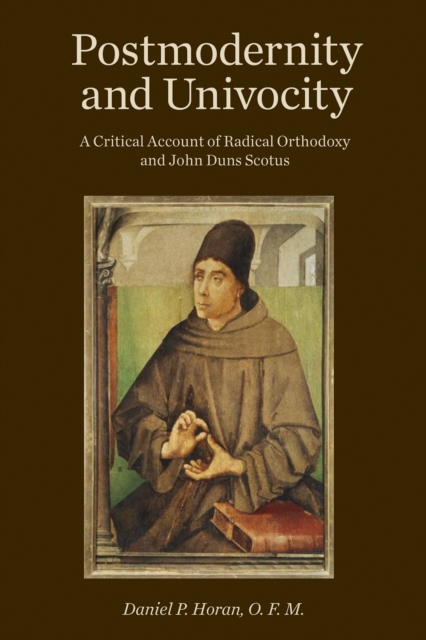
Nearly twenty-five years ago, John Milbank inaugurated Radical Orthodoxy, one of the most significant and influential theological movements of the last two decades.
The "e;Great Whore"e; of the Book of Revelationthe hostile symbolization used to illustrate the authors critique of empirehas attracted considerable attention in Revelation scholarship.
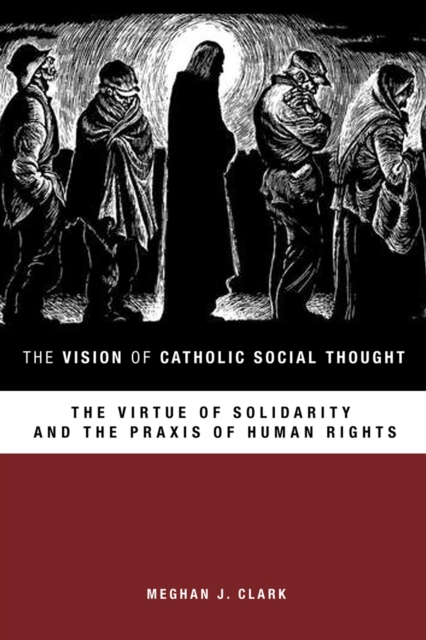
The Vision of Catholic Social Thought traces the emergence of solidarity and human rights as critical theological and philosophical pillars of the anthropology and ethics foundational to the development of Catholic social teaching.
Fortress Press’s Foundations for Learning series prepares students for academic success through compelling resources that kick-start their educational journey into professional Christian ministry.
Theological reactions to the rise of the new atheist movement have largely been critically hostile or defensively deployed apologetics to shore up the faith against attack.
If Basil of Caesarea receives mention in a standard course of lectures on Christian theology or history it is as the first person to write a dedicated discourse on the Holy Spirit.
Scholars are now at work not only rethinking Schleiermachers relation to the modern and contemporary theological tradition, but re-examining the dogmatic intricacies and commitments within his texts.
Over the last several decades, perceptive observers of Western civilization have documented what virtually everyone has perceived: as the old foundations of society have toppled, morality and personal character have been set adrift and often vanished altogether.
In his brilliant introduction on the Mishnah, Jacob Neusner asks:How do you read a book that does not identify its author, tell you where it comes from, or explain why it was written - a book without a preface?