Using the traditional Buddhist allegorical image of the Wheel of Life and the teaching of the twelve links of dependent origination, the Dalai Lama deftly illustrates how our existence, though fleeting and often full of woes, brims with the potential for peace and happiness.
Pabongka Rinpoche was one the twentieth century's most charismatic and revered Tibetan lamas, and in Liberation in the Palm of Your Hand we can see why.
Drawing inspiration from such diverse sources as Khalil Gibran, Virginia Woolf, and Frank Sinatra, as well as the Bible and the great Zen masters of old, this book offers a path to rich and lasting happiness achieved through what Huston Smith calls "e;goal-attaining patience.
Zen's Chinese Heritage traces twenty-five generations of inlightened Buddhist teachers, supplementing their core teachings with history, biography, and poetry.
With the right perspective, our anxiety around sickness, old age, and death can be a "e;wholesome fear"e;--a fear with a positive quality that ultimately enriches and nourishes our lives.
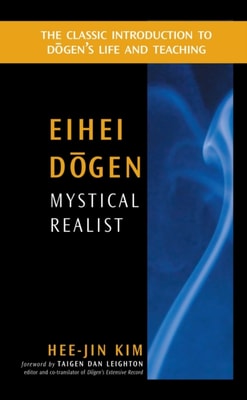
Eihei Dogen, the thirteenth-century Zen master who founded the Japanese Soto School of Zen, is renowned as one of the world's most remarkable religious thinkers.
Dogen, the thirteenth-century Zen master who founded the Japanese Soto school of Zen, is renowned as one the world's most remarkable religious geniuses.
The Kagyu school of Tibetan Buddhism began in the eleventh century with such renowned figures as Marpa and Milarepa, and its seminal meditative traditions are Mahamudra and the six Dharmas of Naropa.
Anyen Rinpoche's wise and reassuring voice guides readers through the Tibetan Buddhist teachings on death and dying, while providing practical tools for end-of-life and estate planning.
Maitreya's Ratnagotravibhaga, also known as the Uttaratantra, is the main Indian treatise on buddha nature, a concept that is heavily debated in Tibetan Buddhist philosophy.
Throughout the history of Buddhism, few philosophers have attained the stature of Dharmakirti, the "e;Lord of Reason"e; who has influenced virtually every systematic Buddhist thinker since his time.
Exploring crucial points on the path to enlightenment, Stages of the Path literature continues to hold its place as one of the great treasures of Buddhist thought.
The Essence of Zen is an expert's guided tour of the ins and outs of the tradition's approach to meditation, enlightenment, and the oneness of all things.
Jetsun Milarepa, Tibet's renowned and beloved saint, is known for his penetrating insights, wry sense of humor, and ability to render any lesson into spontaneous song.
In Door to Satisfaction Lama Zopa Rinpoche reveals a text he discovered in a cave in the Himalayas that captures the essential point of Buddhist training.
Eihei Dogen, the founder of the Japanese branch of the Soto Zen Buddhist school, is considered one of the world's most remarkable religious philosophers.
This book contains seven fundamental Buddhist texts considered essential to Western students by Geshe Wangyal, who first brought Tibetan Buddhism to America.
Divine Stories is the inaugural volume in a landmark translation series devoted to making the wealth of classical Indian Buddhism accessible to modern readers.
In this brilliant new translation and commentary on The Diamond Sutra--one of the sublime wisdom teachings of Mahayana Buddhism--Mu Soeng integrates this ancient wisdom teaching with current scientific and psychological thought.
Creation and Completion represents some of the most profound teachings of Jamgon Kongtrul (1813-99), one of the true spiritual and literary giants of Tibetan history.
In this fascinating study, Dagyab Rinpoche not only explains the nine best-known groups of Tibetan Buddhist symbols but also shows how they serve as bridges between our inner and outer worlds.
Exploring the long history of cultural exchange between 'the Roof of the World' and 'the Middle Kingdom,' Buddhism Between Tibet and China features a collection of noteworthy essays that probe the nature of their relationship, spanning from the Tang Dynasty (618 - 907 CE) to the present day.
The Kadam school of Tibetan Buddhism emerged in the eleventh century from the teachings of the Indian master Atisa and his principal Tibetan student, Dromtonpa.
The Book of Equanimity contains the first-ever complete English language commentary on one of the most beloved classic collections of Zen teaching stories (koans), making them vividly relevant to spiritual seekers and Zen students in the twenty-first century.