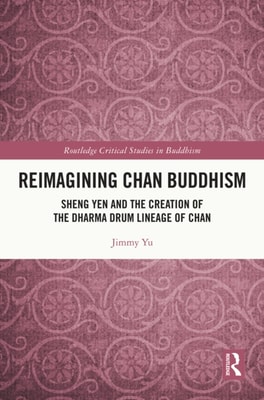
This book is the first socio-intellectual history of the Dharma Drum Lineage of Chan (Zen), a new lineage of Buddhism founded by the late Chinese Buddhist cleric, Sheng Yen (1931-2009)-arguably one of the most influential Chan masters in contemporary times.
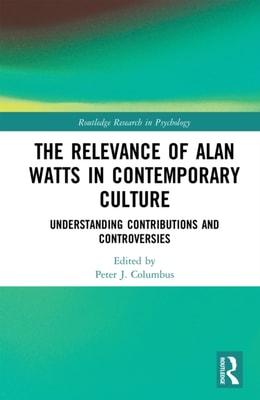
Whilst accounting for the present-day popularity and relevance of Alan Watts' contributions to psychology, religion, arts, and humanities, this interdisciplinary collection grapples with the ongoing criticisms which surround Watts' life and work.
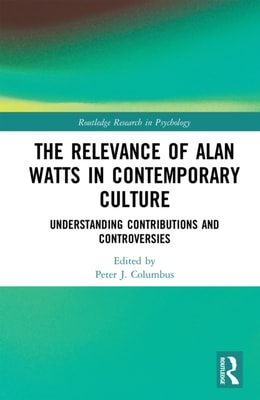
Whilst accounting for the present-day popularity and relevance of Alan Watts' contributions to psychology, religion, arts, and humanities, this interdisciplinary collection grapples with the ongoing criticisms which surround Watts' life and work.
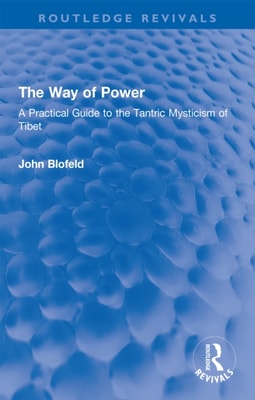
First published in 1970, The Way of Power is an exploration of the school of Mahayana Buddhism prevalent in Tibet and Mongolia, known as the Vajrayana.
First published in 1970, The Way of Power is an exploration of the school of Mahayana Buddhism prevalent in Tibet and Mongolia, known as the Vajrayana.
Even though hundreds of thousands of people have attended a Kalachakra empowerment, very few actually know how to put the Kalachakra teachings into practice.
In a time of particularly strong violence and conflict, whole regions of the globe are engaged in ideological struggles, rooted in widespread ignorance and fear.
How often do you hear the story of a man who was immaculately born from within a lotus flower with a thousand petals, in the middle of a lake, having been sent as a meteor from the heart of the Boudha of Boundless light?
For nearly forty-five years, Arnaud Maitland has devoted himself to the teachings of Tarthang Tulku Rinpoche, one of the last surviving Nyingma lamas to receive a complete education in Old Tibet.
Osho is known around the world for his pioneering contribution to meditation the science of inner transformation with the unique approach of his "e;Osho Active Meditations"e; acknowledging the accelerated pace of the contemporary world and bringing meditation into modern life.
Using eleven Zen stories as a starting point and diving deep into their mysterious world, he then weaves his magical clarity on many diverse contemporary topics.
Nirvana has become an idealized word associated with the juxtaposition of a cult rock celebrity who died before his time and a vague new age version of Eastern religion.
Fed up with teenage life in the suburbs, Jaimal Yogis ran off to Hawaii with little more than a copy of Hermann Hesse's Siddhartha and enough cash for a surfboard.
In the classic bestseller, Introduction to Tantra, Lama Yeshe offered a profound and wonderfully clear glimpse into the sophisticated practices of Tibetan Buddhist tantra.
In The Gateless Gate, one of modern Zen Buddhism's uniquely influential masters offers classic commentaries on the Mumonkan, one of Zen's greatest collections of teaching stories.
With characteristic humility, His Holiness the Dalai Lama begins this landmark survey of the entire Buddhist path by saying, "e;I think an overview of Tibetan Buddhism for the purpose of providing a comprehensive framework of the path may prove helpful in deepening your understanding and practice.
In Emptiness, the fifth volume in The Foundation of Buddhist Thought series, Geshe Tashi Tsering provides readers with an incredibly welcoming presentation of the central philosophical teaching of Mahayana Buddhism.
This new volume from the Foundation of Buddhist Thought series, provides a stand-alone and systematic - but accessible - entry into how Buddhism understands the mind.
This book offers a complete translation of the Majjhima Nikaya, or Middle Length Discourses of the Buddha, one of the major collections of texts in the Pali Canon, the authorized scriptures of Theravada Buddhism.
This book offers a complete translation of the Digha Nikaya, the long discourses of the Buddha, one of the major collections of texts in the Pali Canon, the authorized scriptures of Theravada Buddhism.
This volume offers a complete translation of the Samyutta Nikaya, The Connected Discourses of the Buddha, the third of the four great collections in the Sutta Pitaka of the Pali Canon.