The Records of Mazu and the Making of Classical Chan Literature explores the growth, makeup, and transformation of Chan (Zen) Buddhist literature in late medieval China.
This book delves deep into the lived experiences of the Tibetan diaspora, offering an insightful exploration through the intersecting lenses of politics, psychology, and culture.
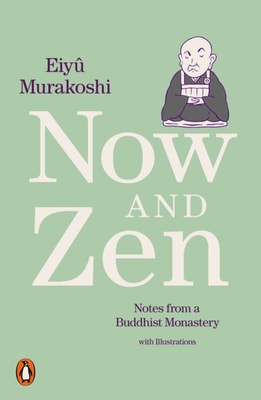
Since Zen Buddhism first captivated the attention of Western seekers the dominant discourse about this sect has been romantic, idealistic, and utopian.
When books about Zen Buddhism began appearing in Western languages just over a half-century ago, there was no interest whatsoever in the role of ritual in Zen.
It is said that in traditional Japan the samurai embraced Zen because it helped them to be fearless in adversity, to act quickly and decisively, and to keep focused on their ultimate goal.
With the growing popularity of Zen Buddhism in the West, virtually everyone knows, or thinks they know, what a koan is: a brief and baffling question or statement that cannot be solved by the logical mind and which, after sustained concentration, can lead to sudden enlightenment.
Revered by Buddhists in the United States and China, Master Sheng-yen shares his wisdom and teachings in this first comprehensive English primer of Chan, the Chinese tradition of Buddhism that inspired Japanese Zen.
In our multicultural society, faiths formerly seen as exotic have become attractive alternatives for many people seeking more satisfying spiritual lives.
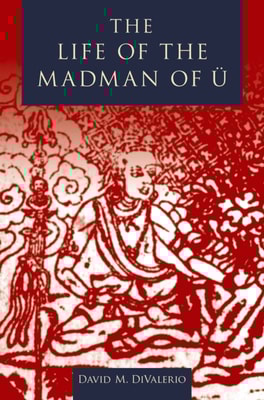
Throughout the past millennium, certain Tibetan Buddhist yogins have taken on profoundly norm-overturning modes of dress and behavior, including draping themselves in human remains, consuming filth, provoking others to violence, and even performing sacrilege.
In this book, Yaroslav Komarovski argues that the Tibetan Buddhist interpretations of the realization of ultimate reality both contribute to and challenge contemporary interpretations of unmediated mystical experience.
Dogen and Soto Zen builds upon and further refines a continuing wave of enthusiastic popular interest and scholarly developments in Western appropriations of Zen.
In this book, Yaroslav Komarovski argues that the Tibetan Buddhist interpretations of the realization of ultimate reality both contribute to and challenge contemporary interpretations of unmediated mystical experience.
The Records of Mazu and the Making of Classical Chan Literature explores the growth, makeup, and transformation of Chan (Zen) Buddhist literature in late medieval China.
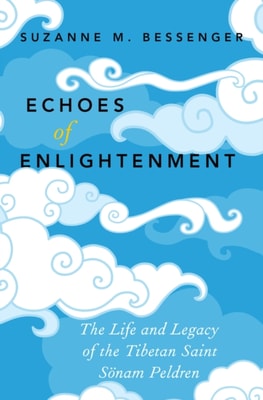
Echoes of Enlightenment explores the issues of gender and sainthood raised by the recently discovered "e;liberation story"e; of the fourteenth-century Tibetan female Buddhist practitioner Sonam Peldren.
One of the best-known and best-loved works of Buddhist literature, the Dhammapada forms part of the oldest surviving body of Buddhist writings, and is traditionally regarded as the authentic teachings of the Buddha himself, spoken by him in his lifetime, and memorized and handed on by his followers after his death.
A guide to key writings from Buddhism’s meditative tradition and what they reveal about the history and practice of meditation Is it possible to capture the spirit of Buddhist meditation, which depends so much upon silence and unspoken wisdom?
Symbolism of the Three Degrees by Oliver Day Street is a masterful exploration of the rich and intricate symbolism embedded within the first three degrees of Freemasonry.
Through the eventful life of a Himalayan Buddhist teacher, Khunu Lama, this study reimagines cultural continuity beyond the binary of traditional and modern.
Explore the profound intersection of ancient wisdom and modern science with Rama Prasad's Nature's Finer Forces: The Science of Breath and the Philosophy of the Tattvas.
These translations of Kitaro Nishida's philosophy of nothingness and the intelligible world are accompanied with a scholarly introduction that explains the author's ideas and views on Western philosophy.
Orison Swett Marden's "e;The Optimistic Life, or In the Cheering-Up Business"e; is a heartfelt and inspiring guide to embracing positivity and cultivating a joyful, resilient outlook on life.