The Linjilu (Record of Linji or LJL) is one of the foundational texts of Chan/Zen Buddhist literature, and an accomplished work of baihua (vernacular) literature.
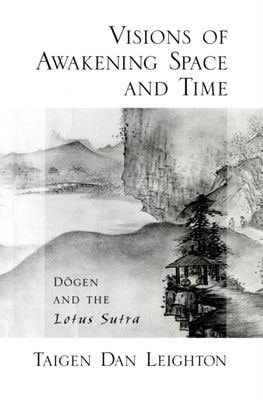
In this groundbreaking collection of essays edited by Steven Heine, leading scholars of Buddhism from both sides of the Pacific explore the life and thought of Zen Master Dogen (1200-1253), the founder of the Japanese Soto sect.
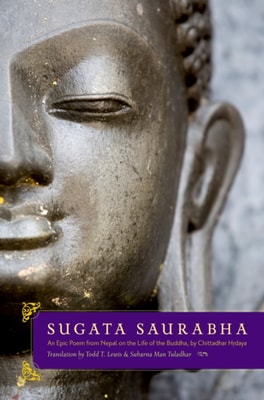
This rendering of the Sugata Saurabha, in a long line of accounts of the Buddha's life dating back almost 2,000 years, may be the last ever to be produced that conforms to the traditions of Indic classic poetry.
As a religion concerned with universal liberation, Zen grew out of a Buddhist worldview very different from the currently prevalent scientific materialism.
In this book, Anne Carolyn Klein, an American scholar and teacher of Buddhism, and Geshe Tenzin Wangyal Rinpoche, a rigorously trained Tibetan Lama who was among the first to bring Bon Dzogchen teachings to the West, provide a study and translation of the Authenticity of Open Awareness, a foundational text of the Bon Dzogchen tradition.
Bodhidharma, its first patriarch, reputedly said that Zen Buddhism represents "e;a special transmission outside the teaching/Without reliance on words and letters.
This life story of Milarepa--the important Tibetan religious leader who lived over 800 years ago--is part of a remarkable four-volume series on Tibetan Buddhism produced by the late W.
The Tibetan Book of the Great Liberation, which was unknown to the Western world until its first publication in 1954, speaks to the quintessence of the Supreme Path, or Mahayana, and fully reveals the yogic method of attaining Enlightenment.
Books, audiotapes, and classes about yoga are today as familiar as they are widespread, but we in the West have only recently become engaged in the meditative doctrines of the East--only in the last 70 or 80 years, in fact.
Koans are dialogues that stand at the center of Zen Buddhist literature and are often used to provoke the "e;great doubt"e; in testing a trainee's progress.
Extending their successful series of collections on Zen Buddhism, Heine and Wright present a fifth volume, on what may be the most important topic of all - Zen Masters.
This life story of Milarepa--the important Tibetan religious leader who lived over 800 years ago--is part of a remarkable four-volume series on Tibetan Buddhism produced by the late W.
Books, audiotapes, and classes about yoga are today as familiar as they are widespread, but we in the West have only recently become engaged in the meditative doctrines of the East--only in the last 70 or 80 years, in fact.
The Tibetan Book of the Great Liberation, which was unknown to the Western world until its first publication in 1954, speaks to the quintessence of the Supreme Path, or Mahayana, and fully reveals the yogic method of attaining Enlightenment.
As a religion concerned with universal liberation, Zen grew out of a Buddhist worldview very different from the currently prevalent scientific materialism.
Extending their successful series of collections on Zen Buddhism, Heine and Wright present a fifth volume, on what may be the most important topic of all - Zen Masters.
This rendering of the Sugata Saurabha, in a long line of accounts of the Buddha's life dating back almost 2,000 years, may be the last ever to be produced that conforms to the traditions of Indic classic poetry.
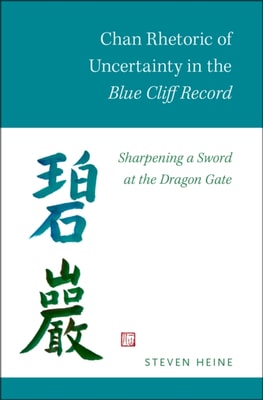
This book provides an in-depth textual and literary analysis of the Blue Cliff Record (Chinese Biyanlu, Japanese Hekiganroku), a seminal Chan/Zen Buddhist collection of commentaries on one hundred gongan/koan cases, considered in light of historical, cultural, and intellectual trends from the Song dynasty (960-1279).
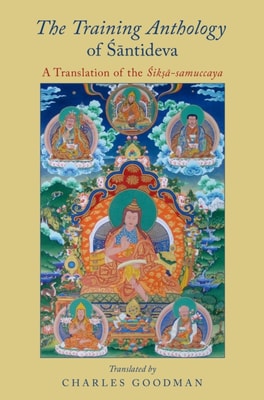
The Training Anthology--or Siksa-samuccaya--is a collection of quotations from Buddhist sutras with illuminating and insightful commentary by the eighth-century North Indian master Santideva.
The Training Anthology--or Siksa-samuccaya--is a collection of quotations from Buddhist sutras with illuminating and insightful commentary by the eighth-century North Indian master Santideva.
Throughout the past millennium, certain Tibetan Buddhist yogins have taken on profoundly norm-overturning modes of dress and behavior, including draping themselves in human remains, consuming filth, provoking others to violence, and even performing sacrilege.
Envisioning a Tibetan Luminary examines the religious biography of Shardza Tashi Gyaltsen (1859-1934), the most significant modern figure representing the Tibetan Bon religion-a vital minority tradition that is underrepresented in Tibetan studies.
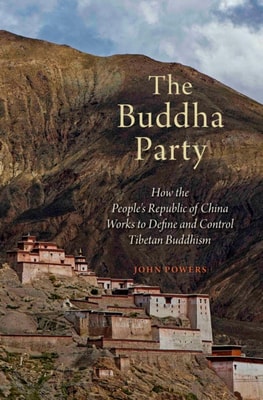
The Buddha Party tells the story of how the People's Republic of China employs propaganda to define Tibetan Buddhist belief and sway opinion within the country and abroad.
The Buddha Party tells the story of how the People's Republic of China employs propaganda to define Tibetan Buddhist belief and sway opinion within the country and abroad.
Dogen and Soto Zen builds upon and further refines a continuing wave of enthusiastic popular interest and scholarly developments in Western appropriations of Zen.
Since Zen Buddhism first captivated the attention of Western seekers the dominant discourse about this sect has been romantic, idealistic, and utopian.
Dogen (1200-1253), the founder of the Soto Zen sect in Japan, is especially known for introducing to Japanese Buddhism many of the texts and practices that he discovered in China.
When books about Zen Buddhism began appearing in Western languages just over a half-century ago, there was no interest whatsoever in the role of ritual in Zen.
In this book, Anne Carolyn Klein, an American scholar and teacher of Buddhism, and Geshe Tenzin Wangyal Rinpoche, a rigorously trained Tibetan Lama who was among the first to bring Bon Dzogchen teachings to the West, provide a study and translation of the Authenticity of Open Awareness, a foundational text of the Bon Dzogchen tradition.
It is said that in traditional Japan the samurai embraced Zen because it helped them to be fearless in adversity, to act quickly and decisively, and to keep focused on their ultimate goal.