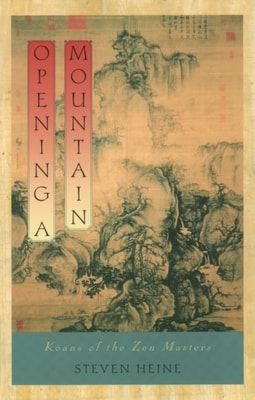
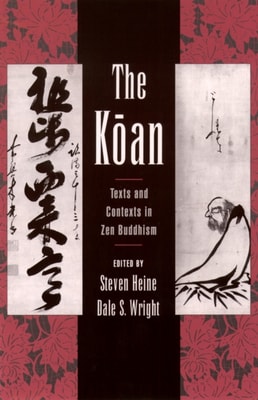
Bodhidharma, its first patriarch, reputedly said that Zen Buddhism represents "e;a special transmission outside the teaching/Without reliance on words and letters.
With the growing popularity of Zen Buddhism in the West, virtually everyone knows, or thinks they know, what a koan is: a brief and baffling question or statement that cannot be solved by the logical mind and which, after sustained concentration, can lead to sudden enlightenment.
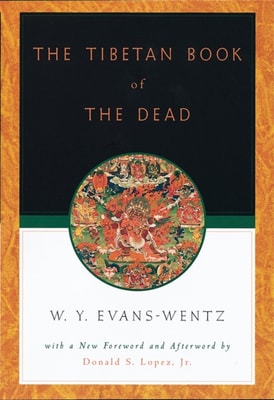
The Tibetan Book of the Dead is one of the texts that, according to legend, Padma-Sambhava was compelled to hide during his visit to Tibet in the late 8th century.
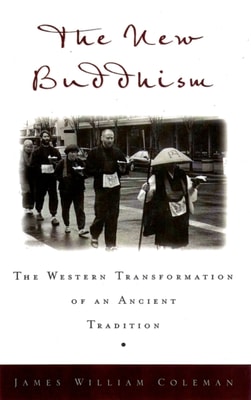
In our multicultural society, faiths formerly seen as exotic have become attractive alternatives for many people seeking more satisfying spiritual lives.
Revered by Buddhists in the United States and China, Master Sheng-yen shares his wisdom and teachings in this first comprehensive English primer of Chan, the Chinese tradition of Buddhism that inspired Japanese Zen.
Tibetan Buddhism and the Dalai Lama enjoy global popularity and relevance, yet the longstanding practice of oracles within the tradition is still little known and understood.
Tibetan Buddhism and the Dalai Lama enjoy global popularity and relevance, yet the longstanding practice of oracles within the tradition is still little known and understood.
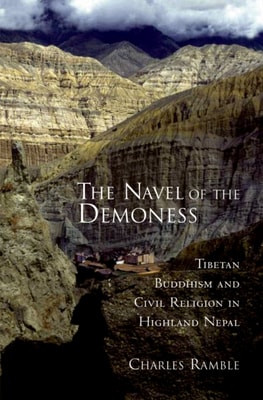
The Tibetan district of Tsari with its sacred snow-covered peak of Pure Crystal Mountain has long been a place of symbolic and ritual significance for Tibetan peoples.
In this study, based on both historical evidence and ethnographic data, Paula Arai shows that nuns were central agents in the foundation of Buddhism in Japan in the sixth century.
In Radiant Emptiness, Yaroslav Komarovski offers an annotated translation of three seminal works on the nature and relationship of the Yogacara and Madhyamaka schools of Buddhist thought, by Serdok Penchen Shakya Chokden (1428-1507).
In Radiant Emptiness, Yaroslav Komarovski offers an annotated translation of three seminal works on the nature and relationship of the Yogacara and Madhyamaka schools of Buddhist thought, by Serdok Penchen Shakya Chokden (1428-1507).
Envisioning a Tibetan Luminary examines the religious biography of Shardza Tashi Gyaltsen (1859-1934), the most significant modern figure representing the Tibetan Bon religion-a vital minority tradition that is underrepresented in Tibetan studies.
The Way of the Bodhisattva, composed by the monk and scholar Santideva in eighth-century India, is a Buddhist treatise in verse that beautifully and succinctly lays out the theory and practice of the Mahayana path of a bodhisattva.
The Way of the Bodhisattva, composed by the monk and scholar Santideva in eighth-century India, is a Buddhist treatise in verse that beautifully and succinctly lays out the theory and practice of the Mahayana path of a bodhisattva.
Reincarnation in Tibetan Buddhism examines how the third Karmapa hierarch, Rangjung Dorje (1284-1339) transformed reincarnation from a belief into a lasting Tibetan institution.
Reincarnation in Tibetan Buddhism examines how the third Karmapa hierarch, Rangjung Dorje (1284-1339) transformed reincarnation from a belief into a lasting Tibetan institution.
The Letters of Chan Master Dahui Pujue offers a complete annotated translation, the first into English, of a Chan Buddhist classic, the collected letters of the Southern Song Linji Chan teacher Dahui Zonggao (1089-1163).
The Letters of Chan Master Dahui Pujue offers a complete annotated translation, the first into English, of a Chan Buddhist classic, the collected letters of the Southern Song Linji Chan teacher Dahui Zonggao (1089-1163).
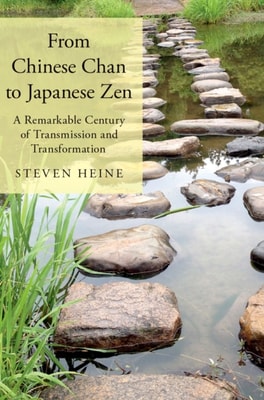
From Chinese Chan to Japanese Zen investigates the remarkable century that lasted from 1225 to 1325, during which the transformation of the Chinese Chan school of Buddhism into the Japanese Zen sect was successfully completed.
From Chinese Chan to Japanese Zen investigates the remarkable century that lasted from 1225 to 1325, during which the transformation of the Chinese Chan school of Buddhism into the Japanese Zen sect was successfully completed.
Echoes of Enlightenment explores the issues of gender and sainthood raised by the recently discovered "e;liberation story"e; of the fourteenth-century Tibetan female Buddhist practitioner Sonam Peldren.
While a short work of only eight verses and a three-page autocommentary, the Investigation of the Percept has inspired epistemologists for centuries and has had a wide-ranging impact in India, Tibet, and China.
While a short work of only eight verses and a three-page autocommentary, the Investigation of the Percept has inspired epistemologists for centuries and has had a wide-ranging impact in India, Tibet, and China.