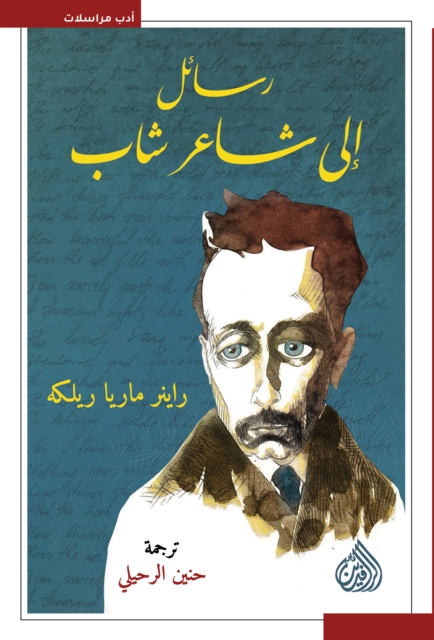
Khalil Gibran was one of a number of Arab intellectuals and writers who lived in the United States in the beginning of the twentieth century and who had a great influence on the development of modern Arabic literature through the exploration of Western literary movements.
patai investigates the false messiahs who have appeared throughout Jewish history, the modern Messiah-influenced movements such as reform Judaism and Zionism, and the numerous reasons put forth by the various branches of Judaism as to why the Messiah has not yet appeared.
This volume provides an introduction and essays on the four key sections of the Hebrew Scriptures from the perspective of top female biblical scholars:Part One: Torah/PentateuchPart Two: Deuteronomistic History (Joshua-2 Kings)Part Three: Prophets and ProphecyPart Four: Writings and the Book of DanielThis volume highlights key issues in the Hebrew Scriptures from the perspective of top female biblical scholars.
Beneath the commonplace affirmation that Jesus “paid for our sins” lie depths of implication: did God demand a blood sacrifice to assuage divine anger?
Convinced that we no longer have immediate access to the sense of Jesus' words but must account for the history of its "e;effects,"e; David Clark seeks to trace the meaning of the Lord's Prayer through the early centuries of the faith.
Acclaimed evangelical speaker and writer Tony Campolo teams up with spiritual director and teacher Mary Albert Darling to reveal some gems from the liturgical Christian tradition to Protestants who may be ready for a refreshing change.
The enigmatic sixteenth-century Swiss physician and natural philosopher Philippus Aureolus Theophrastus Bombastus von Hohenheim, called Paracelsus, is known for the almost superhuman energy with which he produced his innumerable writings, for his remarkable achievements in the development of science, and for his reputation as a visionary (not to mention sorcerer) and alchemist.
Organized by subject, this is a collection of teachings and quotations from the Talmud, the Bible, rabbinical commentaries, and ancient and modern religious and secular writings.
Joseph Friedman, Biblical scholar and lawyer, gives a refreshingly different and exciting approach to the oldest story in the world, which has universal appeal.
In this refreshing exploration of Judah's identity formation, the emphasis is placed on the psychological underpinnings of Judah's sentiments towards Israel, aiming to illuminate the significance of Judah's appropriation of Israel.
Zorba the Buddha is the first comprehensive study of the life, teachings, and following of the controversial Indian guru known in his youth as Bhagwan Shree Rajneesh and in his later years as Osho (19311990).
In 1631, at the epicenter of the worst excesses of the European witch-hunts, Friedrich Spee, a Jesuit priest, published the Cautio Criminalis, a book speaking out against the trials that were sending thousands of innocent people to gruesome deaths.
In this groundbreaking work, Joseph Fitzpatrick challenges the traditional interpretation of chapter three of Genesis: the story of Adam and Eve in Eden.
Continuing the authors commitment to neo-traditional constructive Jewish theology, this book is a sequel to Gellmans trilogy of constructive Jewish theology with Academic Studies Press.
In this original study, Moshe Idel, an eminent scholar of Jewish mysticism and thought, and the cognitive neuroscientist and neurologist Shahar Arzy combine their considerable expertise to explore the mysteries of the Kabbalah from an entirely new perspective: that of the human brain.
In this eagerly awaited book, political theorist Michael Walzer reports his findings after decades of reading and thinking about the politics of the Hebrew Bible.
In this wide-ranging discussion of Kabbalah—from the mystical trends of medieval Judaism to modern Hasidism—one of the world’s foremost scholars considers different visions of the nature of the sacred text and of the methods to interpret it.
Divination, the use of special talents and techniques to gain divine knowledge, was practiced in many different forms in ancient Israel and throughout the ancient world.
A new translation and commentary on the book of Amos, forgoing speculation about his life to provide an innovative analysis of the book itself As part of the Hebrew Bible, the Book of Amos has been studied for more than two thousand years.
This mirror for princes sheds light on the relationship between spiritual and political authority in early modern Egypt This guide to political behavior and expediency offers advice to Sufi shaykhs, or spiritual guides, on how to interact and negotiate with powerful secular officials, judges, and treasurers, or emirs.
A broad, systematic account of one of the most original and creative kabbalists, biblical interpreters, and Talmudic scholars the Jewish tradition has ever produced Rabbi Moses b.