Continuing its distinguished tradition of focusing on central political, sociological, and cultural issues of Jewish life in the last century, this latest volume in the annual Studies in Contemporary Jewry series focuses on how Jewry has been studied in the social science disciplines.
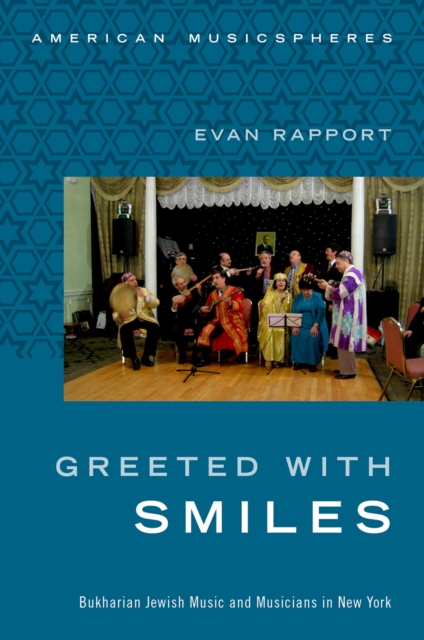
As the Soviet Union stood on the brink of collapse, thousands of Bukharian Jews left their homes from across the predominantly Muslim cities of Central Asia, to reestablish their lives in the United States, Israel and Europe.
The Babylonian Talmud was compiled in the third through sixth centuries CE, by rabbis living under Sasanian Persian rule in the area between the Tigris and Euphrates rivers.
Medieval Jewish philosophers have been studied extensively by modern scholars, but even though their philosophical thinking was often shaped by their interpretation of the Bible, relatively little attention has been paid to them as biblical interpreters.
In 1391 many of the Jews of Spain were forced to convert to Christianity, creating a new group whose members would be continually seeking a niche for themselves in society.
The book of Genesis tells us that God made a covenant with Abraham, promising him a glorious posterity on the condition that he and all his male descendents must be circumcised.
The classical Rabbinic tradition (legal, discursive, and exegetical) claims to be Oral Torah, transmitted by word of mouth in an unbroken chain deriving its authority ultimately from diving revelation to Moses at Sinai.
The foundation for all study of biblical law is the assumption that the Covenant Code is the oldest legal code in the Hebrew Bible and that all other laws are revisions of that code.
Throughout history, the persecutions of the Jewish people have been central to their identity and to the cohesion of their religion and cultural heritage.
This critical study traces the development of the literary forms and conventions of the Babylonian Talmud, or Bavli, analyzing those forms as expressions of emergent rabbinic ideology.