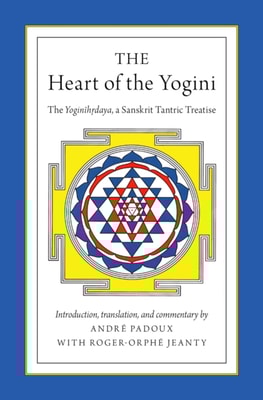
Though many practitioners of yoga and meditation are familiar with the Shri Chakra, a sacred diagram, few fully understand the depth of meaning in this representation of the cosmos.
Winner of the 2014 Mythopoeic Myth & Fantasy Studies AwardAt the heart of the mythology of the Anglo-Scandinavian-Germanic North is the evergreen Yggdrasil, the tree of life believed to hold up the skies and unite and separate three worlds: Asgard, high in the tree, where the gods dwelled in their great halls; Middlegard, where human beings lived; and the dark underground world of Hel, home to the monstrous goddess of death.
Japanese philosophy is now a flourishing field with thriving societies, journals, and conferences dedicated to it around the world, made possible by an ever-increasing library of translations, books, and articles.
Though considered one of the most important informants about Judaism in the first century CE, the Jewish historian Flavius Josephus's testimony is often overlooked or downplayed.
Drawing on two years of ethnographic field research among the Navajos, this book explores a controversial Native American ritual and healthcare practice: ceremonial consumption of the psychedelic Peyote cactus in the context of an indigenous postcolonial healing movement called the Native American Church (NAC).
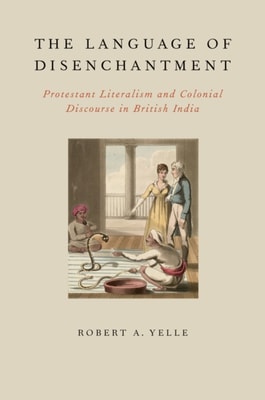
The Language of Disenchantment explores the ways in which Protestant ideas concerning language influenced British colonial attitudes toward and proposals to reform Hinduism.
In The Dysfunction of Ritual in Early Confucianism Michael Ing describes how early Confucians coped with situations where their rituals failed to achieve their intended aims.
The Hieroi Logoi (or "e;Sacred Tales"e;) of Aelius Aristides presents a unique first-person narrative from the ancient world-one that seems at once public and private, artful and naive.
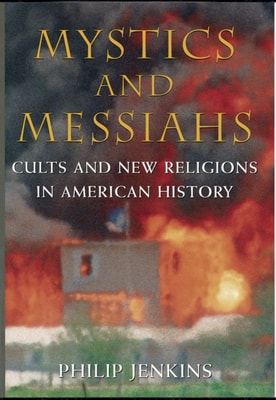
In Mystics and Messiahs--the first full account of cults and anti-cult scares in American history--Philip Jenkins shows that, contrary to popular belief, cults were by no means an invention of the 1960s.
The city of Constantinople was named New Rome or Second Rome very soon after its foundation in AD 324; over the next two hundred years it replaced the original Rome as the greatest city of the Mediterranean.
Anne Murphy offers a groundbreaking exploration of the material aspects of Sikh identity, showing how material objects, as well as holy sites, and texts, embody and represent the Sikh community as an evolving historical and social construction.
John Nemec examines the beginnings of the non-dual tantric philosophy of the famed Pratyabhijna or "e;Recognition [of God]"e; School of tenth-century Kashmir, the tradition most closely associated with Kashmiri Shaivism.
Scholars of Daoism in the Ming dynasty (1368-1644) have paid particular attention to the interaction between the court and certain Daoist priests and to the political results of such interaction; the focus has been on either emperors or Daoist masters.
Rufinus' vivid account of the battle between the Eastern Emperor Theodosius and the Western usurper Eugenius by the River Frigidus in 394 represents it as the final confrontation between paganism and Christianity.
On April 25, 1999, ten thousand Falun Gong practitioners gathered outside Zhongnanhai, the guarded compound where China's highest leaders live and work, in a day-long peaceful protest of police brutality against fellow practitioners in the neighboring city of Tianjin.
Despite Chinese efforts to stop foreign countries from granting him visas, the Dalai Lama has become one of the most recognizable and best loved people on the planet, drawing enormous crowds wherever he goes.
This book presents a systematic account of the role of the personal spiritual ideal of wu-wei--literally "e;no doing,"e; but better rendered as "e;effortless action"e;--in early Chinese thought.
In the ancient Greco-Roman world, it was common practice to curse or bind an enemy or rival by writing an incantation on a tablet and dedicating it to a god or spirit.
An investigation of the multiple meanings and functions of sacrifice in diverse religious texts and practices from the late Hellenistic and Roman imperial periods.
American Indian tribes have long been recognized as "e;domestic, dependent nations"e; within the United States, with powers of self-government that operate within the tribes' sovereign territories.
This book presents a systematic account of the role of the personal spiritual ideal of wu-wei--literally "e;no doing,"e; but better rendered as "e;effortless action"e;--in early Chinese thought.
David Shulman and Velcheru Narayana Rao offer a groundbreaking cultural biography of Srinatha, arguably the most creative figure in the thousand-year history of Telugu literature.
In this illuminating study of a vital but long overlooked aspect of Chinese religious life, Jimmy Yu reveals that in the sixteenth and seventeenth centuries, self-inflicted violence was an essential and sanctioned part of Chinese culture.
Recent scholarship on ancient Judaism, finding only scattered references to messiahs in Hellenistic- and Roman-period texts, has generally concluded that the word 'messiah' did not mean anything determinate in antiquity.